The Illusion of Simplicity: Why Mastery is Often Misunderstood
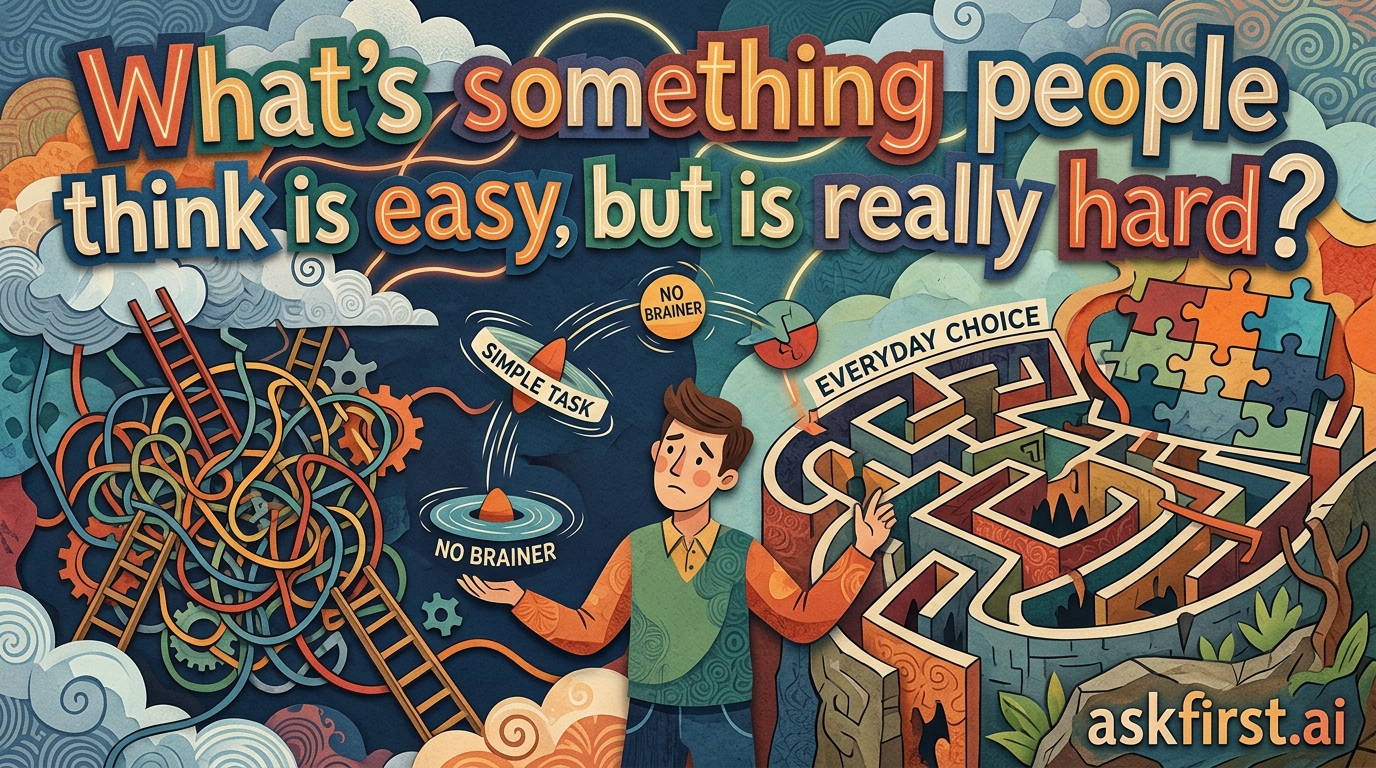
In our modern, hyper-accelerated world, we are conditioned to believe that competence is just a tutorial away. We see the final, polished result—a beautifully plated dish, a seamless piece of code, or an effortless public speech—and we assume the process is equally frictionless. This is the "Illusion of Simplicity." The human brain is wired to focus on the output while disregarding the grueling, iterative process that makes that output possible. Nowhere is this more evident than in the art of effective communication and writing.
Many people believe that because they speak daily, writing must be a natural, easy extension of their existing skills. In reality, writing is one of the most cognitively demanding tasks a human can perform.
The Architecture of Thought: Writing as a High-Stakes Discipline
Most people view writing as a mechanical act—the transcription of thoughts onto a screen. However, as William Zinsser argues in his seminal work, On Writing Well, writing is actually "thinking on paper." To write well, one must first possess a clarity of thought that most people never bother to cultivate.
When you sit down to write an essay, a report, or even a nuanced email, you are forced to confront the gaps in your own understanding. If you cannot explain a concept simply, it is usually because you do not understand it well enough. This is the Feynman Technique in action: the belief that the ultimate test of knowledge is the ability to simplify it without losing its integrity.
Why this is hard:
- Cognitive Load: You are simultaneously acting as the architect (structuring the argument), the builder (choosing the precise vocabulary), and the critic (editing for tone and flow).
- The Curse of Knowledge: Once you understand a subject, it is incredibly difficult to imagine what it is like not to understand it. Authors often struggle to bridge this gap, leaving readers confused.
- Vulnerability: Writing requires you to commit to a position. In a world of fluid opinions, putting your thoughts into permanent, structured text is inherently risky.
The Dunning-Kruger Effect and the Mastery Gap
The difficulty of "easy" tasks is often exacerbated by the Dunning-Kruger Effect, a cognitive bias first identified by psychologists David Dunning and Justin Kruger in their 1999 study published in the Journal of Personality and Social Psychology. The effect suggests that people with limited knowledge in a domain overestimate their own competence.
Think of gardening, for instance. To an observer, a gardener simply puts a seed in the dirt and waits for water to do the work. In reality, successful horticulture is a complex dance of soil pH management, nitrogen cycles, pest control, and micro-climate awareness. When a novice fails, they often blame "bad luck," whereas the master understands the intricate variables that caused the failure. The gap between the novice and the expert is not just effort; it is the depth of mental models applied to the task.
The Hidden Complexity of "Simple" Habits
Another area where people severely underestimate difficulty is habit formation. We often treat discipline as a character trait—something you "just have"—rather than a complex system of environmental design.
In Atomic Habits, James Clear illustrates that the difficulty of changing behavior lies in the fact that we try to change the outcome rather than the identity or the system. People think that "eating healthy" is an easy decision to make at the grocery store. They fail to account for the fact that their environment (the layout of the store, the marketing of processed foods, their own physiological stress levels) is actively working against them.
True mastery of habit involves:
- Environmental Design: Removing the friction from good habits and adding friction to bad ones.
- Identity Shifting: Moving from "I am trying to run" to "I am a runner."
- System Maintenance: Understanding that motivation is a finite, unreliable resource, whereas systems are sustainable.
Why Simplicity is the Ultimate Sophistication
We often mistake "simple" for "basic." In truth, simplicity is the result of refined complexity. As Leonardo da Vinci famously noted, "Simplicity is the ultimate sophistication." To reach a point where a process looks easy, you must first navigate the labyrinth of the difficult.
Whether it is playing a musical instrument, managing personal finances, or leading a team, the "easy" version is merely the tip of the iceberg. Beneath the surface lies hundreds of hours of trial, error, failure, and systematic refinement.
Conclusion
The next time you see someone perform a task with grace and ease, do not mistake it for simplicity. Recognize it for what it is: the outward manifestation of deep, hidden, and often exhausting labor. We should not be discouraged by this reality. Instead, we should embrace the difficulty of these tasks as a sign that we are engaged in the pursuit of genuine mastery. If something looks easy, it is likely because someone has spent a significant portion of their life ensuring that it remains so. Excellence is never an accident; it is the result of high intention, sincere effort, and intelligent execution.