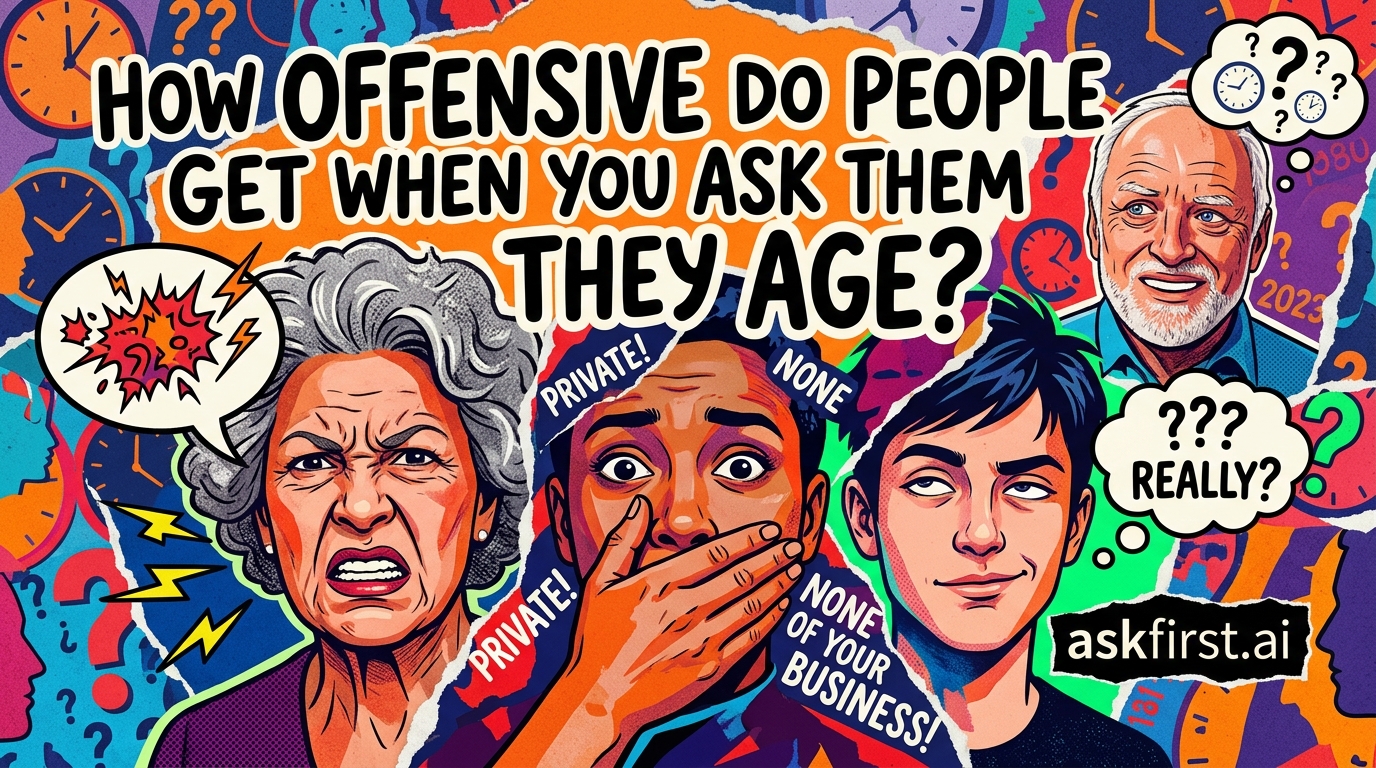
The question of age is one of the most complex social variables in human interaction. Across various cultures and professional environments, asking someone their age can range from a polite inquiry to a deeply offensive social transgression. To understand why this question triggers such visceral reactions, we must analyze the intersection of societal expectations, personal identity, and the cultural baggage associated with aging.
The Social Taboo and the "Ageism" Factor
In many Western cultures, age is frequently treated as a "private" piece of information, similar to income or weight. This stems largely from the pervasive issue of ageism. As noted by Dr. Robert Butler, who coined the term in 1969, ageism is a systematic stereotyping of and discrimination against people because they are old. Because society often equates youth with value, productivity, and attractiveness, asking an individual's age can be interpreted as a veiled attempt to categorize them within a hierarchy of relevance.
When a person is asked their age, they often perceive it not as a simple data-gathering question, but as a judgment. If the individual is younger, they may feel they are being patronized or dismissed due to a lack of experience. If they are older, they may feel they are being evaluated for signs of decline or obsolescence. In This Chair Rocks: A Manifesto Against Ageism (2017), author Ashton Applewhite argues that our obsession with age-based metrics forces people into defensive postures, making the question feel like an intrusive audit of their personal "shelf life."
Contextual Sensitivity: Where the Offense Occurs
The degree of offense is almost entirely dependent on the context of the interaction. There are three primary environments where this question is received differently:
- Professional Environments: In a workplace, asking a colleague’s age is often viewed as inappropriate or even legally risky. Human Resources departments generally discourage such questions because they can be perceived as the precursor to discriminatory practices regarding hiring, promotion, or layoffs. If an interviewer asks a candidate their age, it can violate Equal Employment Opportunity (EEO) guidelines in the United States, as it implies that age is a factor in the decision-making process.
- Social and Dating Arenas: In dating, the question is often normalized as a way to establish common ground or generational compatibility. However, it can become offensive if the asker uses the information to invalidate the other person’s experiences or preferences. For example, telling someone "You're too young to understand" or "You're too old to be doing that" is a clear example of how the data point is weaponized to create an power imbalance.
- Cultural Variations: It is critical to note that this "offense" is not universal. In many East Asian cultures, such as in Korea or Japan, knowing someone's age is an essential social prerequisite. It dictates the honorifics used in speech and the level of respect (keigo) that must be displayed. In these contexts, not knowing someone's age can be more offensive because it prevents the participants from correctly navigating the social hierarchy.
The Psychology of Defensive Reactions
Why do people get "defensive" or "offended"? The answer lies in the Self-Categorization Theory, popularized by psychologists John Turner and Henri Tajfel. Humans define themselves through their social groups. When we are asked our age, we are being forced to identify with a specific group that carries a set of societal labels.
If a person has worked hard to maintain their vitality or professional standing, an unsolicited question about their age feels like a "micro-aggression." It suggests that the asker is looking for a reason to place them in a box. For instance, a 50-year-old software engineer might feel that a younger peer asking their age is subtly implying that they are "out of touch" with current technology. The offense is rarely about the number itself; it is about the implied subtext that the asker is about to make assumptions about the individual's capabilities or limitations based on that number.
How to Navigate the Question
If you find yourself in a situation where you feel the need to know someone's age, consider the following expert guidelines:
- Establish Rapport First: Never make age the opening line of a conversation. It is an intimate detail that should follow the establishment of a genuine connection.
- Explain the "Why": If you must ask, provide context. Instead of "How old are you?", try "I’m curious, what decade did you grow up in? I’m trying to see if we share any common cultural touchstones."
- Respect the Refusal: If a person deflects or says they prefer not to share, accept it immediately and move on. Pushing for the number after a boundary has been set is where the interaction shifts from a social faux pas to active rudeness.
Conclusion
Ultimately, the offense taken at being asked one’s age is a reflection of the systemic value placed on youth in modern society. While the question itself is mathematically benign, it is socially loaded with the weight of biases, stereotypes, and anxieties regarding personal worth. To navigate social interactions with grace, one must recognize that for many, age is not just a number—it is a point of vulnerability. By practicing situational awareness and prioritizing respect over curiosity, we can avoid the pitfalls of this common, yet often uncomfortable, social inquiry. As with many aspects of human communication, the intent of the speaker is often secondary to the lived experience of the listener.