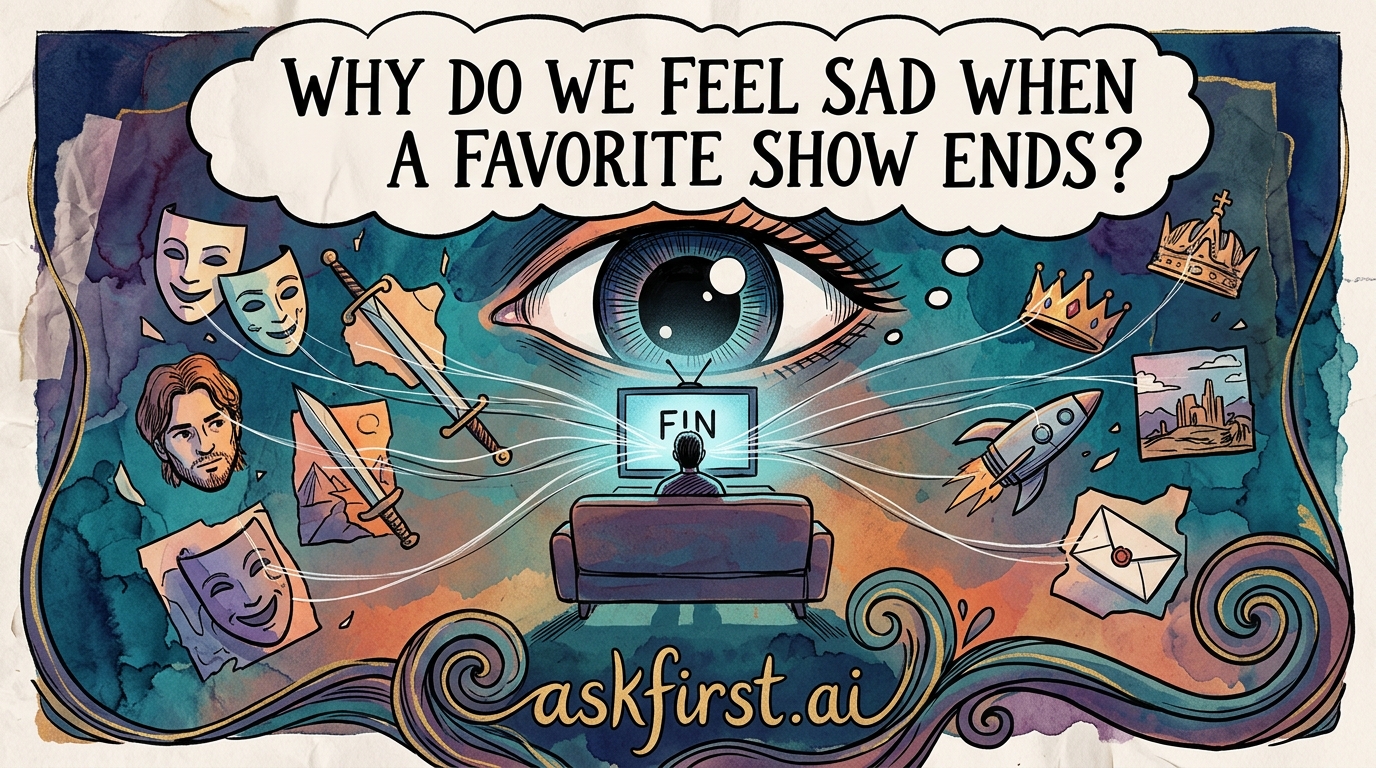
The Psychology of Post-Series Melancholy
When a long-running television show reaches its finale, viewers often report a profound sense of loss, emptiness, or even genuine grief. This phenomenon is known as 'Post-Series Depression' (PSD). It is not a clinical mental health disorder, but rather a recognized psychological reaction to the abrupt severance of a deeply ingrained ritual. Humans are social creatures who thrive on connection, and modern entertainment has mastered the art of simulating these social bonds.
The Parasocial Relationship Explained
At the core of this sadness lies the concept of Parasocial Relationships. These are one-sided emotional attachments that viewers form with fictional characters. While the viewer is aware that the characters are actors, the brain processes the sustained exposure to these individuals in a manner similar to real-world acquaintances. Because television shows often span dozens or hundreds of hours, the brain invests significant cognitive resources into 'knowing' these figures. When the show ends, the brain experiences a sudden lack of stimuli associated with these 'friends,' triggering a response akin to social withdrawal.
The Science of Narrative Immersion
Narrative Transportation Theory suggests that when individuals become fully immersed in a story, they physically and mentally 'transport' themselves into the world of the characters. During this state, the viewer temporarily adopts the emotional stakes of the protagonists. The brain releases dopamine and oxytocin as characters triumph or face challenges. The sudden conclusion of the show serves as a 'dopamine crash.' The brain, which has been conditioned to expect a regular release of these neurochemicals through the show's habitual viewing, must now readjust to their absence.
The Impact of Routine and Ritual
Humans are creatures of habit. A show often serves as a foundational element of a daily or weekly routine—a 'cognitive anchor' that provides structure to one's downtime. The disappearance of this show leaves a vacuum in that schedule. Psychologically, this disrupts the viewer's sense of continuity and predictability. The loss of the show is not just the loss of a story; it is the loss of a time-management pillar, leading to feelings of disorientation.
Strategies for Navigating the End
Understanding why this sadness occurs can empower individuals to mitigate its effects. Below are several evidence-based approaches to process the end of a series:
- Analyze the Closure: Reflect on the emotional growth experienced through the characters. Many viewers find writing a 'review' or participating in fan discussions helps transition the experience from an active engagement to a memory.
- The 'Bridge' Approach: Do not immediately jump into a new show that is tonally similar. Allow a 'cooling-off' period to allow the brain to reset its emotional baseline.
- Physical Activity and Socialization: Counter the sedentary nature of binge-watching by engaging in real-world activities. Physical exercise promotes the natural production of mood-regulating neurotransmitters that were previously supplied by the emotional highs of the television show.
Evolutionary Perspectives
Evolutionary psychologists argue that our capacity for empathy evolved to foster group cohesion. Because we are hardwired to care about the stories and fates of our group members, we naturally extend this capacity to fictional narratives. In the ancestral environment, following the struggles of 'group members' was vital for survival. Today, our brains do not fully differentiate between the social data gained from a neighbor and the social data gained from a meticulously crafted fictional character. Consequently, when a series concludes, the brain behaves as if a legitimate member of the tribe has departed.
A New Perspective on Media Consumption
Instead of viewing this sadness as a negative outcome, it should be regarded as a testament to the power of human imagination and the quality of modern storytelling. The fact that an audience can feel such intense emotion for a construct of lights and sound is a remarkable display of human empathy. When the screen goes dark, it is not an end, but an integration—the lessons learned, the laughter shared, and the emotional catharsis experienced become a permanent part of the viewer's internal narrative landscape. The sadness felt is simply the echo of a profound experience, and it is a reminder of the capacity to be moved by beauty and narrative complexity.