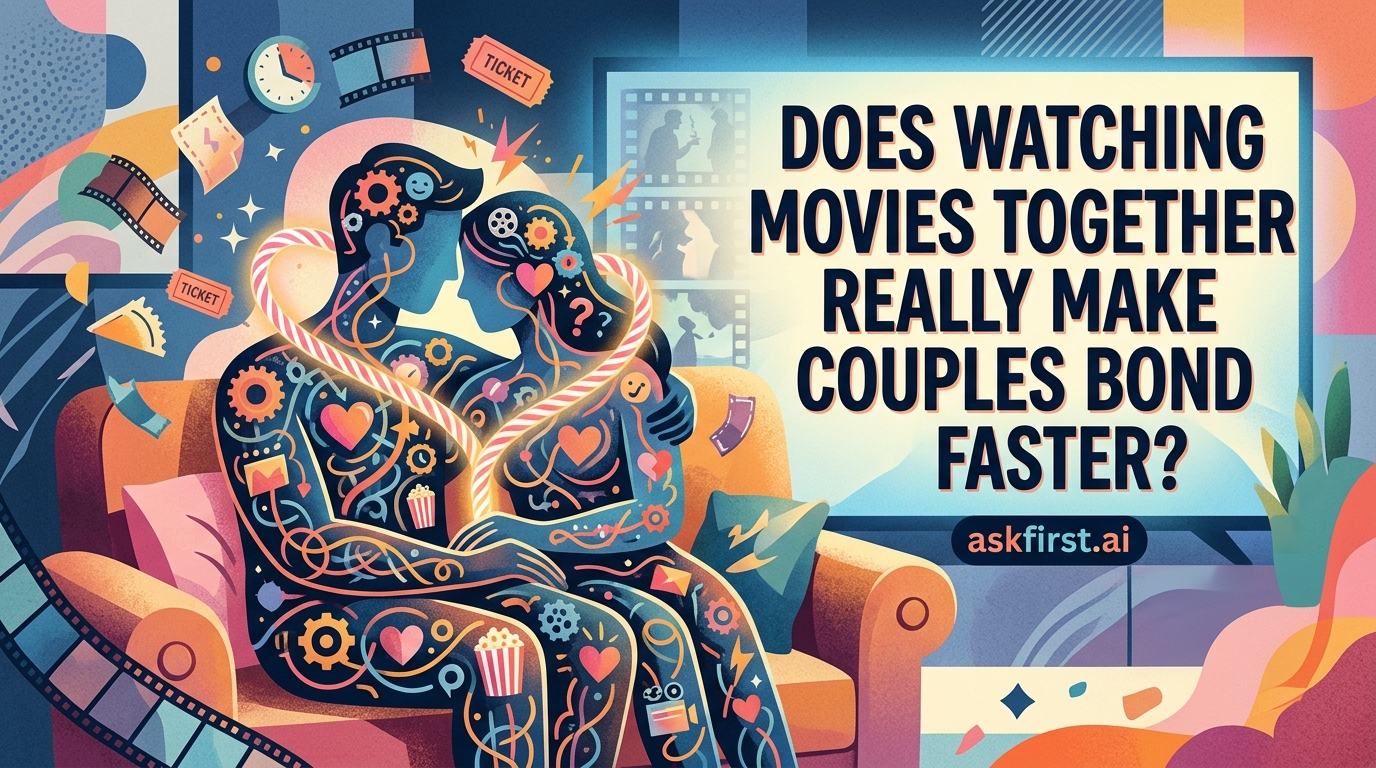
The phenomenon of shared cinematic experiences as a catalyst for relationship depth is a subject of significant psychological intrigue. While movies are often perceived merely as a passive form of entertainment, the act of watching them together acts as a powerful psychological 'social glue.' This practice taps into the core principles of emotional resonance, parasocial interaction, and shared reality construction, all of which contribute to faster relational bonding. When couples engage in this activity, they are not just viewing pixels on a screen; they are navigating a surrogate emotional landscape together.
The Psychology of Co-Viewing
At the heart of the relationship-bonding theory is the concept of 'Emotional Synchrony.' When two people view a film simultaneously, their physiological responses—heart rate, galvanic skin response, and pupil dilation—often mirror each other. According to research in social psychology, these synchronized reactions signal to the brain that the partner is a 'safe' emotional anchor, creating a feedback loop of intimacy. By experiencing a character’s triumph or loss alongside a partner, an individual subtly maps their own emotional capacity onto their significant other, creating a shortcut to understanding the partner's empathy levels and values.
Bypassing Superficial Dialogue
One of the most persistent hurdles in early-stage dating is the awkwardness of 'small talk.' Couples often struggle to bridge the gap between superficial conversation and deep emotional intimacy. Movies act as a 'Third-Party Stimulus.' Instead of asking an invasive question like, 'What are your core moral values?', a couple can watch a film featuring a high-stakes ethical dilemma. The discussion that follows—'Would you have done the same thing?'—allows for a deep, philosophical exploration of character without the pressure of direct interrogation. This psychological distancing allows for vulnerability to emerge naturally, significantly accelerating the process of 'getting to know' one another.
Establishing Shared Narratives
Human beings are, by design, narrative-seeking creatures. Relationships are defined by the stories a couple tells about themselves. Watching movies provides a shared library of 'cultural shorthand.' A couple that enjoys a specific genre or a classic cinematic masterpiece often develops inside jokes, references, and symbolic associations linked to those films. This creates a unique 'language' known only to the couple, reinforcing a sense of exclusivity and 'us-ness' that is essential for long-term bonding. Studies on relationship maintenance suggest that couples who establish these internal reference points tend to report higher satisfaction levels because they possess a shared world that exists outside of their daily routines.
The Role of 'Self-Expansion'
Psychologist Arthur Aron’s Self-Expansion Model suggests that humans possess an innate drive to expand their identity through close relationships. Watching movies allows partners to 'try on' different versions of the world. Through the diverse experiences of cinematic characters, individuals are exposed to scenarios, cultures, and emotions they might never encounter in their day-to-day existence. When this exploration is done together, both partners broaden their collective horizon. By processing these novel experiences as a team, couples engage in what researchers call 'shared self-expansion,' which is highly correlated with relationship excitement and longevity.
Curating the Experience for Maximum Bond
To leverage movie-watching for true relationship growth, the selection process is paramount. It is not necessarily about the high-octane blockbusters, but about the intentionality of the choice:
- Diversification: Rotate genres to challenge each other’s perspectives.
- Post-Watch Debrief: Dedicate time after the credits roll to discuss themes rather than just the plot. Ask questions about character motivations and moral arcs.
- The 'Mirroring' Factor: Use the experience to notice non-verbal cues. If a partner reacts with intense empathy to a sorrowful scene, it provides insight into their personality that a date at a loud concert never could.
Busting the 'Passive' Myth
Contrary to the cynical view that watching television is 'rotting your brain' or indicative of a lazy relationship, intentional co-viewing is actually a form of Active Engagement. It is a shared cognitive load. When couples treat movie night as a ritual rather than a mindless habit, it fosters an environment of trust and mutual discovery. It is not the movie itself that does the work; it is the shared observation of humanity reflected in the film that facilitates the bond. By creating a 'cinema for two,' partners are effectively building a sanctuary where the world fades away, leaving only the two of them to interpret, critique, and feel the wonders of human stories together. This leads to a faster acceleration of emotional intimacy because it creates moments of concentrated, high-quality focus that are otherwise hard to find in the modern, distracted landscape.