The Psychology of Wealth: Experiences Over Material Goods
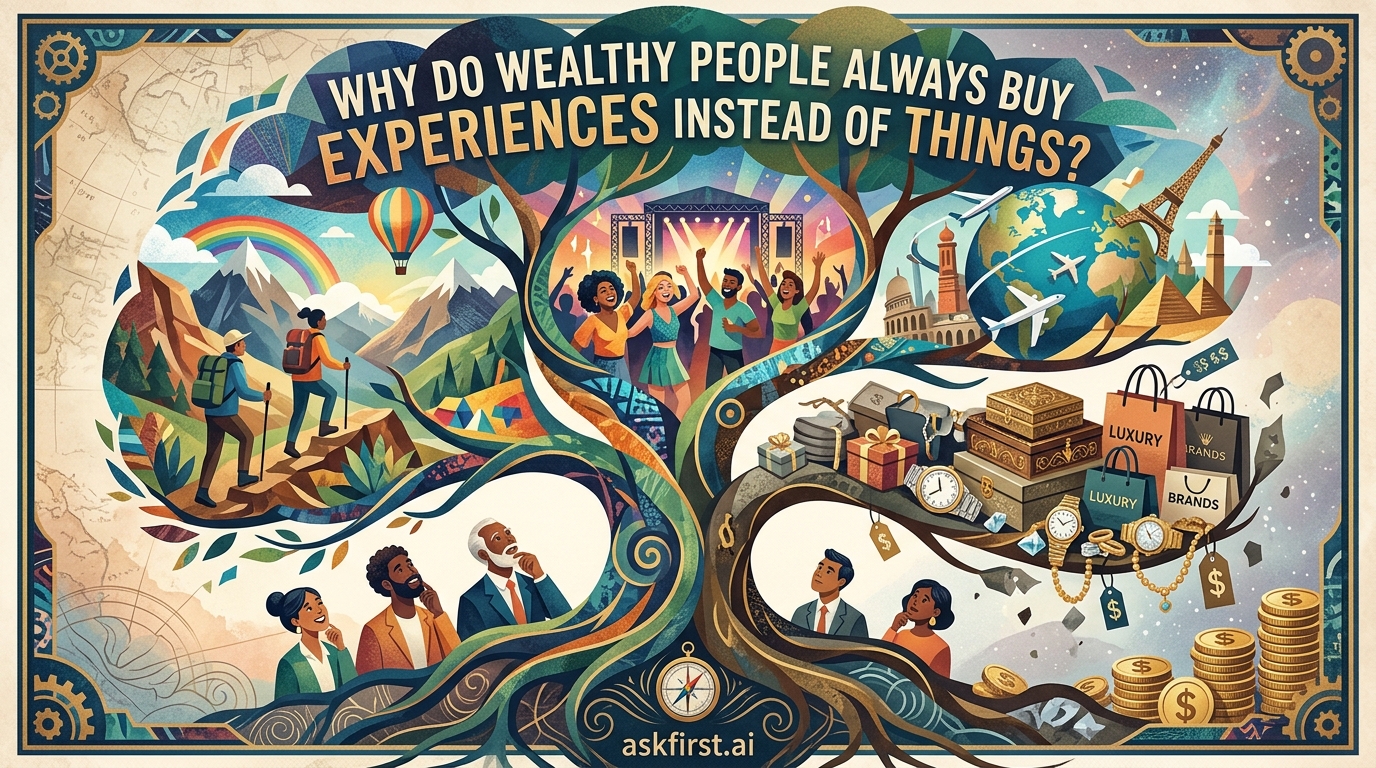
Wealthy individuals often prioritize spending capital on experiences—such as travel, educational workshops, or cultural events—rather than accumulating depreciating physical assets. This phenomenon is supported by extensive psychological research, most notably the 'Easterlin Paradox' and the concept of 'hedonic adaptation.' While material items may provide a momentary thrill, experiences tend to weave themselves into the fabric of identity, yielding long-term psychological dividends that physical possessions rarely match.
1. The Trap of Hedonic Adaptation
Hedonic adaptation refers to the human tendency to quickly return to a relatively stable level of happiness despite major positive or negative events. When someone buys a new luxury car or a high-end watch, the initial excitement is potent but fleeting. Within a few months, the item becomes 'the new normal.' It is absorbed into the background of daily life, and the neurochemical 'hit' of dopamine fades. In contrast, experiences are inherently temporal. Because they have a start and an end, they are harder to habituate to. The memory of a transformative trip or a unique learning opportunity does not lose its luster through constant presence in the living room; instead, it becomes a cherished narrative asset.
2. Social Connection and Emotional Currency
Research consistently shows that experiences facilitate social bonding, which is a primary driver of human well-being. Attending a concert, traveling with family, or participating in a high-stakes hobby fosters connections with others. According to psychologist Dr. Thomas Gilovich from Cornell University, people derive more satisfaction from shared experiences because they contribute to our sense of self and our social relationships. We are the sum of our experiences, not our inventory of goods. Sharing stories about a mountain climbing expedition provides long-term social 'interest,' whereas discussing a physical object eventually reaches a conversational dead end.
3. Experiences as Narrative Construction
Wealthy individuals often view life as a portfolio of experiences. A material object sits statically on a shelf, but an experience becomes a story. Humans are meaning-making creatures; we define who we are by what we have done, where we have been, and what we have learned. This 'experiential self' is much more resilient to the stresses of life than the 'material self.' Investing in an experience like learning a new language or attending a world-class opera creates a unique identity that cannot be stolen, lost, or depreciated. This intrinsic value is a cornerstone of the psychological portfolio of successful people.
4. The Avoidance of Social Comparison
Material goods often invite direct social comparison. If one person buys a luxury vehicle, it is easy to compare it to a neighbor's even flashier car, leading to feelings of inadequacy or the 'keeping up with the Joneses' syndrome. Experiences, however, are subjective. It is difficult to compare a personalized journey through the Himalayas with someone else's trip to a beach resort. This subjectivity shields individuals from the negative externalities of status anxiety. By choosing experiences, the wealthy escape the competitive rat race of consumerism and focus on personal growth, which leads to a higher quality of life and sustained internal satisfaction.
5. Cultivating Future Utility and Memory Re-consumption
One of the most profound benefits of experiences is the concept of 're-consumption.' While a physical item is only enjoyed when it is being used, an experience provides joy at three different stages: the anticipation, the actual event, and the reflection. The act of planning a complex trip or waiting for an exclusive event provides anticipation, which can often be as satisfying as the event itself. After the event, the memory continues to provide 'emotional dividends' as the individual reflects on the experience. This 'triple-threat' of happiness makes experiential spending an incredibly efficient investment of resources.
Summary: Investing in the Self
Ultimately, the shift toward experiential spending is not merely a sign of affluence; it is a strategic decision to optimize life satisfaction. By prioritizing subjective, transformative experiences over objective, material objects, individuals invest in their character, their memories, and their interpersonal relationships. As the world becomes increasingly digital and automated, the one thing that remains exclusively ours—and the source of our most profound meaning—is the collection of experiences that define our unique journey through time.