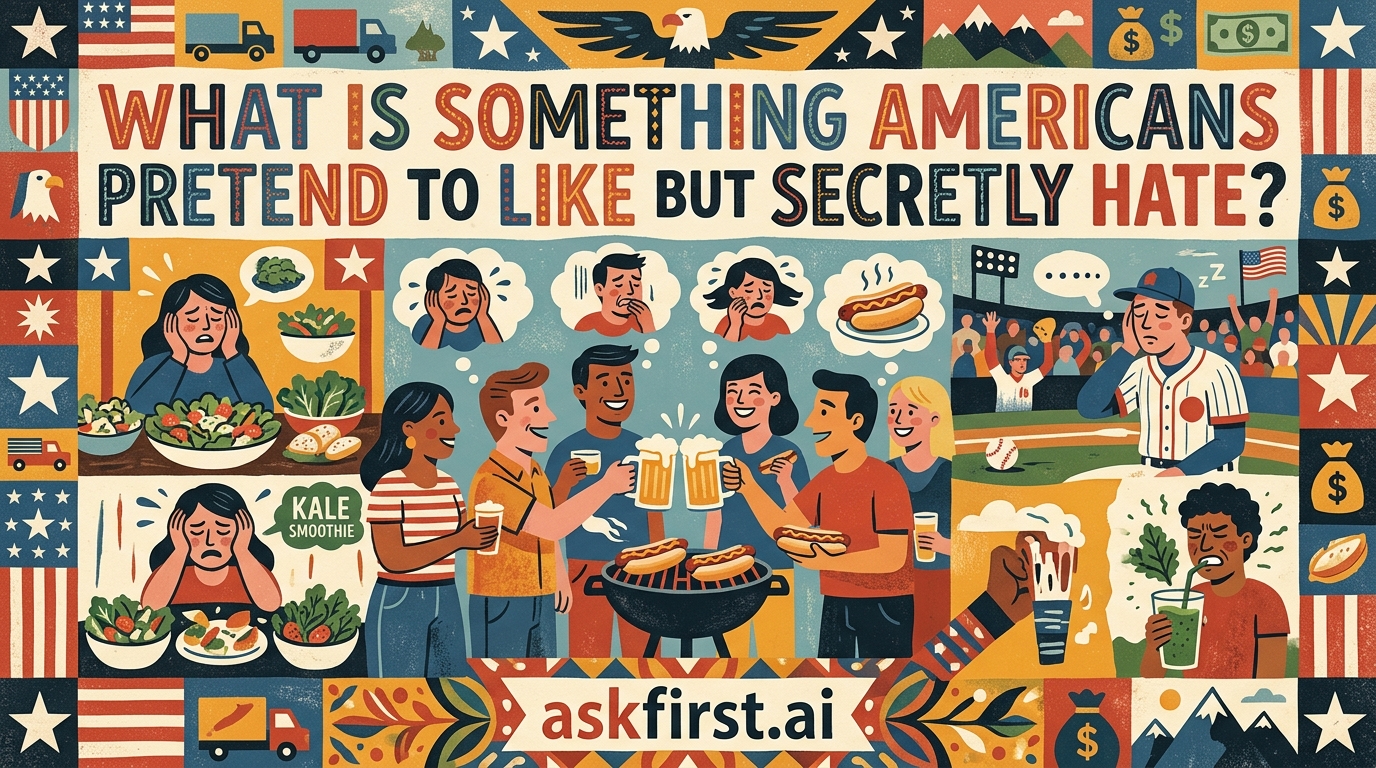
The Paradox of American Social Etiquette: The "Everything is Great" Facade
American culture is built upon a foundation of optimism, positivity, and a relentless forward momentum. However, beneath this polished veneer lies a complex landscape of social performance where individuals frequently express enthusiasm for things they find tedious, draining, or genuinely unpleasant. This phenomenon is often rooted in the American cultural imperative to be "agreeable" and to avoid conflict at all costs. While the reasons vary, the result is a collective simulation of enjoyment that permeates everything from workplace culture to modern leisure activities.
1. The Corporate "Team-Building" Retreat
Perhaps the most egregious example of performative enjoyment in the United States is the corporate team-building retreat. Despite the near-universal eye-rolling that occurs behind closed doors, employees are expected to participate in trust falls, escape rooms, or awkward icebreaker games with a smile plastered on their faces.
In his seminal work Bullshit Jobs: A Theory, anthropologist David Graeber explores the psychological toll of performative labor. He argues that when employees are forced to engage in activities that are fundamentally disconnected from their actual productivity—or worse, activities that feel patronizing—they experience a deep sense of "spiritual violence." Americans pretend to love these retreats because the alternative is being labeled "not a team player." The fear of being perceived as cynical or uncooperative forces a false enthusiasm that, in reality, most people find profoundly irritating.
2. The Ritual of "Small Talk"
American social interaction is heavily predicated on small talk—a low-stakes, high-frequency exchange about the weather, weekend plans, or the traffic. While Americans are world-renowned for their friendliness, this is often a superficial comfort mechanism rather than a genuine desire for deep connection.
Author and linguist Deborah Tannen, in Talking from 9 to 5, notes that Americans use small talk as a "ritualized bridge" to establish rapport. However, many Americans secretly loathe the repetitive nature of these inquiries. The standard response to "How are you?" is almost always "Good, how are you?"—even when the individual is struggling, exhausted, or bored. This linguistic script is a social obligation that people perform to maintain harmony, even though it leaves many feeling isolated and unfulfilled. The pretense is not that they hate the people they are talking to, but that they feel trapped by the formulaic nature of the interaction.
3. The "Busy" Olympics
In the United States, there is a strange, competitive pride associated with being "busy." If you ask an American how they are doing, the most common status symbol is to answer, "I’m just so busy." It implies importance, demand, and high value.
However, behind this mask of productivity, many Americans harbor a deep resentment toward the grind culture that necessitates this state of constant motion. In The Overworked American: The Unexpected Decline of Leisure by Juliet Schor, it is documented that Americans work significantly more hours than their counterparts in other developed nations. While they pretend to embrace the "hustle," the secret reality is an epidemic of burnout and a longing for the ability to sit still without feeling guilty. The pretense of loving the "hustle" is a defense mechanism; if you claim to love your crushing workload, you are less likely to be viewed as failing to keep up with the American Dream.
4. Large-Scale Family Holidays
The American cultural archetype of the perfect Thanksgiving or Christmas dinner is a powerful piece of propaganda. The imagery of the happy family gathered around a turkey is so pervasive that it creates a crushing expectation of joy.
In reality, these gatherings are often hotbeds of suppressed tension, political disagreement, and exhaustion. According to research cited by clinical psychologist Dr. Harriet Lerner in The Dance of Connection, many Americans endure these holidays out of a sense of duty, all the while counting the minutes until they can retreat to their own homes. The "pretending" here is a survival tactic. By performing the role of the happy family member, individuals avoid the emotional fallout of setting boundaries or addressing long-standing interpersonal conflicts.
Conclusion: The Cost of the Performance
The American propensity to pretend to like things they secretly hate is not merely a quirk; it is a structural component of a society that prioritizes consensus and social cohesion over radical authenticity. Whether it is the forced camaraderie of the office, the scripted nature of small talk, the glorification of burnout, or the mandatory joy of family holidays, these performances serve to keep the social machinery running smoothly.
However, the cost of this performance is high. It creates a disconnect between the public self and the private reality, contributing to the widespread anxiety and loneliness that define much of modern American life. By acknowledging that these rituals are often chores rather than pleasures, one might begin to see the cracks in the facade—and perhaps find the courage to opt out of the performances that no longer serve a meaningful purpose. Authentic connection, while harder to achieve than a polite smile, is the only true antidote to the exhaustion of social pretense.