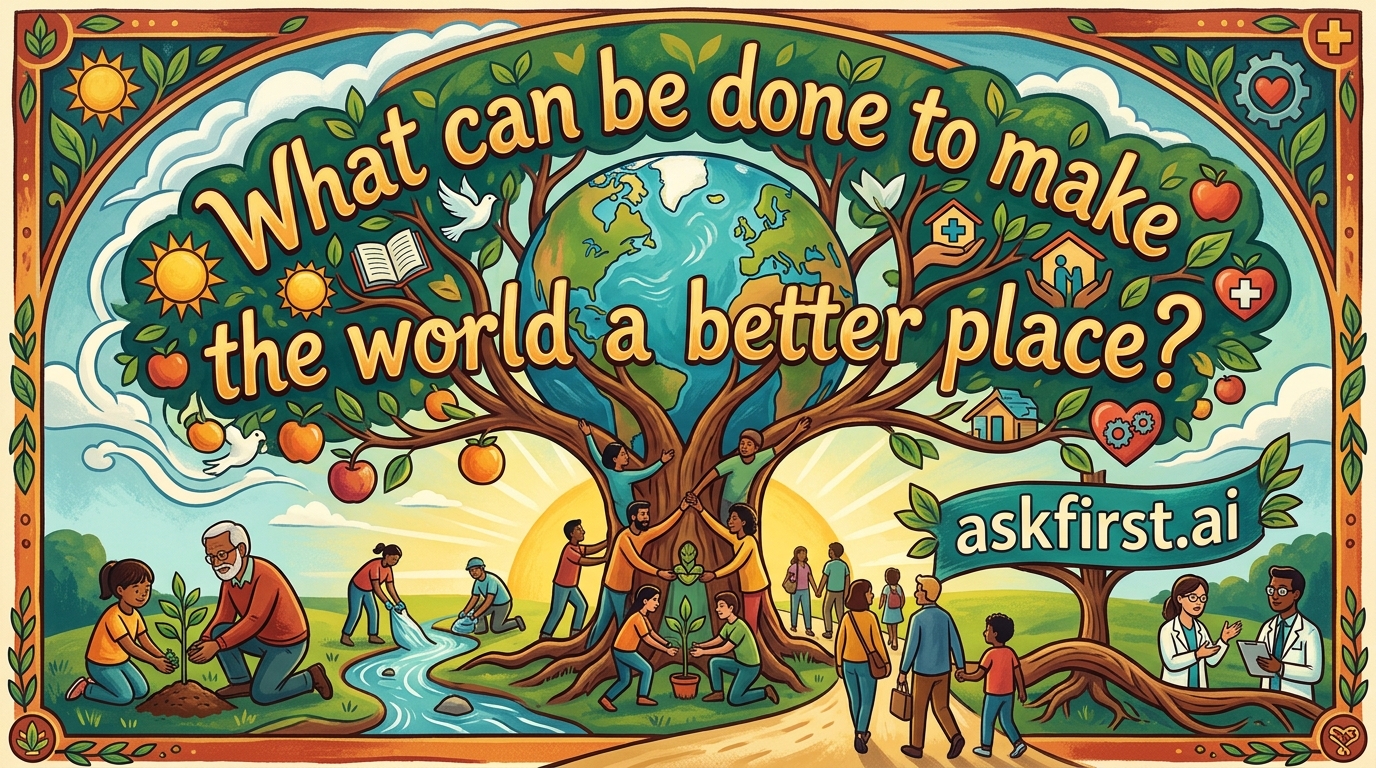
Improving the world is not a task for a single generation, nor is it the responsibility of one specific institution. It is a cumulative, iterative process that requires a fundamental shift in how we perceive our relationship with our environment, our global neighbors, and the future. Making the world a better place necessitates a strategic approach that balances macro-level policy changes with micro-level individual responsibilities.
The Foundation of Global Betterment: Education and Critical Thinking
The most sustainable path to a better world begins with the universal democratization of quality education. Education is not merely the acquisition of facts; it is the development of critical thinking, empathy, and problem-solving skills. According to Amartya Sen in his seminal work Development as Freedom, education acts as a "capability expander," allowing individuals to escape the cycles of poverty and participate meaningfully in democratic processes.
When populations are educated, they are better equipped to challenge systemic injustices, demand transparency from their governments, and innovate solutions to local environmental and social crises. To foster this, we must advocate for and invest in:
- Digital Literacy: Ensuring that access to the global knowledge base is not restricted by geography or socioeconomic status.
- Vocational Training: Aligning education with the evolving needs of a green, digital economy to ensure economic stability.
- Civic Education: Emphasizing the importance of community participation and the understanding of human rights as outlined in the Universal Declaration of Human Rights.
Ecological Stewardship: The Transition to Regenerative Systems
For the world to become a better place, we must move beyond the model of "sustainable development"—which often implies doing less harm—toward "regenerative development," which actively repairs the damage done to the biosphere. The ecological crisis, as detailed by Bill McKibben in The End of Nature, is the defining challenge of our era.
To address this, we must prioritize:
- Circular Economics: Transitioning away from the "take-make-waste" industrial model. Companies like Patagonia have set industry standards by emphasizing the longevity, repairability, and recyclability of goods.
- Renewable Infrastructure: Replacing fossil fuel dependence with decentralized energy grids. This not only mitigates climate change but also empowers communities to become energy independent.
- Biodiversity Restoration: Protecting "carbon sinks" such as the Amazon rainforest and the peatlands of Southeast Asia. As noted by E.O. Wilson in Half-Earth: Our Planet's Fight for Life, we must dedicate half of the Earth's surface to nature to ensure the survival of our species and the global ecosystem.
Strengthening Social Cohesion and Empathy
A better world is impossible without a robust social fabric. In Bowling Alone, Robert Putnam explores the decline of "social capital"—the networks of relationships among people who live and work in a particular society. Rebuilding this capital is essential for fostering a sense of shared destiny.
We can achieve this by strengthening local communities through:
- Volunteerism: Engaging in local civic projects helps bridge the gap between polarized groups, fostering understanding through shared labor and common goals.
- Intercultural Exchange: Programs that facilitate cross-border collaboration help dismantle xenophobia and prejudice. When individuals interact as humans rather than as political abstractions, the capacity for conflict is significantly reduced.
- Mental Health Prioritization: A society that ignores the psychological well-being of its citizens will inevitably struggle with violence and instability. Integrating mental health resources into public health systems is a moral and strategic imperative.
The Role of Ethical Governance and Corporate Accountability
Individual action is vital, but it is often insufficient to overcome structural barriers. We need governance models that prioritize long-term societal health over short-term political or quarterly profit cycles. This requires:
- Transparency and Anti-Corruption: Corruption acts as a tax on the poor and a barrier to efficient resource allocation. Organizations like Transparency International have consistently shown that nations with higher levels of transparency enjoy greater economic prosperity and social stability.
- Ethical Capitalism: Investors and consumers have immense power to influence corporate behavior. By supporting "B Corporations"—businesses that are legally required to consider the impact of their decisions on workers, customers, suppliers, community, and the environment—we can force the market to account for its externalities.
Conclusion: The Cumulative Effect of Intentionality
Making the world a better place is not a destination but a continuous practice of intentionality. It is found in the synthesis of high-level policy, such as international climate accords, and the daily choices of millions of individuals to act with integrity and foresight. By investing in education, committing to regenerative ecological practices, building social capital, and demanding accountability from our institutions, we create a feedback loop that elevates the human condition.
As the philosopher Martha Nussbaum argues in Creating Capabilities, the goal is to provide every individual with the opportunity to live a life they have reason to value. When we work toward this goal, we are not just improving our own lives; we are contributing to a more resilient, equitable, and vibrant global civilization. The transition will be difficult, but the history of human progress demonstrates that when we align our intelligence with our collective values, we are capable of overcoming even the most daunting obstacles.