The Psychology of Visual Perception in Long-Term Relationships
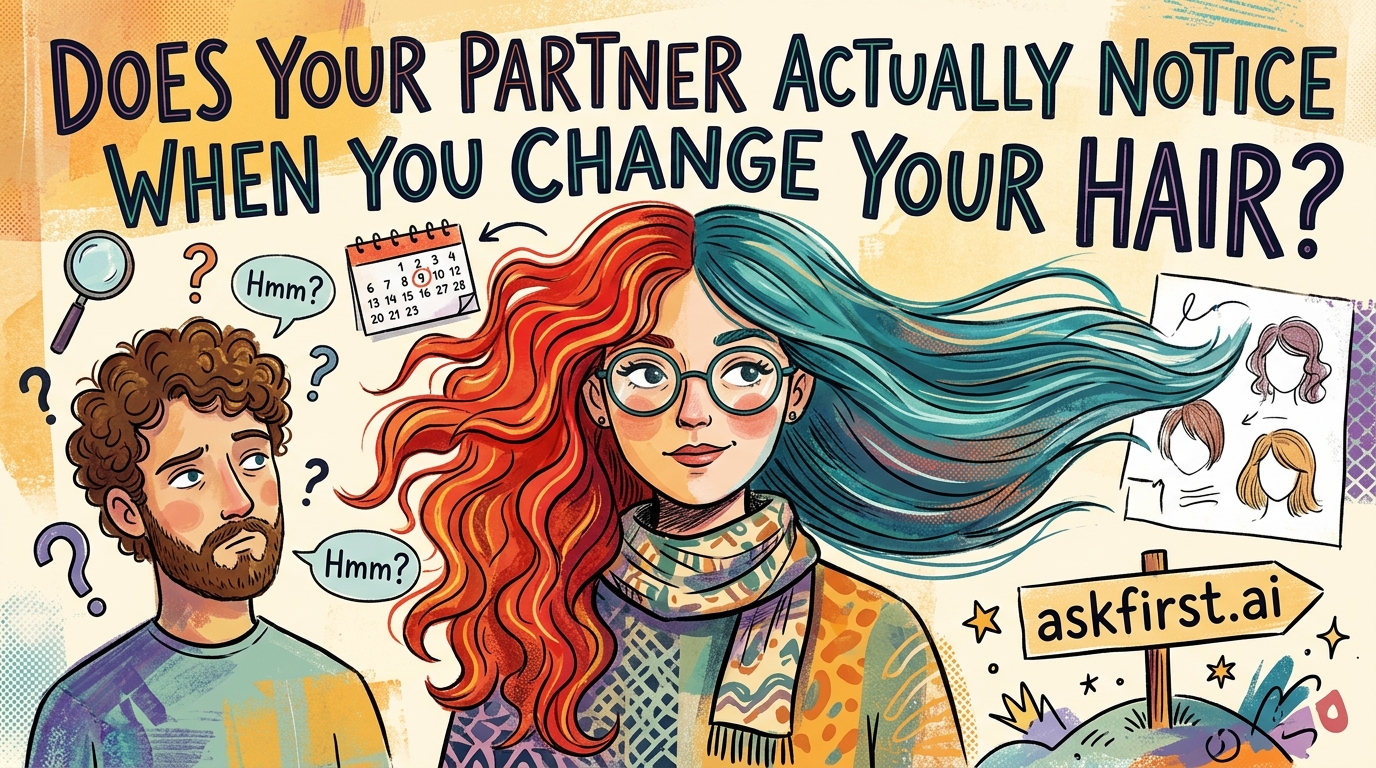
Human perception is a complex, filter-driven process. When individuals exist in long-term relationships, the brain begins to categorize sensory input through a process known as habituation. This neurological shortcut is designed to save energy; by ignoring familiar stimuli, the brain frees up processing power for new or dangerous information. Therefore, when a partner fails to notice a subtle shift in hair length or tone, it is rarely an indicator of indifference or lack of affection. Instead, it is a testament to the cognitive efficiency of the human brain.
The Mechanism of Selective Attention
Selective attention allows humans to focus on specific stimuli while filtering out background noise. In established partnerships, the partner often views the significant other as a holistic 'gestalt' rather than a collection of individual features. This means the brain stores a general impression of the person’s appearance. Unless the change is drastic—such as moving from long, dark hair to a short, blonde pixie cut—the minor variations fail to trigger the 'novelty' alert in the partner's visual cortex. Research in cognitive psychology suggests that when we know someone extremely well, we rely on our internal mental model of them rather than re-evaluating their features every day.
Why Changes Go Unseen: The 'Change Blindness' Phenomenon
'Change blindness' is a well-documented psychological phenomenon where individuals fail to notice large changes in their visual field. This happens because the human brain does not take a continuous 'video' of reality. Instead, it stitches together a series of snapshots. If the change occurs during a moment of low focus, the brain may fail to register the discrepancy. In the context of a relationship, the partner may be so focused on their own internal thought loops or daily tasks that the updated physical details fail to penetrate their immediate conscious awareness. This does not mean the partner is unobservant; it means the partner has integrated the individual so deeply into their life that the 'data' regarding their appearance is taken for granted.
The Difference Between Seeing and Noticing
It is vital to distinguish between visual processing and conscious recognition. The partner's eyes undoubtedly capture the light reflecting off the new haircut, but the information fails to reach the level of conscious acknowledgment. To the brain, the new hair is categorized under the same umbrella as the previous style. It remains 'the partner.' For a change to be noticed, it must deviate significantly from the mental schema the brain has built over time.
Strategies to Increase Visual Awareness in Partners
If the desire is to ensure that a partner notices an aesthetic change, understanding the mechanism of surprise is key. To break through the wall of habituation, one might consider the following evidence-based approaches:
- Change the context: Present the change in a new environment rather than the typical morning routine.
- Highlight the novelty: Draw direct, gentle attention to the change early on. The brain needs a cue to 'refresh' the mental model of the person.
- Reduce visual clutter: Changes are more likely to be noticed when they stand out against a consistent backdrop.
- Use verbal engagement: The human brain is highly attuned to language. Simply mentioning, 'I did something different today,' forces the partner to switch from passive observation to active scanning.
The Emotional Perspective: Beyond the Surface
While it is easy to equate noticing a haircut with proof of love, the two are not fundamentally linked. Emotional intelligence and visual attentiveness are distinct cognitive functions. A partner may be profoundly supportive, deeply loyal, and highly attuned to emotional needs, yet still possess a 'blind spot' for physical details. Understanding this biological reality can alleviate unnecessary friction in relationships. When a partner fails to remark on a change, it is often a signal that they have reached a level of comfort so profound that they simply see 'you' rather than the individual parts that make up the whole.
Conclusion
In essence, the brain operates on a need-to-know basis. Because a hair change does not impact the safety or the core identity of the partner, it often gets filtered out. Embracing this reality shifts the focus from 'Does my partner care?' to 'How does the brain process familiarity?' Ultimately, the lack of a comment is not a failure of character, but a quirk of human neurology. By recognizing that partners operate through mental schemas, one can appreciate that being 'invisible' in small ways is simply a side effect of deep, long-term human connection.