The Phenomenon of the Cinematic Life: A Psychological Exploration
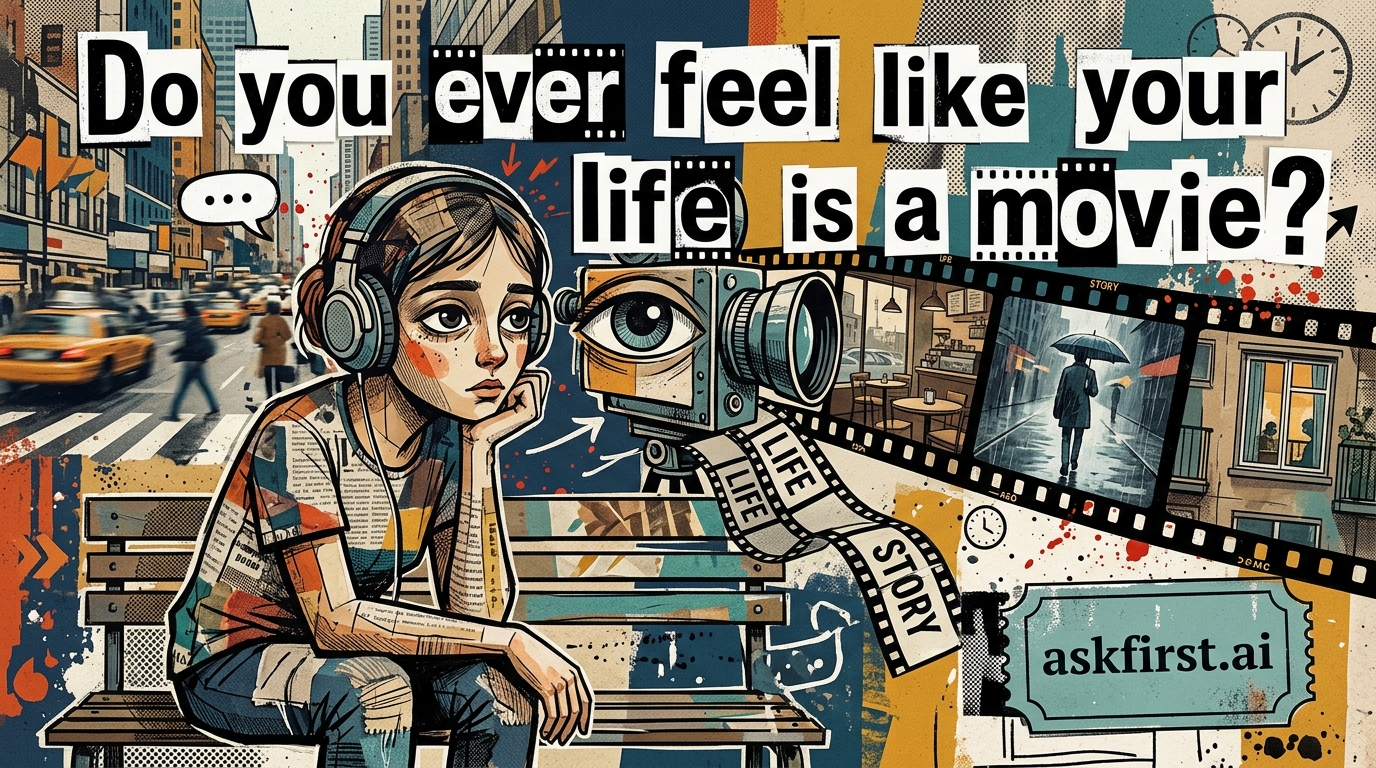
Many individuals report a recurring experience often referred to as the 'Main Character Syndrome' or, more broadly, the feeling that one's life is unfolding like a scripted cinematic production. This perception is not merely a flight of fancy; it is rooted in deep-seated psychological mechanisms that help the human brain organize complex experiences into coherent narratives. When the world feels curated, rhythmic, or meaningful in a way that echoes Hollywood storytelling, it often stems from how cognitive schemas process information through the lens of episodic memory.
The Role of Narrative Psychology
Human beings are inherently storytelling animals. According to narrative psychology, individuals construct their identities by integrating their experiences into internalized narratives. This process provides a sense of continuity and purpose. When a person observes a pattern of coincidences—such as meeting a person exactly when a specific song plays or finding an object just as it is needed—the brain labels this as 'narrative resonance.' This is not supernatural; it is the brain finding order in the chaos of entropy. Psychologists often cite this as an example of pattern recognition, a survival mechanism designed to help ancestors navigate environments by predicting outcomes based on sequential events.
Psychological Hooks and Cognitive Bias
Several cognitive biases contribute to the cinematic sensation:
- The Spotlight Effect: This cognitive bias leads people to overestimate the extent to which their actions and appearance are noticed by others. In a movie, the camera is always focused on the protagonist. When individuals feel they are constantly being 'watched' or assessed, they adopt the perspective of a movie director, observing themselves from an external, objective viewpoint.
- The Narrative Fallacy: This refers to the tendency to create stories out of facts to make sense of the world. By stitching together unrelated occurrences into a 'plot,' the mind effectively turns mundane Tuesday afternoon errands into a 'montage' sequence.
- Availability Heuristic: Because media consumption is so pervasive, the brain uses cinematic tropes as a mental shortcut to categorize and interpret life events. If a situation mirrors a familiar genre trope, such as the 'hero's journey' or 'rom-com serendipity,' the brain interprets it through that existing framework.
The Biological Perspective on 'Cinematic Flow'
When life feels like a movie, it is often accompanied by a state of 'flow.' Flow, a concept developed by psychologist Mihaly Csikszentmihalyi, occurs when an individual is fully immersed in an activity. During this state, the sense of time often distorts, and actions seem to unfold with a fluid, pre-determined quality. In cinematic terms, this is the 'action sequence' of existence. Neurochemically, this state is associated with a balance of dopamine and norepinephrine, allowing for hyper-focus and a feeling that the events are perfectly choreographed. Research suggests that high-engagement activities trigger this perception, making reality feel as vivid and intentional as a high-budget film.
Sociological Impacts of Media Culture
It is impossible to ignore the impact of digital media on self-perception. In the age of social media, everyone maintains a personal feed, which functions much like a documentary or a vlog. By constantly curating 'highlight reels' for public consumption, individuals effectively learn to view their own lives as consumable content. This creates a feedback loop: people start living with the awareness of an 'audience,' even if that audience is hypothetical. This self-consciousness is the catalyst for the cinematic feeling, as individuals begin to frame their daily interactions through the lens of a director rather than a participant. Studies in media sociology suggest that this 'hyper-awareness' changes how events are remembered; memories become less about raw data and more about the aesthetic quality of the moment.
Conclusion: Harnessing the Narrative
Viewing life as a movie does not necessarily imply detachment or narcissism. For many, it acts as a powerful tool for resilience and proactive living. If one views oneself as the protagonist of a film, one is more likely to view challenges as 'rising action' or 'plot twists' that must be overcome to reach the resolution. This re-framing technique—known as cognitive reframing—is often used in therapy to help individuals gain a sense of agency over their circumstances.
Ultimately, whether the feeling is an evolutionary byproduct, a cognitive bias, or a social construct, it serves a profound purpose. It provides a structure to navigate the complexities of existence, allowing individuals to extract meaning from the seemingly random occurrences of everyday life. By embracing the 'cinematic' nature of existence, one can turn the page of their own life story with intentionality, curiosity, and a sense of wonder, effectively directing the course of their own future.