The Paradox of Wealth: Why Less Often Becomes More
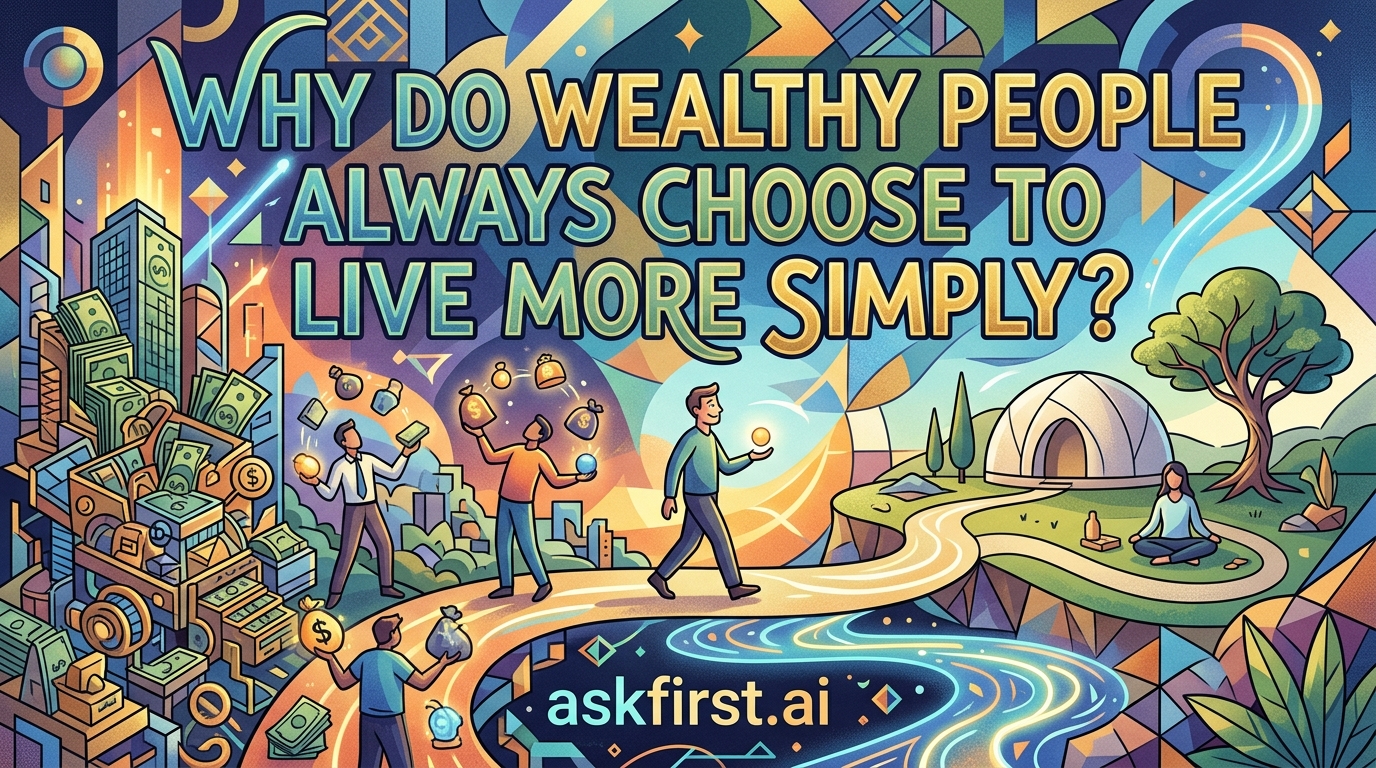
It is a recurring observation that many of the world’s most successful and affluent individuals, from legendary tech entrepreneurs to self-made billionaires, eventually pivot toward lives characterized by extreme minimalism. This phenomenon, often referred to as the 'Wealthy Minimalism' trend, is not merely a stylistic choice but a calculated psychological and strategic evolution. When individuals reach a point where financial barriers no longer exist, the challenge shifts from 'how to acquire' to 'how to manage,' leading them toward the following principles of intentional living.
The Psychology of Decision Fatigue
One of the primary drivers behind this transition is the cognitive science of decision fatigue. High-level executives and entrepreneurs process hundreds of critical decisions every single day. Each decision, no matter how small, depletes a finite reserve of cognitive energy. By simplifying personal aspects of life—such as clothing choices, interior design, or dining routines—these individuals preserve their mental bandwidth for high-stakes problem-solving. As noted in numerous management studies, reducing the trivial variables of daily existence allows the brain to focus on complex, creative, and strategic objectives. This is why many iconic figures, such as Steve Jobs or Mark Zuckerberg, adopted signature 'uniforms'; it eliminates a redundant decision from the morning routine, freeing mental space for innovation.
Valuing Time Over Materialism
As wealth increases, the opportunity cost of time becomes overwhelmingly apparent. Wealthy individuals realize that luxury often comes with an 'administrative tax.' A massive estate, a fleet of vehicles, or an extensive collection of art requires maintenance, security, management, and time. Minimalism offers an escape from this burden. By opting for simplicity, they reclaim autonomy. Instead of spending hours managing assets or coordinating staff, they utilize their time for activities that yield higher personal growth: learning, physical health, philanthropy, or deepening relationships. Wealth, in this context, buys the ultimate luxury: the freedom to be unavailable for unnecessary complications.
Redefining Status Symbols
Sociological shifts have altered what constitutes high status. In an era of mass-produced luxury goods, traditional displays of wealth have become increasingly accessible. Consequently, true status has migrated toward 'stealth wealth.' This involves valuing quality, provenance, and subtlety over ostentation. Living simply is, ironically, a display of elite status—it signals that the individual is so secure in their position that they no longer require external validation through expensive branding. This 'quiet luxury' is a filter that separates those who are chasing status from those who have already attained it. As Veblen’s theory of conspicuous consumption is re-evaluated in the digital age, simplicity becomes the ultimate mark of distinction.
Hedonic Adaptation and the Pursuit of Meaning
Psychology explains the concept of 'hedonic adaptation'—the tendency of humans to quickly return to a baseline level of happiness despite major positive or negative events. Buying a high-end car provides a fleeting spike in dopamine, but the joy fades rapidly as the acquisition becomes part of the daily environment. Conversely, wealthy individuals often find that deep satisfaction stems from experiential gains rather than material ones. Minimalism aligns with the pursuit of eudaimonia—a concept originating from Greek philosophy that focuses on living a meaningful life through virtue and personal growth. Simplifying the physical environment clears the clutter, allowing one to pursue long-term projects and philanthropic goals that provide sustained fulfillment, rather than temporary chemical rewards from consumption.
The Role of Stoicism and Mindful Stewardship
Many high-net-worth individuals are increasingly drawn to Stoic philosophy, which emphasizes the separation of one's inner peace from external circumstances. Stoicism teaches that true resilience comes from detaching one's self-worth from material possessions. By consciously choosing a simple lifestyle, successful individuals practice the 'reserve clause'—maintaining the knowledge that they could lose their fortune and still maintain their identity and dignity. This mindset shift transforms wealth from a tool of vanity into a tool of stewardship. When the focus shifts away from accumulation, the focus naturally turns toward legacy, sustainability, and the broader impact one can have on the world. Simplifying personal life is, in essence, an exercise in emotional intelligence and discipline, ensuring that success does not lead to stagnation or entitlement, but rather to a refined clarity of purpose.