The Fundamental Disconnect Between Logic and Abstraction
The primary reason software engineers find it difficult to explain their craft during social encounters lies in the high level of abstraction inherent in programming. Unlike professions where the output is tangible—such as architecture, where one can point to a building, or culinary arts, where one can share a meal—coding exists in a realm of pure, invisible logic. When a programmer attempts to explain their daily tasks, they are often describing a complex series of nested conditional statements and algorithmic optimizations that lack physical form.
The Problem of Domain Specificity
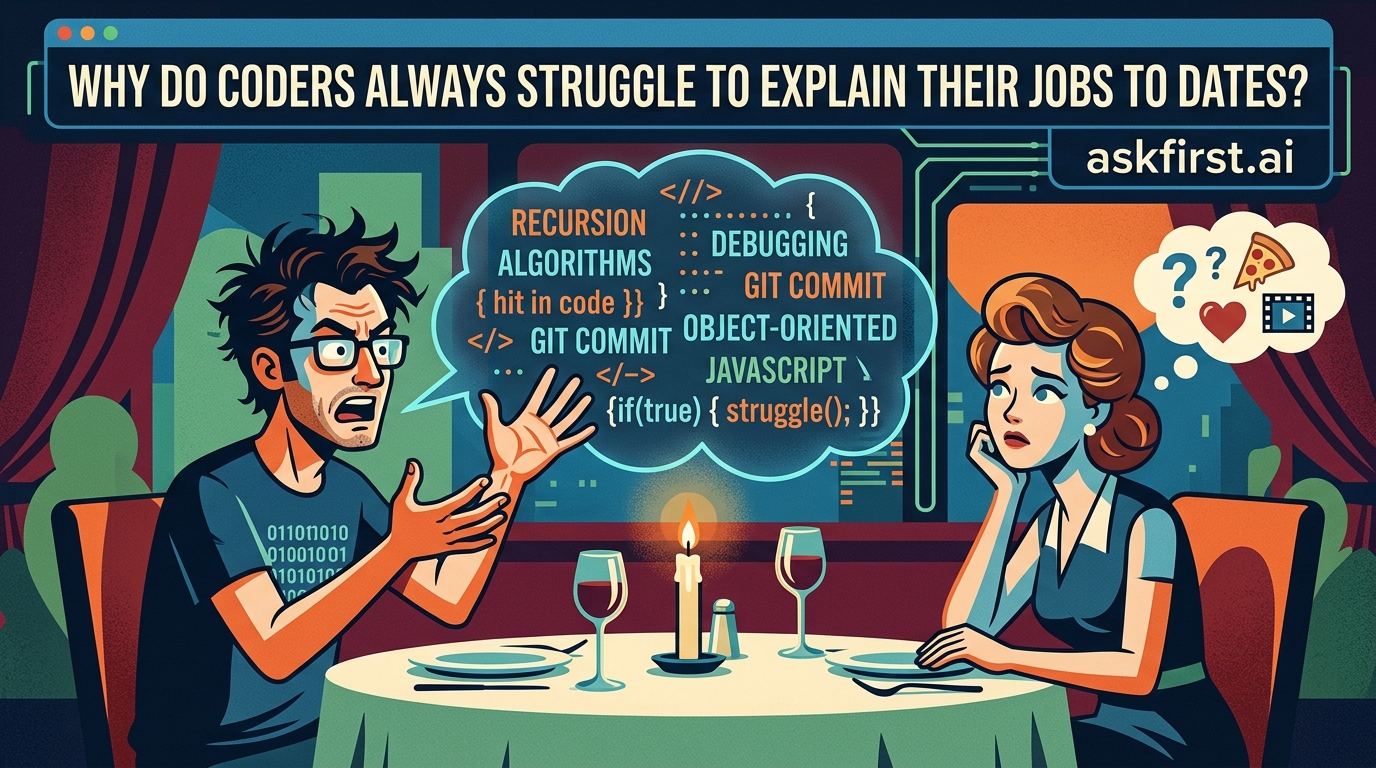
Coders operate within specialized domains, often dealing with architecture, backend infrastructure, or frontend user experience. Attempting to translate 'debugging a race condition in a multi-threaded asynchronous environment' into 'everyday language' leads to what linguists call the semantic gap. This phenomenon occurs when there is no shared vocabulary between the speaker and the listener. The audience lacks the mental model required to visualize the abstract concepts being described, which leads to immediate cognitive fatigue on the part of the listener.
- The Linguistic Barrier: Coders use jargon as a tool for precision. Replacing 'latency in API calls' with 'internet speed' is a lossy translation that ignores the nuance of server-side processing.
- The Invisible Output: A successfully written piece of code is one that works perfectly and goes unnoticed by the user. Therefore, there is no 'product' to show, only the lack of errors.
The 'Wizardry' Myth and Reality
Common myths suggest that coding is akin to magic or high-level mathematics. However, the reality is far more grounded. It is a process of relentless problem-solving and structured design. When a coder tries to bridge the gap, they often lean into technical metaphors that fail to convey the creative or analytical aspects of the role. The partner, hearing terms like 'syntax errors' or 'refactoring,' often feels overwhelmed by the complexity of a field that they do not understand, resulting in a defensive mechanism where the listener shuts down emotionally.
The Role of 'Cognitive Load' in Conversation
Effective communication relies on a shared baseline of understanding. When a software developer speaks, they often assume a certain level of technical literacy. If the date does not possess this background, the developer faces a difficult choice: dumb down the explanation to the point of inaccuracy, or speak technically and risk sounding condescending or boring. This dilemma creates a barrier where the developer stops trying to explain the 'how' and 'what' and simply settles for the label of 'computer guy' or 'coder.'
Strategic Communication for Technical Professionals
To bridge this divide, developers are encouraged to pivot away from the process of coding and instead focus on the value delivery of their work. A more effective approach is to describe the impact of the software on the end-user rather than the architecture of the codebase itself.
- Focus on Impact: Instead of explaining the implementation of a database migration, focus on how the feature makes the user's life easier or faster.
- Use Relatable Analogies: Explain the software development lifecycle as building a house. Planning the foundation is equivalent to designing the system architecture, and fixing a bug is like repairing a leaky pipe behind the wall.
- Embrace Curiosity: Ask the listener questions about their perception of technology to build a conversation that is bidirectional rather than a one-sided lecture.
The Psychological Aspect: Passion vs. Alienation
Coders are often deeply passionate about their work, but this passion can be perceived as an intense focus on things that the general public finds cold or impersonal. By humanizing the process—focusing on the collaborative effort of teams, the struggle of solving a complex puzzle, or the satisfaction of seeing a project go live—the conversation shifts from technical jargon to shared human experiences. The frustration experienced by coders in dating is essentially a failure to bridge the gap between their mental world of machine logic and the human world of interpersonal emotional connection. By simplifying the why rather than the how, developers can foster better understanding and deepen connections.