The Landscape of Free Online Education: A Comprehensive Guide to Lifelong Learning
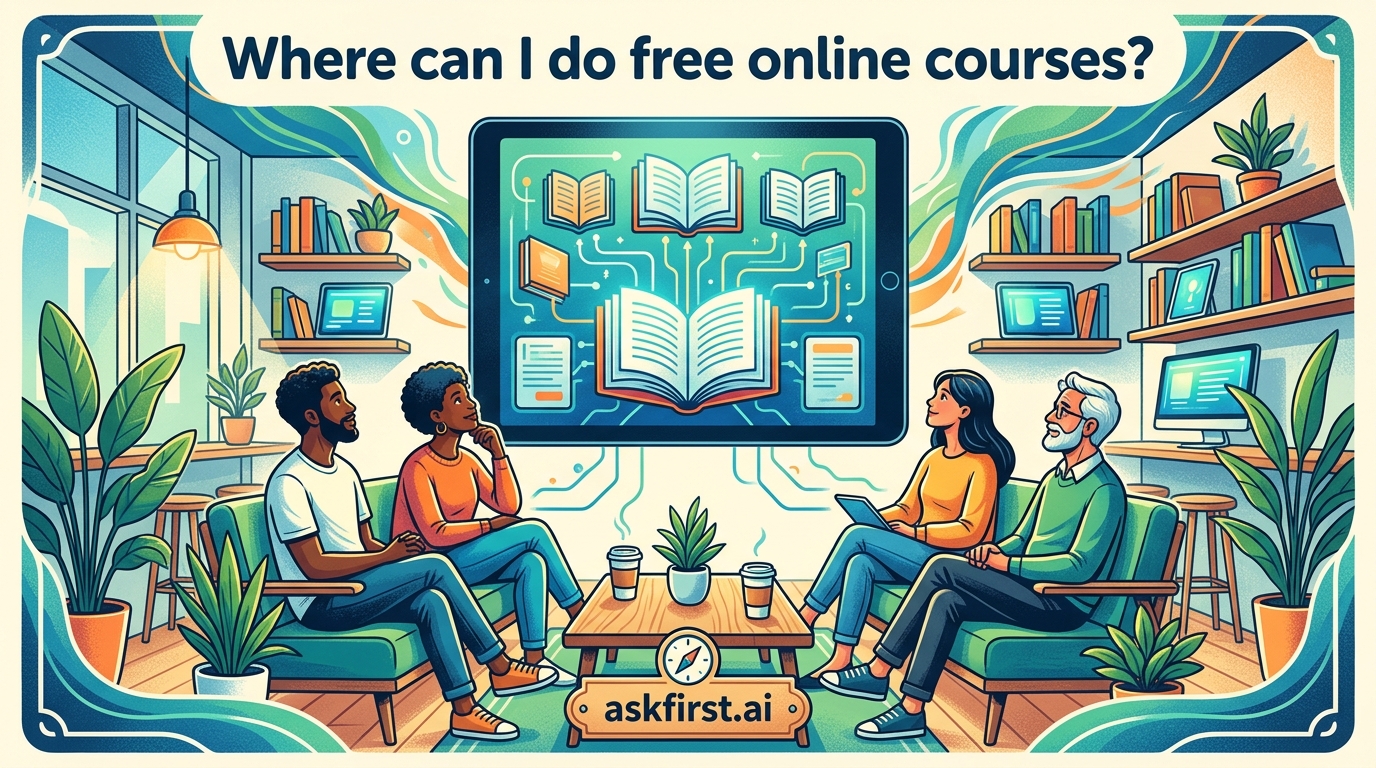
The democratization of knowledge is one of the most significant achievements of the digital age. Today, high-quality education is no longer confined to the ivy-covered walls of elite universities; it is accessible to anyone with a stable internet connection. Whether you are looking to pivot your career, master a new programming language, or explore the humanities, the wealth of free online resources is vast. However, navigating this abundance requires a discerning eye to distinguish between superficial content and rigorous, academic-grade instruction.
Below is a structured guide to the most reputable platforms where you can pursue high-quality, free online education.
1. The Powerhouses: Massive Open Online Courses (MOOCs)
The MOOC movement, pioneered by institutions like Stanford and MIT, remains the gold standard for structured, university-level learning. These platforms partner with top-tier global universities to offer courses that mirror the rigor of traditional undergraduate and graduate programs.
- edX: Founded by Harvard University and MIT, edX is a non-profit platform that hosts courses from world-class institutions like Oxford, Berkeley, and ETH Zurich. While edX offers paid certificates, they provide an "audit" option for the vast majority of their catalog. By selecting the audit track, you gain full access to all course materials, lectures, and readings for free.
- Coursera: While Coursera has pivoted toward professional certifications, it maintains a robust catalog of free courses. Similar to edX, you must navigate to the specific course page and look for the "Audit" button, which allows you to bypass the payment wall while still accessing the core educational content.
- MIT OpenCourseWare (OCW): For those seeking pure, unfiltered academic rigor, MIT OCW remains an unparalleled resource. Unlike MOOC platforms, OCW is a web-based publication of virtually all MIT course content. There is no enrollment, no deadlines, and no certificates—just the raw lecture notes, assignments, exams, and reading lists used by MIT students. It is perhaps the most honest representation of a university education available online.
2. Specialized Platforms for Technical and Creative Skills
If your goal is to acquire practical, hands-on skills—such as software development, data science, or digital design—dedicated technical platforms are often more effective than traditional university courses.
- freeCodeCamp: This is arguably the most effective resource for anyone aspiring to become a software developer. Founded by Quincy Larson, freeCodeCamp operates on a project-based curriculum. Users learn by building real-world applications, moving from basic HTML/CSS to complex backend architectures. The community-driven nature of the platform, paired with its rigorous certification projects, makes it a staple in the tech industry.
- Khan Academy: Founded by Salman Khan, this platform is the bedrock of supplemental education. While it covers K-12 subjects, its advanced sections on multivariable calculus, linear algebra, and macroeconomics are used by university students worldwide. It is entirely free, ad-free, and supported by philanthropy, ensuring that the barrier to entry remains non-existent.
3. Institutional Repositories and Open Educational Resources (OER)
Beyond structured courses, there are massive repositories of open-source knowledge that offer the same materials utilized in professional training and academic research.
- The Open University (OpenLearn): Based in the United Kingdom, The Open University provides a massive library of free learning materials via their "OpenLearn" portal. These courses are broken down into manageable "hours of study" and cover everything from history and psychology to complex engineering principles.
- Google Digital Garage: For those interested in digital marketing, data analytics, and cloud computing, Google offers a suite of free courses. These are particularly valuable because they are industry-recognized and designed to bridge the "skills gap" between academic theory and workplace reality.
4. Strategic Approaches to Learning
To truly benefit from these resources, one must treat online learning with the same discipline as a physical classroom. In his influential book Ultralearning, Scott Young argues that the most effective learners are those who employ "meta-learning"—the act of learning how to learn.
Tips for success:
- Set a Schedule: Without the external pressure of tuition or physical presence, it is easy to procrastinate. Block out specific hours in your calendar dedicated solely to your coursework.
- Engage with the Community: Most platforms offer forums. Use them. Explaining a concept to a peer is one of the most effective ways to solidify your own understanding, a concept supported by the "Feynman Technique," named after the Nobel Prize-winning physicist Richard Feynman.
- Curate Your Path: Don't just pick random courses. Create a "learning roadmap" that aligns with your professional or personal goals. For example, if you want to enter data science, follow a structured path of Statistics → Python → SQL → Machine Learning.
Conclusion
The tools for self-improvement are currently at their historical zenith. Platforms like MIT OpenCourseWare, freeCodeCamp, and edX provide the necessary infrastructure to gain a world-class education without the burden of student debt. The challenge today is not a lack of access, but a lack of focus. By selecting a reputable platform, structuring your study time, and engaging deeply with the material, you can acquire the skills necessary to excel in an increasingly competitive global economy. The cost of entry has been reduced to zero; the only investment required now is your time and your persistence.