The Psychology of Minimalist Wealth: Beyond the Brand Label
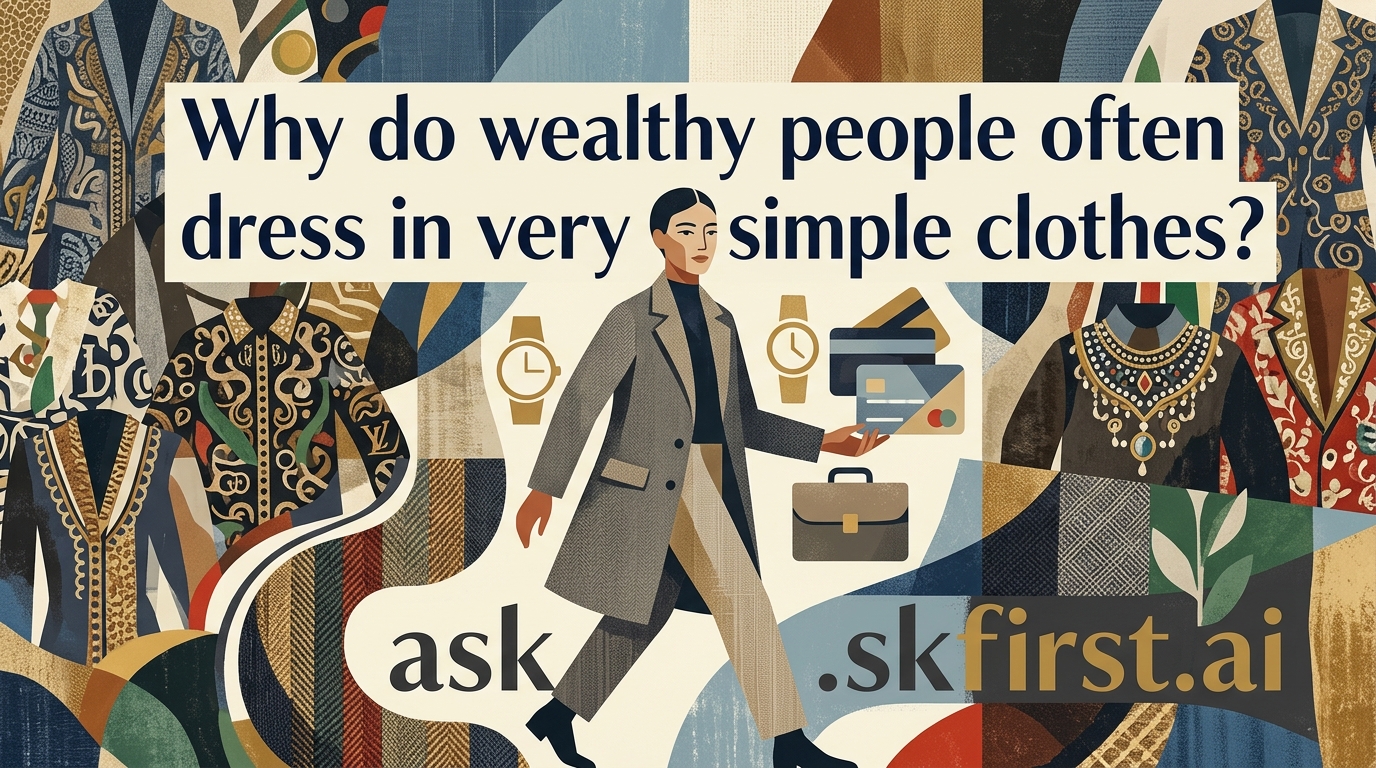
It is a recurring phenomenon that triggers curiosity among the masses: the wealthiest individuals in society—visionaries, CEOs, and titans of industry—often eschew luxury fashion houses in favor of plain grey t-shirts, unbranded jeans, or monotonous sweaters. This departure from ostentatious displays of wealth represents a significant psychological and strategic shift known as the 'quiet luxury' movement or, more formally, the economy of attention. While the average consumer may view fashion as a primary signal of status, the ultra-wealthy often view clothing as a cognitive burden to be optimized.
1. The Decision Fatigue Theory
One of the most scientifically grounded explanations for this trend is the concept of decision fatigue. Psychologists like Roy Baumeister have long argued that human willpower and the ability to make high-stakes decisions are finite resources. Every choice an individual makes—from what to eat for breakfast to which color tie matches a suit—depletes this mental energy. For someone managing a multi-billion dollar organization or solving complex global problems, the morning decision of 'what to wear' is viewed as an unnecessary tax on their mental bandwidth. By adopting a 'uniform' approach—wearing essentially the same outfit every single day—they preserve their executive function for critical decision-making processes, ensuring their mental capital is directed toward innovation rather than aesthetics.
2. The Inverse Signal of Status
In sociological circles, this phenomenon is often analyzed through the lens of 'signaling.' Traditional status symbols, such as logos or high-fashion trends, are designed to signal wealth to the outside world. However, when an individual possesses absolute financial security, they no longer need to prove their status to others. In many high-level professional circles, the ultimate sign of power is the freedom from the constraints of social performance. Wearing expensive, branded clothing can be perceived as 'trying too hard.' Conversely, wearing simple, high-quality basics suggests that the individual is so secure in their position that they are entirely indifferent to external judgment. This is a subtle yet potent assertion of dominance—the luxury of not caring about what one wears is a status symbol far more exclusive than any diamond-encrusted accessory.
3. Focus on Functionality and Quality
Wealthy individuals often prioritize the utility of their garments over their appearance. When one reaches a level of extreme wealth, the value proposition of a garment changes. Rather than seeking a status symbol, they seek items that offer supreme comfort, durability, and practical functionality. Many ultra-high-net-worth individuals purchase bespoke versions of 'simple' items—t-shirts made of rare, long-staple cotton or sneakers engineered for extreme comfort. This is not 'cheap' clothing; it is often highly engineered, minimalist attire that costs a premium but performs significantly better than mass-market fashion. The focus shifts from the 'look' to the 'experience' of the textile and its longevity.
4. The Cultural Shift Toward 'Stealth Wealth'
Historically, wealth was showcased through elaborate displays: heavy gold, complex ornamentation, and expensive fabrics. However, in the modern era, there is a cultural shift toward stealth wealth. This involves a deliberate move away from the conspicuous consumption that characterized previous generations. As income inequality has become a more prominent topic of social discourse, many wealthy individuals have adopted a more humble aesthetic to avoid alienating their peers, employees, or consumers. By dressing simply, they signal humility, approachability, and a focus on meritocracy rather than material acquisition. It suggests: 'I am a worker, not a clothes horse.'
Key Characteristics of the Wealthy Aesthetic:
- Monochromatic Palettes: Primarily blacks, navys, greys, and whites reduce visual noise.
- Logo-less Design: Removing branding shifts the focus from the company to the individual.
- Uniformity: Repeating successful outfits minimizes time spent on daily maintenance.
- Focus on Fabric: Choosing cashmere, silk, or high-grade cotton ensures physical comfort.
Conclusion: The Ultimate Luxury is Simplicity
Ultimately, the move toward simple dressing among the wealthy is a sophisticated form of self-actualization. It is an acknowledgment that true power resides in one's output, intellect, and character, rather than the labels stitched into the back of a collar. For the aspiring leader or the curious observer, this behavior serves as a reminder that the greatest asset one can possess is the ability to clear the mental clutter, focus on the mission at hand, and define one's own sense of style through the lens of authenticity rather than societal pressure. Simplicity, in the hands of the truly wealthy, becomes the ultimate luxury.