The Evolutionary Psychology of Luxury Consumption
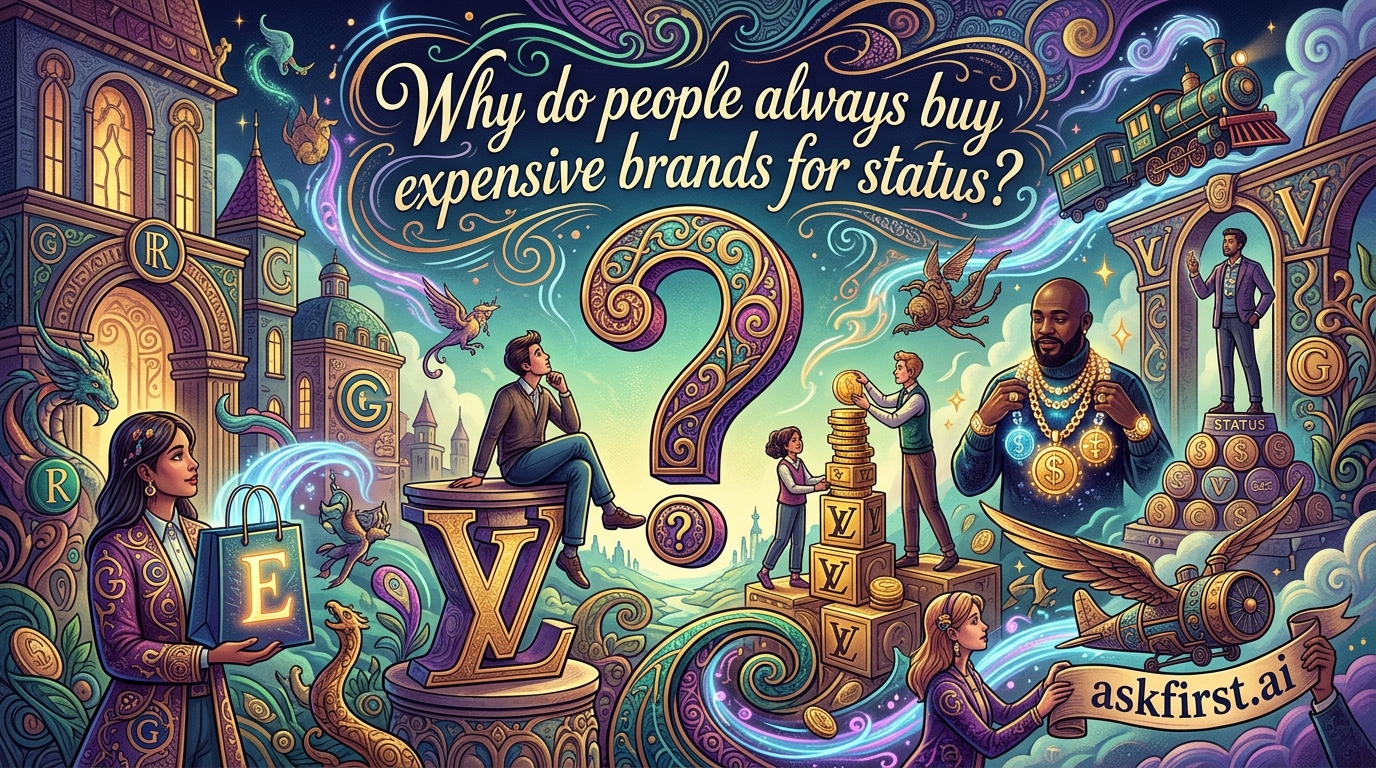
At the intersection of evolutionary biology and modern sociology lies the phenomenon of conspicuous consumption. The drive to acquire expensive brands is rarely about the objective utility of the product itself; rather, it is a sophisticated mechanism of human signaling. Humans have evolved as intensely social beings, where the ability to demonstrate fitness, resource acquisition, and social standing directly correlated with survival and reproductive success for our ancestors. In contemporary society, these biological imperatives have evolved into the complex realm of brand marketing and social identity.
The Signaling Theory of Status
Signaling theory suggests that individuals use 'costly signals' to communicate their quality to others. If a resource is easy to obtain, it carries no status. If a product is exceptionally expensive or difficult to acquire, it functions as an 'honest signal'—a proof of wealth that is difficult for those with fewer resources to mimic. By wearing or using luxury goods, consumers communicate, often subconsciously, that they possess surplus resources, success, or exclusive social access. This behavior is deeply rooted in the 'Peacock Effect,' where animals display extravagant physical traits to prove their genetic superiority or fitness.
Psychological Underpinnings and Social Currency
Social Identity Theory: This theory proposes that people define themselves based on their membership in social groups. Luxury brands act as badges of belonging, signaling membership in an 'in-group' that appreciates the quality or status of a brand.
The Scarcity Heuristic: Humans naturally perceive scarce items as more valuable. Expensive brands utilize artificial scarcity—through limited editions or high entry-level price points—to heighten the desire for the item, regardless of its functional utility.
Psychological Empowerment: Possessing high-status items provides a sense of self-actualization and social confidence. For many, luxury goods serve as an external anchor for self-esteem, compensating for underlying insecurities in a fast-paced, competitive world.
The Role of Veblen Goods in Economics
Economist Thorstein Veblen famously identified 'Veblen goods'—products for which the demand increases as the price increases. This contradicts traditional supply-and-demand curves. These goods satisfy the 'invidious comparison' motive, where consumers aim to distance themselves from those of lower socioeconomic strata. The higher the price, the more effective the item is as a barrier to entry, thus making it more desirable for the social elite who value distinctiveness.
Modern Marketing and the Halo Effect
Modern luxury brands capitalize on the Halo Effect, a cognitive bias where the perception of a positive trait (such as wealth or prestige) in one area influences the overall perception of a person. When an individual is seen with a luxury product, observers often subconsciously attribute other positive qualities to that person, such as high intelligence, professional competence, or superior taste. This phenomenon is amplified by social media, where image curation has become a form of professionalized social signaling.
Mitigating Factors and Cultural Shifts
While the drive for status is universal, its expression is changing. Trends like 'quiet luxury' or 'stealth wealth' indicate that the form of signaling is becoming more subtle. Rather than massive, overt logos, status is now increasingly communicated through discreet indicators of high quality, such as exclusive textiles or niche craftsmanship that only a small circle of 'initiates' recognizes. This shift demonstrates that the goal is not merely to be seen with expensive items, but to signal sophisticated, insider knowledge to one's own social peers.
Summary of Core Motivators
- Fitness Signaling: Demonstrating superiority in resource competition.
- Belonging: Establishing clear social hierarchies and group identity.
- Cognitive Bias: Leveraging the scarcity heuristic and the Halo Effect.
- Social Distinction: Separating oneself from the perceived lower socioeconomic classes.
Ultimately, the compulsion to buy expensive brands is an expression of our desire to navigate and excel within our social hierarchy. By understanding these deep-seated psychological mechanisms, consumers can begin to distinguish between personal preference and socially conditioned status-seeking, leading to more intentional and meaningful consumption patterns. The drive for luxury is not merely vanity; it is a fundamental aspect of human social engineering that has persisted across centuries and will continue to shape global markets for the foreseeable future.