The Eloquence of Absence: Why Silence Often Outspeaks Speech
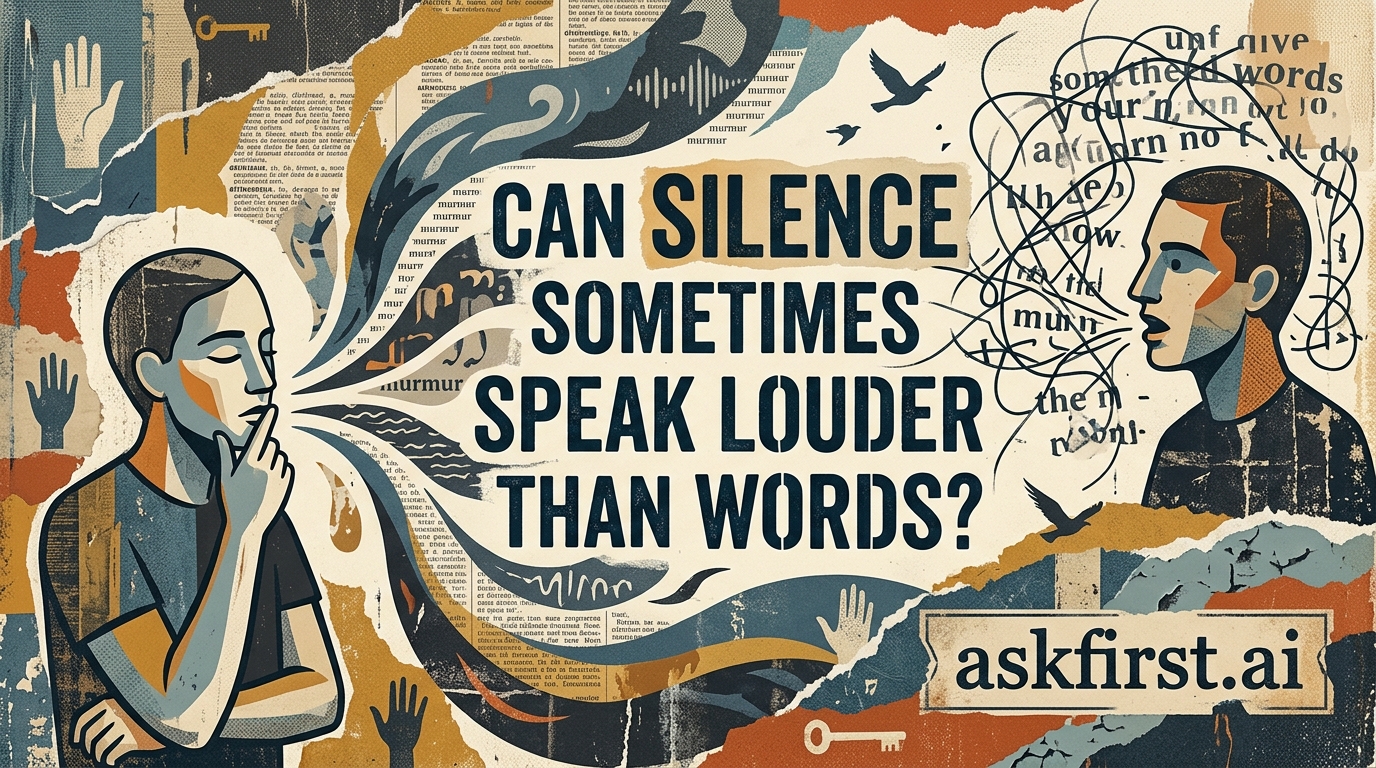
In the cacophony of modern existence, where communication is frequently measured by volume, frequency, and digital footprint, the profound weight of silence is often overlooked. We are conditioned to believe that to be heard is to speak, yet the most transformative moments in human history, psychology, and interpersonal relationships are often defined not by what is articulated, but by what is left unsaid. Silence is not merely the absence of sound; it is a sophisticated, multifaceted tool that commands attention, conveys depth, and forces introspection. When words fail to capture the magnitude of a sentiment, silence steps in as the ultimate medium of expression.
The Psychological Architecture of Strategic Silence
In the field of behavioral psychology, silence is recognized as a powerful mechanism for controlling the flow of information and establishing authority. In his seminal work The 48 Laws of Power, Robert Greene identifies "Law 4: Always Say Less Than Necessary." Greene argues that the more one speaks, the more common one appears, and the more likely one is to say something foolish. By maintaining a measured silence, an individual creates an aura of mystery and confidence.
When a person remains silent during a negotiation or a tense confrontation, they create a "vacuum of information." This vacuum exerts immense psychological pressure on the other party, who often feels compelled to fill the silence with explanations, concessions, or unintended truths. This phenomenon is frequently utilized by master negotiators and trial attorneys. By pausing after a critical question, they allow the weight of the silence to settle, often prompting the witness or opponent to elaborate—and potentially incriminate themselves—simply to alleviate the social discomfort of the quiet.
Silence as a Conduit for Emotional Depth
While speech is the primary vehicle for facts and logistics, silence is the primary vehicle for emotion. In the realm of grief, trauma, or profound love, language often feels reductive. As the philosopher Ludwig Wittgenstein famously wrote in his Tractatus Logico-Philosophicus, "Whereof one cannot speak, thereof one must be silent." This is not a dismissal of the inexpressible, but an acknowledgment that some human experiences exist beyond the boundaries of syntax and grammar.
Consider the "companionable silence" between long-term partners. In these instances, silence is not a void; it is a testament to shared history and mutual understanding. It signals a level of intimacy where the need for external validation through speech has been replaced by the comfort of presence. Conversely, the "cold shoulder" or the "pregnant pause" in a failing relationship communicates volumes of resentment, disappointment, or detachment that a thousand words could not clarify. The silence here is loud precisely because it signals a breakdown in the desire to connect.
The Cultural and Spiritual Dimension of Quietude
Throughout history, silence has been revered as a prerequisite for wisdom. In the Zen Buddhist tradition, as explored in Shunryu Suzuki’s classic Zen Mind, Beginner's Mind, silence is not just a practice but a state of being. It is through the quietude of the mind that one achieves clarity. Silence acts as a mirror; when we stop the constant output of words, we are forced to confront our own thoughts, anxieties, and truths.
In institutional settings, the "moment of silence" is a universal ritual used to signify respect, mourning, or solemnity. It is a collective recognition that words are inadequate to honor the gravity of a tragedy or the heroism of a sacrifice. By stripping away language, we create a space where the collective consciousness can process complex emotions without the distraction of rhetoric. This demonstrates that silence is not passive; it is an active, communal performance of respect.
Silence in the Digital Era: A Lost Art
We currently live in an era of "compulsive communication." Social media platforms are designed to incentivize constant output, leading to what many sociologists call "the inflation of discourse." When everyone is speaking, nothing is heard. In this climate, the ability to remain silent becomes an act of radical rebellion.
To practice silence is to reclaim agency over one's own narrative. It requires the discipline to withhold judgment, the patience to listen, and the courage to exist without the need for constant external verification. When we choose to be silent instead of reacting impulsively, we signal that our thoughts are deliberate and our presence is intentional.
Conclusion: The Weight of the Unspoken
Silence is rarely empty. It is heavy with the subtext of our intentions, the depth of our listening, and the boundaries of our respect for others. Whether it is the tactical pause in a boardroom, the profound stillness between lovers, or the meditative quiet of the cloister, silence serves as a bridge to a deeper understanding of the human condition.
As we navigate an increasingly noisy world, we would do well to remember that the most impactful messages are often those that are never vocalized. By mastering the art of silence, we do not merely refrain from speaking; we create the necessary space for truth, empathy, and wisdom to emerge. In the end, words may build the house of our thoughts, but it is silence that provides the foundation upon which they stand.