The Digital Paradox: Evaluating the Societal Impact of Social Media
The advent of social media has fundamentally restructured the architecture of human communication. In less than two decades, platforms like Facebook, X (formerly Twitter), Instagram, and TikTok have transitioned from niche networking sites into the primary infrastructure of global public discourse. As we stand in mid-2026, the debate regarding whether these platforms serve as a net positive or a net negative for society remains one of the most contentious topics in sociology, psychology, and political science. To determine if social media is doing more harm than good, one must weigh the democratic potential of connectivity against the documented erosion of mental health, privacy, and social cohesion.
The Democratization of Information and Global Connectivity
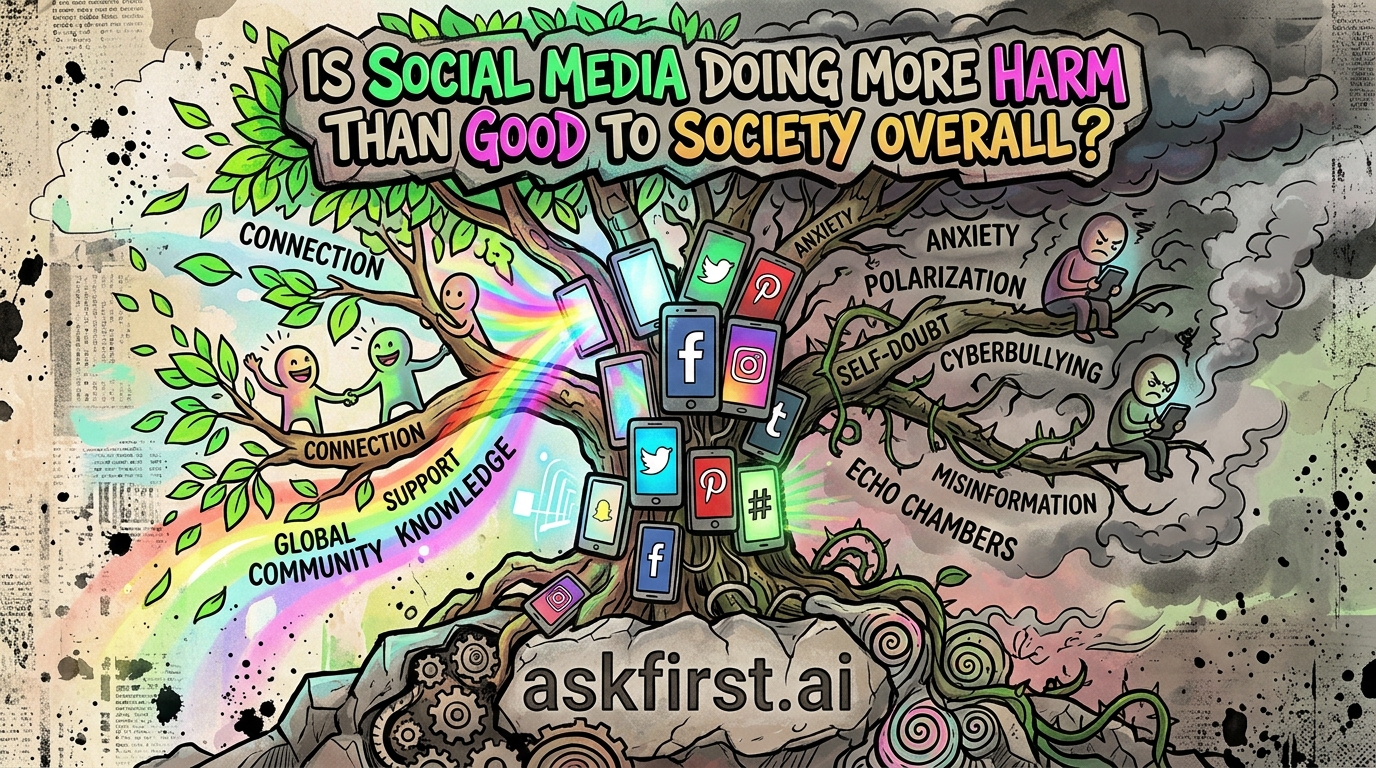
At its inception, the promise of social media was rooted in the democratization of information. It provided a voice to the voiceless, allowed for the rapid mobilization of social movements, and facilitated the maintenance of relationships across vast geographical distances.
In The Shallows: What the Internet Is Doing to Our Brains, author Nicholas Carr notes that the internet has revolutionized how we access information, allowing for unprecedented levels of collaborative learning. During humanitarian crises, natural disasters, or political uprisings—such as the Arab Spring or various global social justice movements—social media acted as a vital tool for real-time information dissemination and grassroots organizing. By bypassing traditional media gatekeepers, individuals gained the agency to document events as they unfolded, forcing transparency on institutions that previously operated in the shadows.
Furthermore, social media serves as a lifeline for marginalized communities. Individuals with niche interests, rare health conditions, or those living in isolated environments often find support systems that were historically impossible to cultivate. This "community-building" aspect is a profound benefit, fostering a sense of belonging in a world that can often feel fragmented and alienating.
The Erosion of Mental Health and Cognitive Well-being
Conversely, the psychological toll of social media is a growing crisis that cannot be ignored. The design philosophy of these platforms—often referred to as the "Attention Economy"—is predicated on maximizing time-on-site through algorithmic reinforcement.
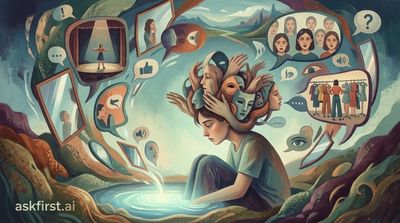
Social psychologist Jonathan Haidt, in his extensive research on the subject (notably in his analyses of the "anxious generation"), has highlighted the correlation between the rise of smartphone-based social media and the surge in adolescent anxiety, depression, and self-harm. The constant exposure to curated, idealized versions of other people’s lives creates a pervasive environment of social comparison. This phenomenon, often termed "Facebook Depression," occurs when users perceive their own lives as inadequate in comparison to the highlight reels of others.
Moreover, the dopamine-driven feedback loops inherent in "likes," "shares," and "comments" mirror the mechanics of addictive substances. This constant stimulation has been linked to shortened attention spans and cognitive fragmentation. As Sherry Turkle argues in her book Alone Together: Why We Expect More from Technology and Less from Each Other, we are increasingly tethered to our devices, sacrificing deep, reflective conversation for the superficial efficiency of digital interaction. This transition has led to a paradoxical state where we are more connected than ever, yet feel profoundly lonely.
Polarization, Misinformation, and the Fragmentation of Truth
Perhaps the most significant harm posed by social media is its impact on the democratic process. The algorithms that power platforms like X and Facebook prioritize "engagement," which is most effectively generated by content that triggers strong emotional reactions, particularly outrage and fear.
This algorithmic bias creates "echo chambers" or "filter bubbles," where users are predominantly exposed to information that reinforces their existing biases. Eli Pariser, in his seminal work The Filter Bubble: What the Internet Is Hiding from You, warned that this phenomenon would isolate individuals from opposing viewpoints, making constructive debate nearly impossible. When a society loses its shared foundation of objective truth, political polarization inevitably accelerates.
Concrete examples of this can be seen in the rapid spread of misinformation and conspiracy theories during global health crises or election cycles. The speed at which false information travels—often outpacing verified, nuanced reporting—has destabilized public trust in institutions, science, and the very concept of objective reality. When truth becomes a matter of personal preference rather than evidence, the fabric of civil society begins to fray.
Privacy and the Surveillance Capitalist Model
We must also consider the economic model underpinning social media: "Surveillance Capitalism," a term coined by Shoshana Zuboff in her book The Age of Surveillance Capitalism. In this model, human experience is treated as free raw material for hidden commercial practices of extraction, prediction, and sales.
Users are not the customers; they are the product. The systematic harvesting of personal data allows corporations to manipulate consumer behavior and influence political outcomes with terrifying precision. This massive imbalance of power, where a handful of tech giants possess more data on individual citizens than most governments, poses a significant threat to individual autonomy and the democratic ideal of a private life.
Conclusion: A Dual-Edged Sword
Is social media doing more harm than good? The answer is not binary, but rather a reflection of the tools themselves: they are powerful amplifiers of human nature. They amplify our capacity for connection, but they also amplify our propensity for division, vanity, and addiction.
The harm currently appears to be outweighing the benefits because our social, legal, and educational institutions have failed to keep pace with the rapid evolution of digital technology. To mitigate the damage, society requires a multi-faceted approach: rigorous data privacy legislation, algorithmic transparency, and a renewed emphasis on digital literacy in schools. Without these guardrails, social media risks continuing its trajectory as a force that fractures the very society it was intended to connect. We are at a crossroads; the future of our digital existence depends not on the technology itself, but on our collective willpower to regulate it for the common good.