The evolution of social norms is a relentless tide, constantly eroding the boundaries of what is considered "shocking" and reshaping them into the mundane. Looking back through history, we see that many behaviors, technologies, and social structures now woven into the fabric of daily life were once met with moral panic, legal prohibition, or profound social ostracization. Understanding these shifts reveals that "normality" is not a fixed point, but a moving target dictated by the prevailing cultural zeitgeist.
The Evolution of Public Attire: From Scandal to Standard
Perhaps the most visceral example of shifting norms is the evolution of fashion, particularly regarding women’s swimwear and athletic wear. In the early 20th century, the mere sight of a woman’s ankles or calves in a public space was considered provocative. According to The Evolution of Fashion by historian Valerie Steele, the transition from the heavy, wool-based "bathing costumes" of the 1900s—which required stockings and shoes—to the revealing two-piece bikini of the mid-century was met with intense legislative resistance.
In the 1920s, beach inspectors in the United States famously used measuring tapes to ensure that women’s swimsuits did not rise too far above the knee. Today, a bikini is standard attire at any public beach or pool. This shift demonstrates how society recalibrates its definition of modesty based on the prevailing comfort levels of the era, moving from a culture defined by rigid moral surveillance to one that prioritizes individual choice and anatomical exposure.
Digital Connectivity and the Death of Privacy
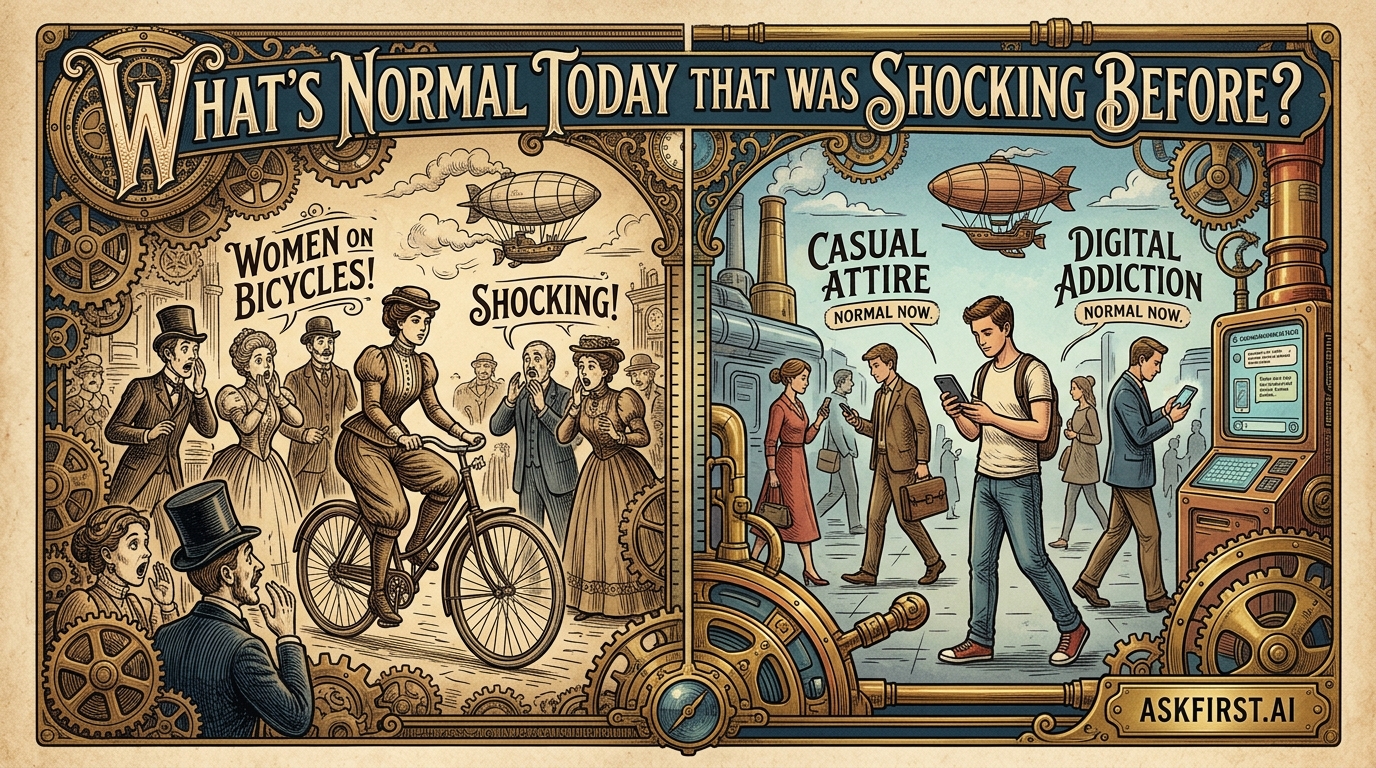
In the late 1990s, the concept of sharing one’s daily life with strangers via the internet was seen as a dangerous, antisocial, and potentially predatory behavior. In his seminal work The Age of Surveillance Capitalism, Shoshana Zuboff details how the transition from the nascent internet to the era of social media fundamentally altered our psychological boundaries.
Twenty-five years ago, the mantra "don't talk to strangers on the internet" was a universal safety rule for children and adults alike. Today, we broadcast our political opinions, our vacation photos, and our dietary habits to thousands of followers without a second thought. Being "offline" is now viewed with more suspicion than being hyper-connected. This transition highlights a massive psychological pivot: we have traded our privacy for the social currency of connectivity, a trade that would have been viewed as a surrender of dignity by previous generations.
The Destigmatization of Mental Health
For much of the 20th century, mental health was a subject shrouded in silence, often relegated to the shadows of private medical history or institutionalization. As documented by Andrew Solomon in his definitive book The Noonday Demon: An Atlas of Depression, the public discourse surrounding mental illness was historically characterized by shame and the "hush-hush" culture of the mid-century.
Today, discussing anxiety, depression, or burnout in a professional or casual setting has become increasingly normalized. High-profile figures, athletes, and corporate leaders frequently speak about their therapy sessions and mental health struggles. What was once a "shocking" admission of weakness is now categorized as a responsible act of self-care. This shift represents a profound maturation in our collective understanding of human biology and psychology, moving away from moral judgment toward a medicalized, empathetic framework.
The Transformation of the Domestic Sphere
The traditional family structure has undergone a radical transformation that would have been unrecognizable to someone living in the 1950s. The normalization of cohabitation before marriage, the rise of single-parent households, and the legal recognition of same-sex unions are all examples of structural shifts that were once deemed radical.
In The Way We Never Were: American Families and the Nostalgia Trap, Stephanie Coontz argues that the "traditional" nuclear family was a historical anomaly rather than a timeless standard. The fact that we now view diverse domestic arrangements as the baseline for a modern society is a testament to the decoupling of social status from rigid, archaic family models. What was once considered a "scandalous" living situation is now simply a matter of personal logistics.
Conclusion: The Fluidity of the Human Experience
The items discussed above—public exposure, digital transparency, mental health awareness, and domestic diversity—all share a common thread: they were once deemed threats to the social order. Yet, as time progresses, the "shocking" becomes "conventional." This process is driven by generational turnover and the relentless advancement of technology, which forces us to adapt our moral compasses to new realities.
We must recognize that the norms we hold dear today will likely be viewed as antiquated or even bizarre by the generations that follow us. The lesson here is not that we should abandon our values, but that we should hold them with a degree of humility, acknowledging that "normal" is merely a consensus, not an absolute truth. By studying these shifts, we gain the ability to navigate a changing world with greater perspective, recognizing that today’s shock is merely tomorrow’s tradition.