The Psychology of Success: Dress for Success vs. Financial Reality
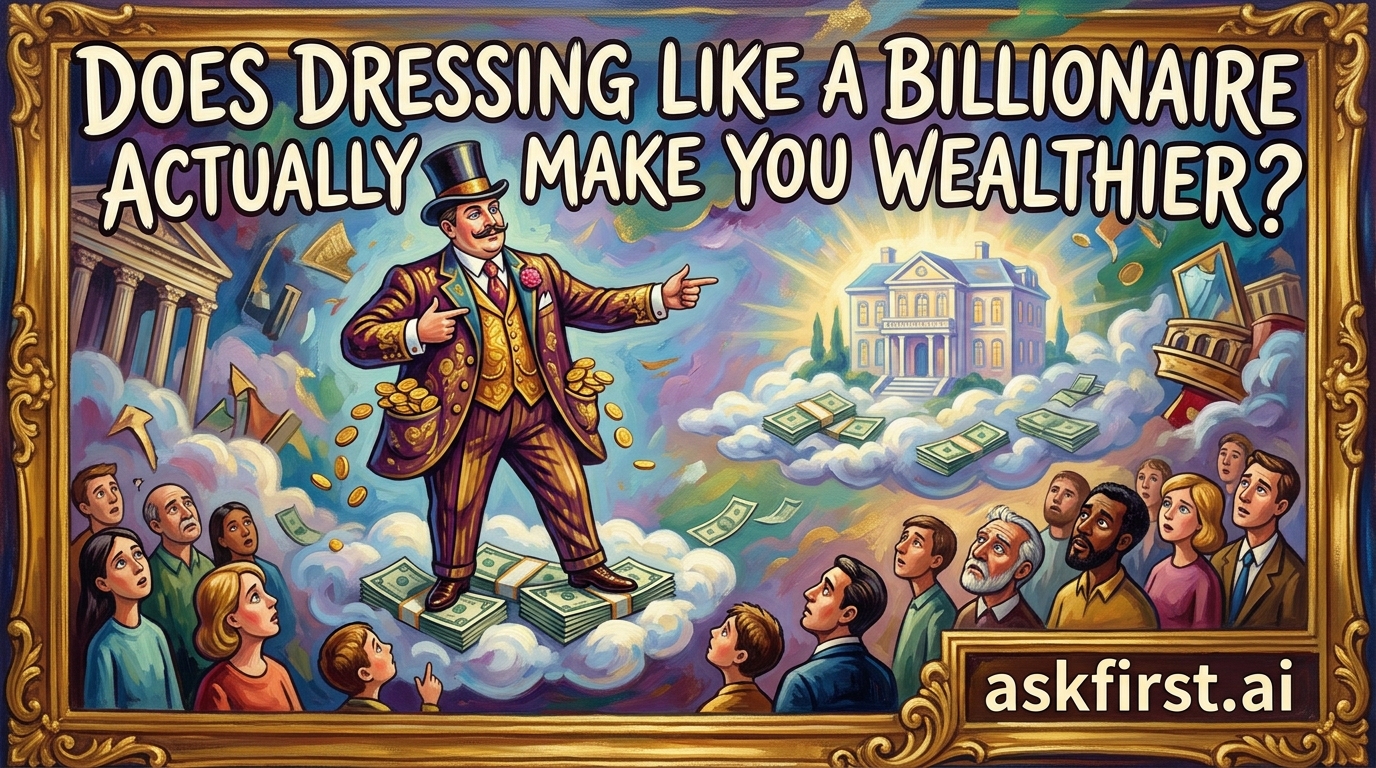
The age-old adage 'dress for the job you want, not the job you have' has permeated professional culture for generations. Many individuals subscribe to the belief that curating an aesthetic consistent with immense wealth can trigger a psychological shift that leads to greater prosperity. However, the correlation between personal sartorial choices and actual balance sheets is far more nuanced than simple outward appearance. While dressing well can influence social perception, it is not a direct driver of wealth creation.
The Signaling Theory of Fashion
In economic terms, clothing acts as a 'signal.' According to signaling theory, individuals use clothing to convey information about their status, competence, and reliability. Conspicuous consumption—the practice of purchasing luxury goods to display economic power—often mimics the habits of the ultra-wealthy. Yet, there is a fundamental paradox here: true billionaires often eschew hyper-branded, ostentatious luxury in favor of 'stealth wealth.'
- The Uniform Effect: Figures like Mark Zuckerberg or the late Steve Jobs utilized a simplified wardrobe to minimize decision fatigue. By removing the daily choice of what to wear, these individuals redirected their cognitive energy toward high-leverage decision-making.
- Signaling Competence: Professionalism is linked to neatness and situational appropriateness rather than the price tag. A well-fitted suit or high-quality professional attire can signal respect for an environment, which may facilitate networking. However, an expensive suit does not compensate for a lack of expertise or business acumen.
The 'Halo Effect' and Cognitive Bias
Human psychology is heavily influenced by the Halo Effect, a cognitive bias where the perception of one positive trait (such as being well-dressed) leads to the assumption that a person possesses other positive traits (like intelligence, trustworthiness, or wealth).
Research indicates that people who are perceived as well-dressed are often treated with greater deference and granted more social capital. This 'premium' in social treatment can indirectly open doors to opportunities, such as securing a mentor, closing a deal, or gaining the trust of a skeptical investor. In this narrow sense, dressing well can be an enabler of success. Nevertheless, this is an effect of social conditioning rather than a magical financial lever. If the underlying work, product, or service quality is absent, the image will ultimately fail to sustain a wealthy trajectory.
Why Appearance Is Not a Wealth Strategy
Wealth accumulation is primarily a function of asset allocation, income generation, and compound interest. None of these financial mechanics are governed by the label on a garment. Investing in depreciating luxury assets—like high-fashion designer clothing—can actually be counter-productive to long-term wealth building.
- The Depreciation Trap: Luxury fashion items rarely function as investments. Unlike equities, real estate, or venture capital, clothes lose value the moment they are worn. Spending significant portions of one’s income on luxury labels often shrinks the capital available for high-yield investments.
- The Opportunity Cost of Luxury: Capital utilized for 'looking the part' is capital that is not earning interest. If a young professional spends $5,000 annually on designer apparel, they are effectively subtracting that amount from their retirement portfolio or business seed money. Over twenty years, that money could have grown significantly.
- Authenticity Matters: In high-level professional circles, observers are often adept at distinguishing between superficial display and genuine status. Overcompensating with expensive brands can occasionally be perceived as an 'impostor syndrome' indicator, which may work against the goal of building genuine connections.
Redefining 'Dressing the Part'
True professionals understand that dressing 'like a billionaire' is less about imitating a look and more about embodying the principles that many self-made individuals actually live by: functional efficiency and situational intelligence.
- Prioritize Quality over Logos: Invest in durable, timeless pieces that project competence rather than trend-focused items that expire in a single season. This reflects a mindset of long-term value, which is a hallmark of wealthy individuals.
- Focus on Grooming and Carriage: Much of the impact of one's appearance comes from physical health, posture, and hygiene. These factors contribute more to a 'successful' look than the cost of a jacket.
- Adaptability: The most successful individuals know how to blend into their environment while maintaining high standards. They are neither over-dressed nor under-dressed, showing a high level of situational awareness.
Conclusion
Dressing well can serve as a catalyst for professional perception, potentially aiding in networking and impression management. However, there is no evidence to suggest that luxury spending creates inherent wealth. In fact, for many aspiring professionals, the drive to look wealthy before having the underlying assets to support that lifestyle can be a major barrier to financial growth. Instead of focusing on the imitation of billionaire aesthetics, the focus should be on the habits of wealth building: disciplined investing, continuous skill development, and long-term planning. True wealth is found in what is saved and invested, not in what is worn.