The Psychology of Unrequited Pursuit
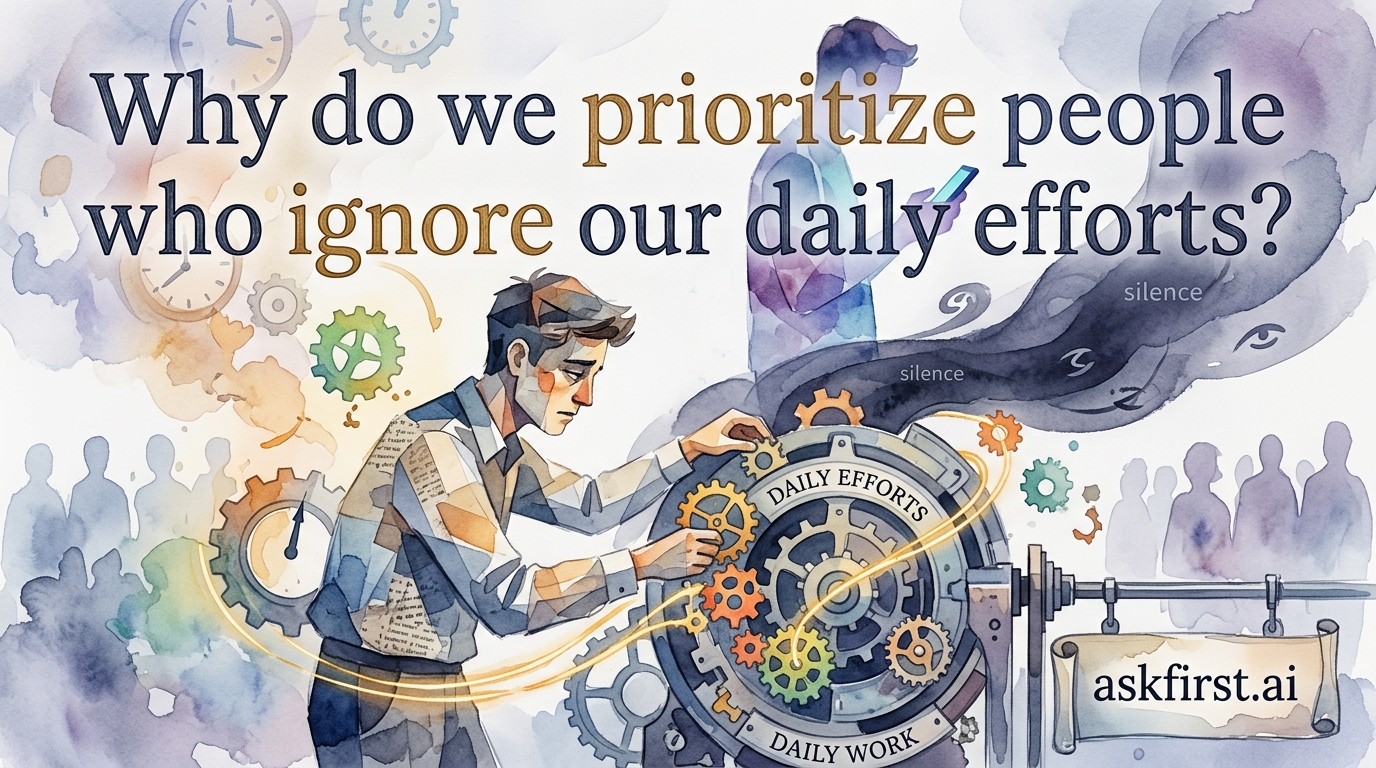
The phenomenon of prioritizing individuals who remain indifferent to our consistent efforts is a recurring theme in human social dynamics. Psychologically, this tendency is often rooted in the 'Scarcity Principle' and the concept of 'Variable Rewards.' When someone is unavailable or unresponsive, our brains perceive them as a scarce resource, which inadvertently increases their perceived value. According to social psychologist Robert Cialdini, humans are hardwired to desire that which seems difficult to obtain or limited in availability. This manifests in professional, personal, and social relationships where the lack of validation acts as a powerful, albeit counterproductive, incentive to work harder for approval.
The Mechanism of Intermittent Reinforcement
One of the most compelling explanations for this behavior comes from B.F. Skinner’s theory of Intermittent Reinforcement. In laboratory settings, subjects—whether animals or humans—exhibit higher levels of persistence when rewards are unpredictable rather than consistent. When a person ignores our efforts, their occasional moments of recognition or attention feel disproportionately significant. This unpredictability creates a dopamine-driven feedback loop, locking the individual into a cycle of 'chasing' the reward. The effort expended is not necessarily proportional to the benefit received, but rather to the internal need to resolve the ambiguity of the situation.
The Role of Ego and Self-Validation
Often, the pursuit of those who ignore us is less about the other person and more about internal self-concept. The desire to 'win over' a difficult individual can become a proxy for testing one’s own competence or attractiveness. If an individual succeeds in gaining the attention of someone aloof, it serves as a powerful validation of their personal worth. Consequently, prioritizing unresponsive people becomes an ego-driven mission to transform rejection into acceptance, which serves as a shield against potential feelings of inadequacy.
Strategies to Shift Focus
Understanding the mechanics of this behavior is the first step toward breaking the cycle. To redirect focus toward more rewarding connections, one should implement the following psychological frameworks:
- Cognitive Reframing: Consciously recognize that the indifference of others is rarely a reflection of personal failure. It is often a byproduct of the other person’s internal state, personal history, or capacity for empathy.
- Setting Boundaries: Establish non-negotiable standards for reciprocity. If a relationship—professional or personal—lacks mutual exchange, limit the investment of emotional and physical capital.
- Prioritizing Reciprocal Relationships: Shift attention toward individuals who demonstrate consistent appreciation and value. Research in positive psychology suggests that nurturing established, reciprocal bonds significantly increases long-term subjective well-being.
- Developing Self-Reliance: Reduce the dependency on external validation. When self-esteem is derived internally, the need to seek approval from those who withhold it diminishes significantly.
The Impact of Attachment Styles
It is also essential to acknowledge how Attachment Theory influences these patterns. Individuals with an 'anxious-preoccupied' attachment style are statistically more likely to gravitate toward 'avoidant' partners or colleagues. This dynamic creates a push-pull cycle: the avoidant person retreats as the anxious person pursues, creating a persistent imbalance. Recognizing these patterns allows for the intentional selection of environments and relationships that prioritize stability and mutual growth rather than chasing elusive validation.
Conclusion: Cultivating Healthy Dynamics
The obsession with those who ignore our efforts is a powerful, ingrained impulse, but it is one that can be managed through awareness. By recognizing the role of scarcity, intermittent reinforcement, and the underlying desire for ego validation, individuals can reclaim their energy. True professional and personal satisfaction is found not in the pursuit of the difficult, but in the appreciation of those who stand alongside us, contributing to a balanced and supportive environment. Shifting the focus from the 'chase' to the 'connection' ensures that efforts are directed toward individuals who value the energy invested in them, leading to a much more fulfilling and sustainable trajectory in both life and work.