The Psychology of Wealth and Consumption
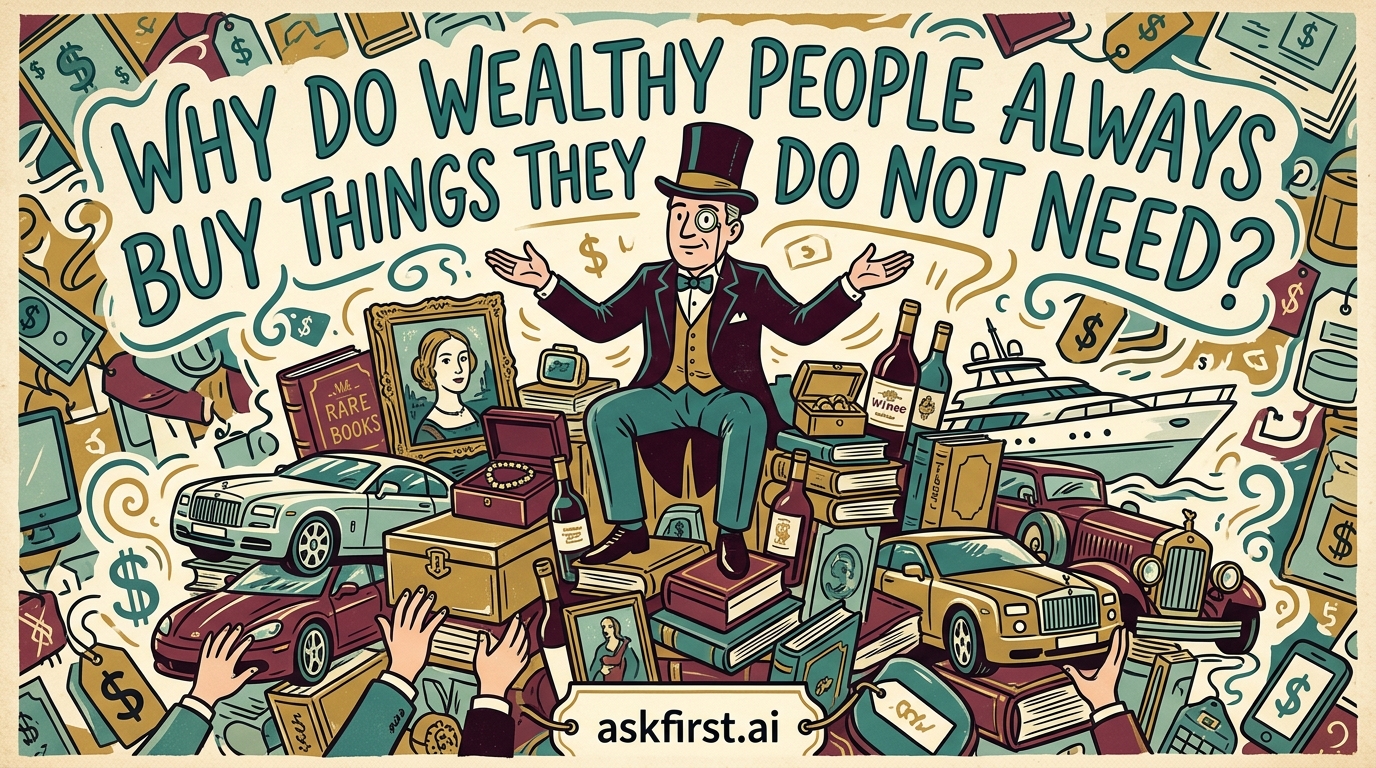
When observing the habits of the ultra-wealthy, the behavior of acquiring luxury goods—items often perceived as unnecessary by the general public—reveals a complex interplay of evolutionary psychology, sociology, and economic signaling. It is not merely about possession; it is about the strategic deployment of capital to navigate social and psychological landscapes.
1. Signaling and the Theory of Conspicuous Consumption
The economist Thorstein Veblen famously coined the term conspicuous consumption in 1899. This theory posits that individuals purchase high-status goods to signal their position within a social hierarchy. By acquiring items that have no utilitarian value, an individual demonstrates a 'surplus' of resources. In the animal kingdom, this is akin to the peacock’s tail—a costly signal that implies the individual is so fit and wealthy that they can afford to waste resources on non-essential, purely aesthetic, or status-driven displays. This creates an immediate, subconscious understanding of the person's status without a single word being spoken.
2. The Hedonic Treadmill and Adaptation
From a psychological perspective, humans are prone to hedonic adaptation. This is the process where individuals quickly return to a relatively stable level of happiness despite major positive or negative life events. For the wealthy, the initial rush of purchasing a new item fades rapidly. This leads to a persistent cycle where they feel compelled to acquire new, more unique, or more expensive items to reach the same level of gratification or social 'stimulation.' The item is not needed for survival or even functionality; it is needed to counteract the natural psychological drift toward neutrality.
3. Identity Construction and Personal Branding
In the modern digital age, items are often curated as part of a personal brand. Wealthy individuals frequently operate in spheres where their 'image' is an asset. Purchasing exclusive art, limited-edition vehicles, or haute couture functions as a form of non-verbal communication that secures entry into specific elite circles. In these environments, the object serves as a social filter. When an individual owns something that is not easily accessible to the general population, they are effectively curating their peer group. The 'unnecessary' item becomes a key that unlocks access to networking, investment opportunities, and social circles that remain closed to the uninitiated.
4. Psychological Security and Control
There is a deep-seated human need for a sense of control and distinctiveness. For those who have reached the pinnacle of financial success, the world often begins to feel predictable or homogeneous. Purchasing items that are bespoke, rare, or technologically advanced provides a sense of novelty and individualized control. It transforms the environment into a reflection of personal taste rather than a standardized existence. It is not about the utility of the object, but the exercise of autonomy it represents.
5. Investing in 'Store of Value' Assets
It is vital to distinguish between frivolous spending and strategic wealth preservation. Many items that appear unnecessary—such as rare vintage watches, high-end fine art, or specialized collectibles—are actually treated as alternative asset classes. When a wealthy individual spends millions on a rare painting, they are not just buying décor; they are diversifying their portfolio into tangible assets that are often uncorrelated with the stock market. In this context, the 'need' is financial: it is a hedge against inflation and a method of long-term capital preservation.
Summary Table: Motivations for Acquisition
| Driver | Psychological Function | Market Impact |
|---|---|---|
| Status Signaling | Social hierarchy validation | Luxury brand growth |
| Hedonic Need | Preventing emotional adaptation | Constant innovation demand |
| Strategic Assets | Inflation hedging/Diversification | Alternative investment booms |
| Peer Selection | Defining social boundaries | Exclusive community access |
Conclusion
Ultimately, what the outside observer classifies as an 'unnecessary purchase' is often, in the eyes of the wealthy, a rational tool for social navigating, asset management, or personal identity reinforcement. These purchases are rarely about the item itself. Whether it is social capital, psychological comfort, or long-term financial strategy, the motivation is deeply rooted in the architecture of success and the preservation of status. By understanding these mechanisms, one gains insight into the often-misunderstood behaviors that drive the world's most influential markets.