The Psychology of Cinematic Immersion: Solitude vs. Social Viewing
Choosing between the solitary theater experience and the communal living room screening involves complex psychological drivers. Both methods offer distinct neurological and emotional benefits that fundamentally alter how the brain processes narrative information. Understanding these nuances helps viewers curate their cinematic experiences to maximize engagement, emotional regulation, and social bonding.
The Case for Solitary Viewing: Deep Immersion and Cognitive Flow
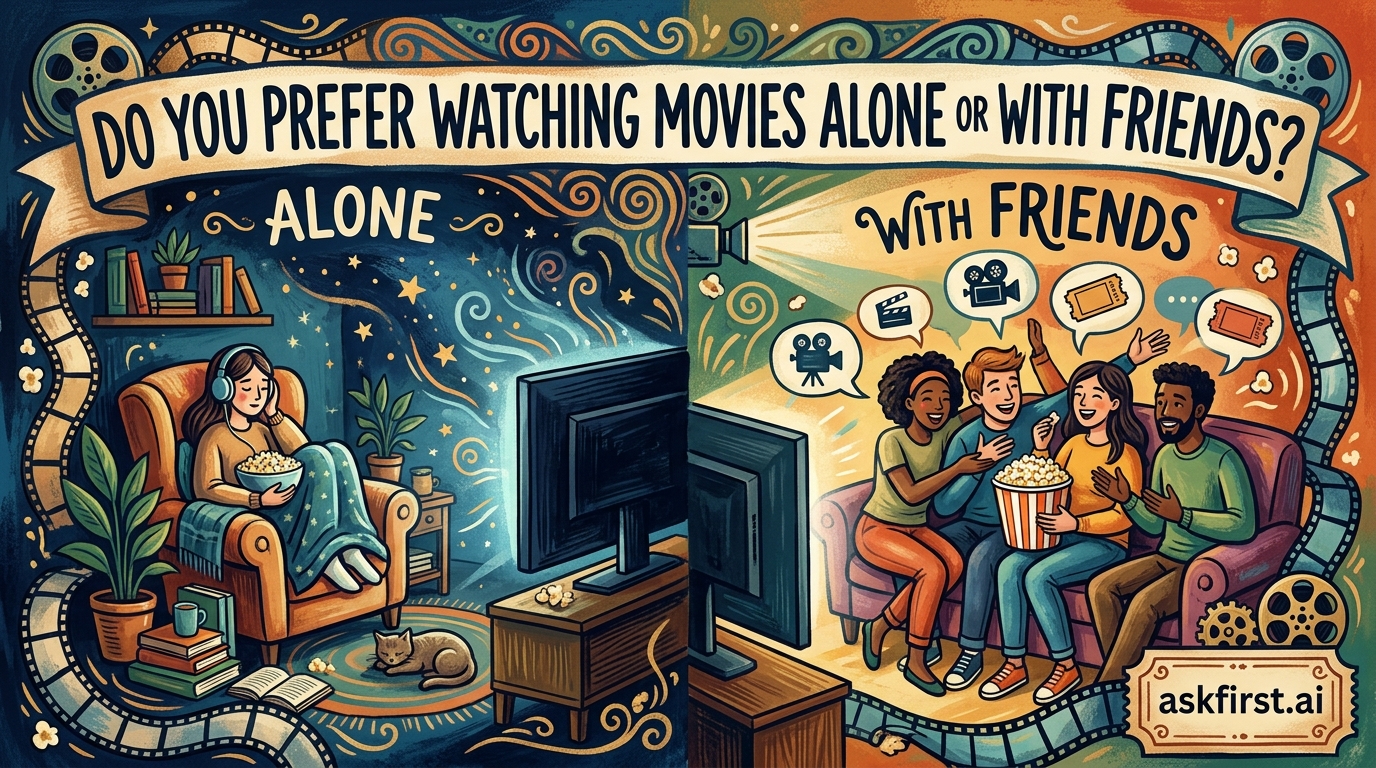
Watching movies alone creates an environment conducive to 'flow state', a psychological concept defined by Mihaly Csikszentmihalyi as complete absorption in an activity. When an individual watches a film without the external stimuli of conversation or social negotiation, the brain minimizes executive function distraction, allowing for deeper cognitive processing of the narrative arc and aesthetic details.
- Uninterrupted Neural Pathways: Without the need to interpret social cues from companions, the prefrontal cortex can dedicate more processing power to visual and auditory analysis. This leads to higher retention of thematic elements and character motivations.
- Personal Pacing: Solitude permits emotional regulation without performative expectations. If a scene triggers profound introspection or sadness, the viewer does not need to manage the comfort of others, allowing for a more authentic cathartic release.
- Sensory Optimization: Adjusting audio levels, lighting, and viewing angles to specific preferences eliminates environmental friction, ensuring that the Director's intent is perceived exactly as designed.
The Communal Experience: Shared Reality and Social Bonding
Conversely, viewing movies with friends activates the brain's social cognition networks. This is not merely about having company; it is about the synchronization of emotional responses. When people watch a film together, their physiological responses—such as heart rate and skin conductance—often begin to synchronize with one another, a phenomenon known as entrainment.
- Shared Emotional Resonance: Seeing others laugh, jump, or weep creates a feedback loop that intensifies the experience. Research suggests that emotional events are processed more vividly when shared with others, as the brain interprets the collective reaction as a validation of the content.
- The Post-Viewing Debrief: The discussion that follows a shared viewing experience is critical for memory consolidation. Verbalizing plot points and debating character morality forces the brain to organize information in a structured way, effectively deepening the intellectual takeaway of the film.
- Cohesion and Trust: Engaging in a shared narrative ritual—even a fictional one—builds interpersonal bonds. According to social identity theory, group activities foster a sense of 'in-group' alignment, strengthening the relationship between participants.
Comparative Analysis: Choosing the Right Environment
To determine the optimal setting, viewers should evaluate the primary objective of the viewing session:
- Analytical Viewing: If the goal is to study the technical mastery of cinematography, acting nuance, or philosophical subtext, solitude is superior. The absence of social distraction ensures that no details are missed.
- Entertainment and Catharsis: For genre films—such as horror or comedy—a social environment is often more rewarding. Horror films, in particular, serve as a 'safe fear' exercise; the presence of friends provides a psychological safety net, allowing viewers to lean into the adrenaline spikes of the movie without genuine distress.
- Active Engagement: If the movie serves as a catalyst for conversation, communal viewing is the gold standard. The shared experience acts as a bridge for complex discussions, making the film a tool for connection rather than just entertainment.
Conclusion: The Balanced Viewer
Neither mode of consumption is objectively 'better'; they serve different functional roles in the human experience. The solitary viewer optimizes for deep, undistracted concentration and personal introspection, while the social viewer optimizes for empathy, connection, and shared emotional memory. By recognizing these psychological triggers, one can consciously choose the environment that best serves the specific film and the desired mental state. Ultimately, the modern cinephile learns to treat solitude as an instrument for technical appreciation and the group setting as a crucible for social connection.