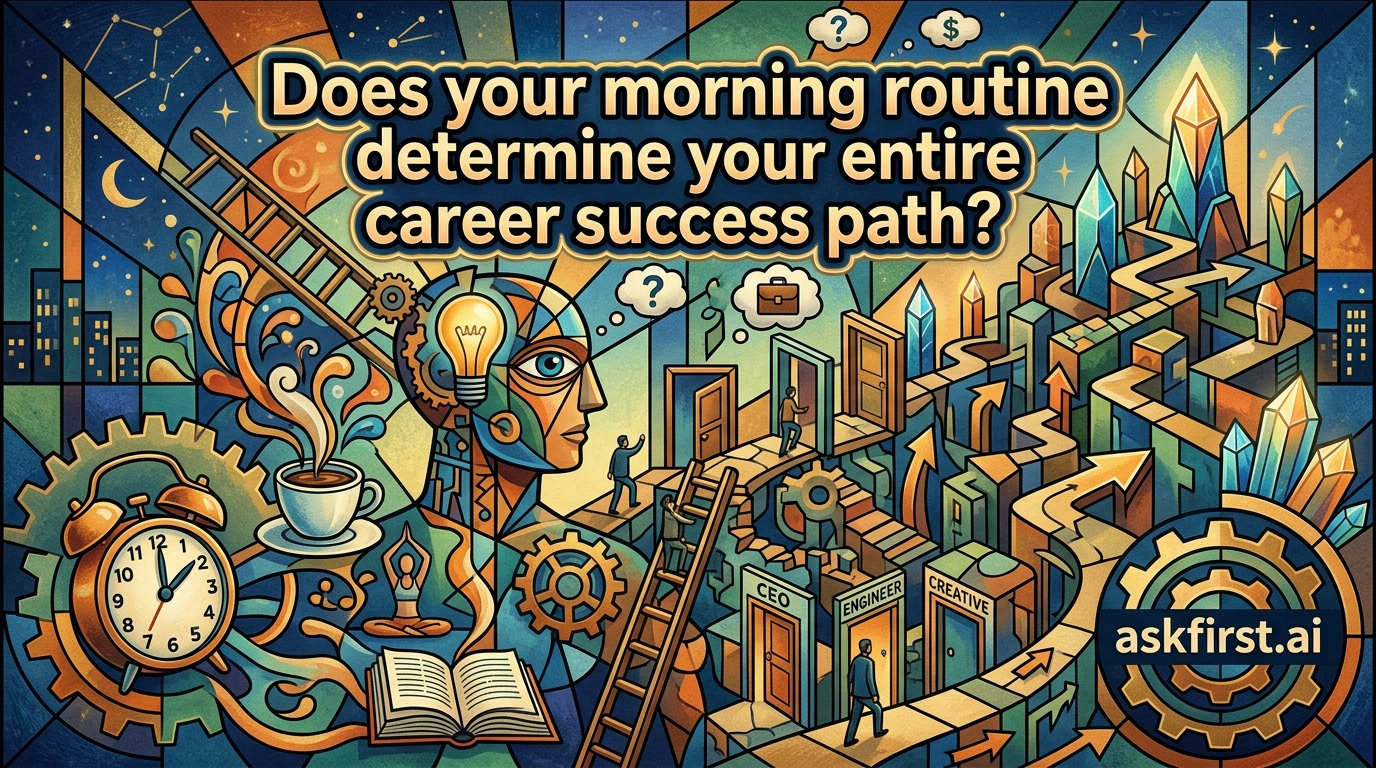
The Myth of the Morning Miracle
The narrative that career success is solely tethered to the specific configuration of the first sixty minutes of a person's day is one of the most pervasive myths in modern productivity literature. Often touted by high-profile executives and influencers, the concept suggests that the order of tasks—meditation, cold showers, hydration, or journaling—acts as a fundamental blueprint for professional output. However, psychological research and longitudinal career analysis indicate that while habits are critical, they do not dictate the totality of a career path. Success is a complex, multi-factorial outcome driven by external environments, skill acquisition, networking, and adaptability, rather than simply how one spends their early hours.
The Psychological Foundation of Habits
Habits are essential for conserving cognitive resources. According to the foundational work of researchers like Charles Duhigg in 'The Power of Habit,' routines function by allowing the brain to switch to an 'autopilot' mode. This efficiency is undeniably beneficial for reducing decision fatigue. By automating mundane morning tasks, individuals can conserve mental bandwidth for the high-stakes decisions required during the workday.
- Decision Fatigue Management: By minimizing morning choices, one preserves executive function for complex work later.
- Consistency Signaling: A routine provides a neurological cue that the workday has begun, facilitating a transition into a 'flow state.'
However, attributing a trajectory of career success—which often spans decades—to these small behavioral loops is an oversimplification. The discipline required to maintain a routine is a positive indicator, but it is not the primary driver of market value or creative breakthroughs.
External Variables: The Hidden Influencers
Career trajectory is frequently impacted by factors entirely outside of an individual’s personal routine. These variables include:
- Macro-Economic Trends: An individual may have a flawless morning routine, but if the sector they operate within faces automation or market contraction, their career path is fundamentally altered regardless of their personal habits.
- Organizational Culture: The internal dynamics of a company—meritocracy versus bureaucracy, leadership styles, and team synergy—play a massive role in how talent is nurtured and promoted.
- Serendipity and Networking: Significant career leaps often occur through unexpected connections. Networking, being at the right place at the right time, and soft-skill application in social settings are often more predictive of success than the specific duration of a morning meditation.
The Counter-Intuitive Truth: Flexibility Over Ritual
History is filled with polymaths, creators, and leaders who operated on unconventional, erratic, or nocturnal schedules. Forcing oneself into a rigid 'successful' morning template may actually hinder productivity for those whose chronobiology leans toward 'night-owl' patterns. The 'chronotype' concept, popularized by Dr. Michael Breus, posits that biological predisposition dictates peak performance windows. When an individual forces an early morning ritual that contradicts their natural biological energy cycle, the net result may be decreased performance rather than an increase in professional efficacy.
Strategic Habit Formation for Career Growth
Instead of viewing the morning routine as a deterministic force, it is more effective to view it as a tool for intentionality. The goal should be to align one's daily starting practices with their specific professional objectives.
- Prioritize Skill Acquisition: Spend mornings on 'Deep Work'—a concept introduced by Cal Newport—rather than passive rituals. Deep work involves undistracted, cognitive-heavy labor that creates the tangible value companies reward.
- Audit for Impact: If a routine does not lead to measurable progress, it is mere performance, not professional development.
- Adaptability: The most successful individuals are those who can pivot. A rigid routine can sometimes lead to cognitive inflexibility, making it harder for a professional to adapt to the fast-changing demands of the modern workplace.
Conclusion: Success as a Result of Systems, Not Rituals
Success in a career path is not found in the consistency of a green smoothie or the intensity of a morning workout. Instead, it is found in the ability to build robust systems of learning, maintain meaningful professional relationships, and navigate complex challenges with intellectual honesty. While a structured morning can provide a foundation of order, it is only a single brick in a much larger, more complex edifice of long-term achievement. Professionals should strive to build habits that support their personal biology and professional goals, avoiding the trap of believing that the ritual itself possesses the power to manifest career milestones. The path to success is paved with continuous growth, strategic risk-taking, and an unwavering commitment to excellence, which functions entirely independently of what time one chooses to wake up.