The Behavioral Economics of Wealth
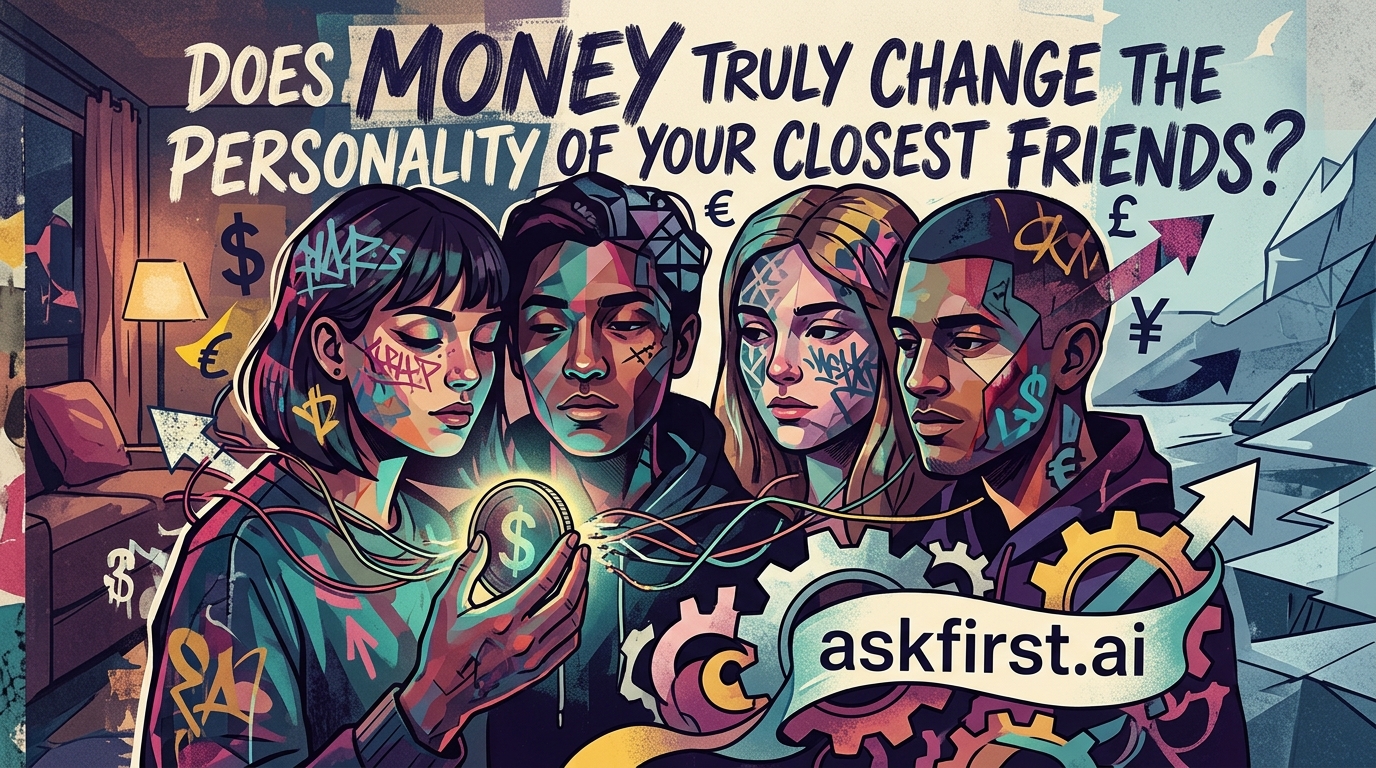
When a close friend gains sudden wealth, the dynamic of the relationship often undergoes a subtle yet profound metamorphosis. Scientific literature in behavioral psychology suggests that money acts less as a transformer of inherent personality and more as a magnifier of latent traits. It is rarely that the person changes, but rather that the social constraints which once kept their authentic impulses in check are dissolved by financial independence.
The Magnification Theory
Research indicates that money creates an environment where 'social lubrication'—the need to maintain reciprocal relationships—is diminished. When an individual possesses unlimited resources, they no longer rely on friends for small favors, shared costs, or emotional reliance. This autonomy can be misconstrued as arrogance or aloofness. However, psychologists define this as the 'Power Paradox'. Studies led by Dacher Keltner at UC Berkeley reveal that as individuals gain social or financial power, they often become less empathetic and more impulsive because they no longer need to be hyper-attuned to the emotional states of those around them to navigate survival or social standing.
Identifying the Shift: What to Watch For
- Value Alignment Divergence: Financial freedom often leads to lifestyle inflation. If a friend begins prioritizing exclusive experiences over inclusive, low-cost bonding, the friction is usually due to a shift in 'identity-based' social circles rather than a malicious intent to exclude.
- The Power Imbalance Trap: When one person covers every bill, the friendship ceases to be a partnership of equals and shifts into a patron-client dynamic. This shift is what often erodes the foundation of long-term bonds, as the friend who receives support may feel a subconscious loss of autonomy, while the donor may begin to subconsciously exert control.
- Cognitive Filtering: Wealthy individuals are often bombarded with requests for capital or advice. Over time, they may develop a 'defensive personality' to manage their resources. This is often interpreted as coldness, but it is frequently a self-protective mechanism to avoid being exploited by acquaintances.
The Role of Social Signaling
Sociological frameworks like those proposed by Pierre Bourdieu suggest that wealth provides access to 'Cultural Capital'. A friend who acquires wealth may start using different language patterns, tastes, or hobbies. This is not necessarily a rejection of past identities; rather, it is an adoption of the markers of their new status group. Humans are highly mimetic; they naturally gravitate toward the behaviors of their current peers. If a friend moves into a higher socioeconomic bracket, they are statistically likely to mimic the behaviors of those around them to reduce social dissonance.
Does Money Actually Ruin Friendships?
It is vital to distinguish between a change in behavior and a change in character. Character is deeply rooted in childhood experiences, moral foundations, and personal integrity. Behavior, conversely, is fluid and reactive. If a friend remains loyal in moments of crisis, provides emotional support, and maintains shared history, the superficial changes in their personality (such as becoming more focused on business or travel) should be viewed as peripheral rather than central.
Navigating the New Dynamic
To preserve a friendship through a period of sudden wealth, honesty is the best currency. If the friend is acting distant, addressing the behavioral change directly—without accusations—is crucial. Using 'I' statements to describe how the friendship feels different can open a door to re-negotiating the boundaries of the relationship. True friendships are resilient; they can survive socioeconomic shifts provided both parties acknowledge that the context of the world around them has changed.
Conclusion
The most important takeaway is that money reveals what was already present. Generosity, ego, insecurity, and kindness do not appear from thin air; they are simply amplified when the constraints of scarcity are removed. If a friend becomes 'different', one is likely witnessing the removal of their mask, not the adoption of a new one. Understanding this nuance is the key to maintaining long-term, high-quality connections in a world where personal fortunes fluctuate. Whether you are the one gaining the resources or the one observing a friend's success, empathy remains the strongest tool for preservation.