The Paradox of Prosperity: Wealth vs. Fulfillment
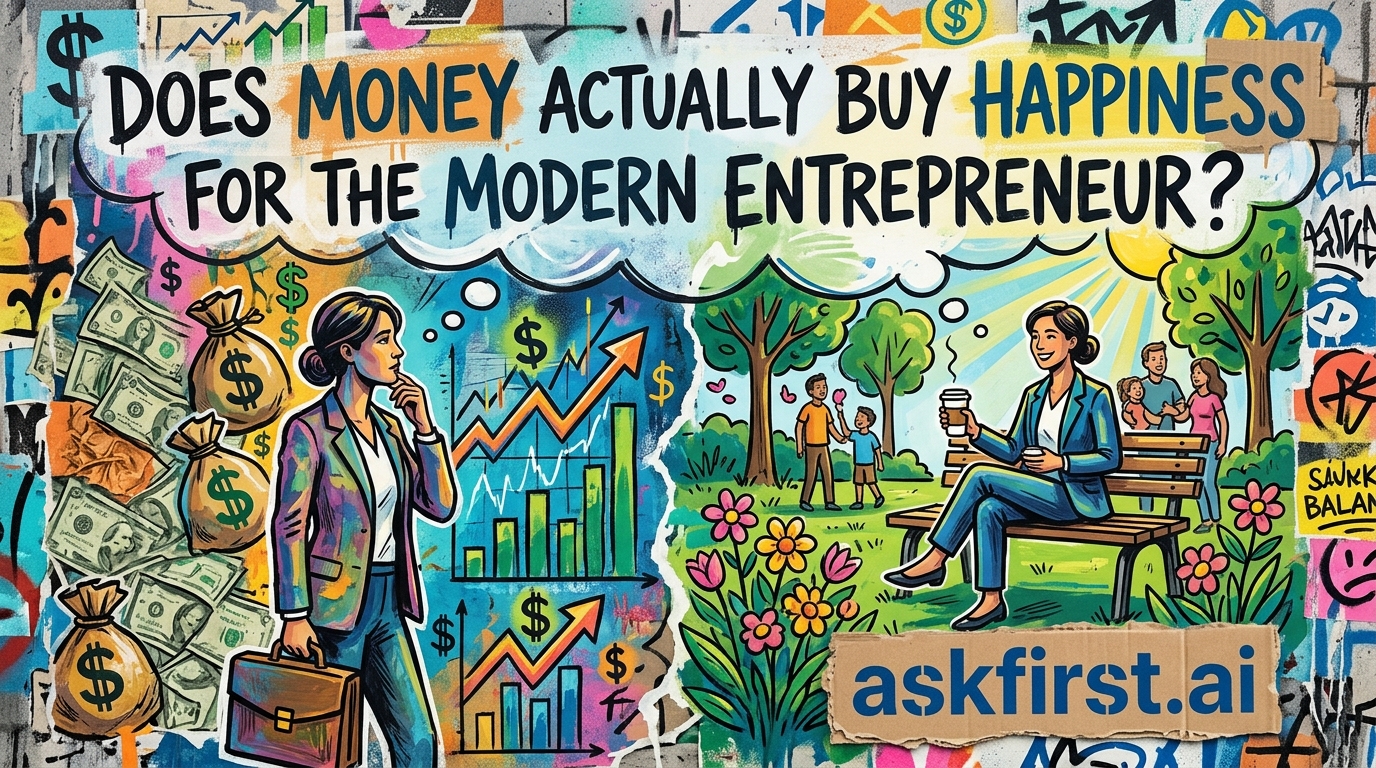
For the modern entrepreneur, the relationship between capital accumulation and subjective well-being is one of the most debated topics in behavioral economics and psychology. While cultural myths suggest that a larger bank account equates to a larger capacity for joy, the empirical data tells a more nuanced story. The pursuit of wealth often acts as a double-edged sword, providing freedom while simultaneously anchoring the individual to new sets of anxieties and responsibilities.
The Easterlin Paradox and Its Relevancy
The foundational research known as the Easterlin Paradox posits that once basic needs are met, the correlation between income and happiness diminishes significantly. For entrepreneurs, this means that while initial success—escaping poverty or funding a startup—creates a massive spike in well-being, the marginal utility of each additional million dollars decreases. This phenomenon is known as the hedonic treadmill. Humans possess an innate ability to adapt to new circumstances; thus, a luxury office or a premium vehicle eventually becomes the 'new normal,' requiring more stimulation to reach the same level of previous satisfaction.
Beyond the Bank Account: The Three Pillars of Entrepreneurial Fulfillment
To understand why money alone fails to purchase long-term happiness, one must look at the three pillars identified by psychologists: Autonomy, Competence, and Relatedness.
- Autonomy: Entrepreneurs often cite the desire to own their time as a primary motivator. Money grants the power to opt out of systems they dislike, but it does not dictate what they opt into. If that autonomy is used to pursue hollow status symbols rather than meaningful contribution, the result is often a feeling of spiritual drift.
- Competence: The act of building a business—solving complex problems and seeing an idea come to fruition—provides a deep psychological reward. Money is merely the scorecard for this competence, not the source of it. When entrepreneurs lose touch with the act of creation and focus solely on the balance sheet, they strip away the primary source of their intrinsic motivation.
- Relatedness: Extreme wealth can occasionally act as a barrier to authentic human connection. If an entrepreneur begins to perceive their value solely through the lens of net worth, they may struggle to build relationships based on vulnerability and mutual trust rather than transactional utility.
The 'Money as a Tool' Mindset
Research consistently shows that individuals who view money as a means to an end—such as funding ventures that help others, providing for family, or enabling personal growth—report higher life satisfaction than those who view money as a status marker. This aligns with findings from the Harvard Study of Adult Development, which highlights that the quality of human relationships is the strongest predictor of long-term health and happiness. Money is a tool for removing friction in life, but it cannot repair the fundamental need for human connection or intellectual challenge.
Psychological Costs and the Trap of Status
One of the most dangerous traps for the modern entrepreneur is the 'status game.' Unlike the consumption of goods, status is positional—for one person to gain it, another must lose it. This zero-sum competition is exhausting and rarely leads to happiness. Entrepreneurs who anchor their self-worth to public accolades or competitive wealth rankings find themselves in a perpetual state of stress. By shifting focus toward internal benchmarks—such as personal mastery and the impact of one's work—entrepreneurs insulate themselves from the volatility of external validation.
Strategies for Sustainable Satisfaction
To avoid the pitfalls of wealth-driven anxiety, successful entrepreneurs employ specific strategies:
- Experiences over Assets: Studies indicate that spending money on life experiences (travel, education, skill-building) provides a more sustained boost to happiness than the purchase of physical goods. Experiences integrate into one's identity and provide lasting memories, whereas objects lose their novelty.
- Philanthropy as Purpose: Utilizing capital to impact the lives of others effectively changes the dopamine-to-serotonin feedback loop. Generosity is shown to reduce cortisol levels, suggesting that money spent on external causes can yield higher dividends for the giver than money spent on personal luxuries.
- Mindfulness and Disconnection: The ability to 'unplug' from the business is a luxury that only the wealthy can truly afford, yet it is often the most neglected. Investing in rest is arguably the most profitable investment an entrepreneur can make regarding their own mental clarity.
In summary, money does not purchase happiness directly; it purchases options. The degree to which those options lead to happiness depends entirely on the wisdom with which they are exercised. For the entrepreneur, money is a force multiplier: it amplifies the character, values, and habits that are already present. If those internal components are aligned with growth and contribution, wealth becomes a magnificent catalyst. If they are not, money simply intensifies the internal state, whether that state be one of curiosity, peace, or discontent.