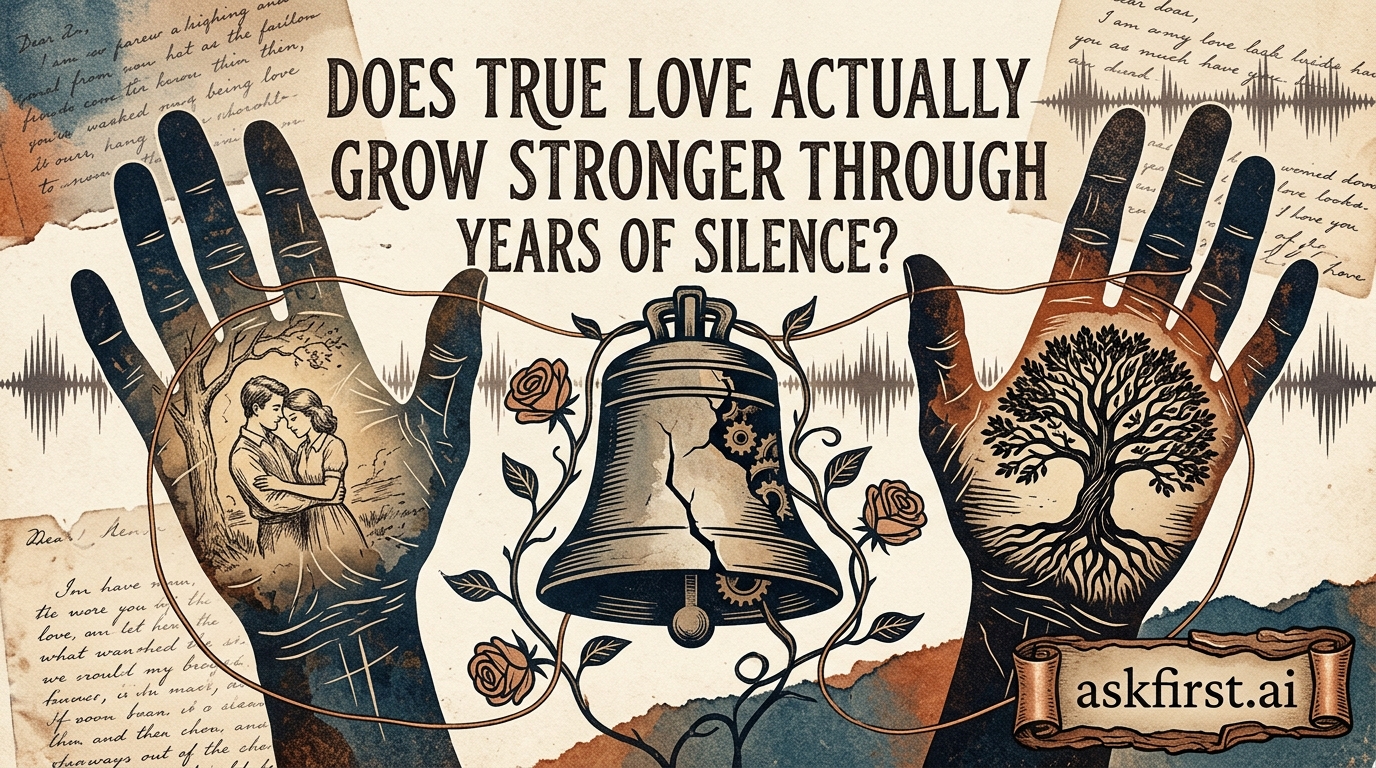
The Paradox of Silent Affection
The notion that love requires constant proximity or verbal communication to survive is a pervasive societal myth. In reality, the psychological framework of 'long-term attachment' suggests that silence does not equate to absence. When two individuals share a deep, foundational connection, the periods of silence—or geographical and communicative distance—often serve as a forge, strengthening the neural pathways associated with longing, idealization, and cognitive permanence.
The Science of Cognitive Idealization
Psychologically, the human brain tends to smooth over the rough edges of past experiences. This phenomenon, known as 'rosy retrospection,' suggests that when time passes, the minor frictions of a relationship fade, leaving behind a distilled essence of the partner. In silence, the mind stops focusing on daily logistical annoyances—like chores or scheduling conflicts—and instead pivots toward the 'core identity' of the other person. This cognitive shift creates a heightened sense of longing that characterizes deep emotional bonds.
- Selective Memory: Research indicates that the brain archives positive emotional memories more effectively than trivial, negative daily interactions during long periods of separation.
- The Zeigarnik Effect: Because human beings have a tendency to remember uncompleted tasks or unresolved emotional narratives, an 'incomplete' or silenced relationship remains mentally active, keeping the individual focused on the partner longer than they might if the relationship were mundane and 'finished' by constant contact.
Silence as a Crucible for Emotional Maturity
True love requires the capacity for internal emotional regulation. Silence forces individuals to engage in a process of 'self-soothing' and personal reflection. Rather than relying on a partner for immediate external validation, the individual learns to cultivate the relationship internally. This maturation process is essential because it shifts the locus of control from the external dynamic to an internal state of being. When the silence eventually breaks, the individuals are often more resilient, self-aware, and appreciative of the shared connection.
Evolutionary Perspectives on Distance
From an evolutionary standpoint, the capacity to maintain a bond across time is a hallmark of human sophisticated consciousness. In ancestral environments, separation for hunting or gathering was common. The ability to maintain pair-bonding through cognitive recall provided a distinct survival advantage. Those who could remain 'emotionally present' even when physically distant were more likely to maintain stable, long-term pair bonds that supported communal stability.
Mitigating Factors and Healthy Attachment
While silence can strengthen an established bond, it is vital to distinguish between healthy detachment and 'avoidant attachment.'
- Healthy Silence: This involves an unspoken commitment and an underlying sense of security. There is an implicit trust that the relationship is robust enough to survive the quiet.
- Avoidant Silence: This is often characterized by a lack of emotional intimacy as a defense mechanism. In such cases, the silence does not build strength; it creates a protective barrier that prevents the deepening of the bond.
Strengthening the Bond Through Reflection
To ensure that silence remains a source of growth rather than erosion, it is beneficial to view the time apart as a period of 'intentional investment.'
- Personal Growth: Use the time to develop individual interests, which then brings new, fresh energy back into the relationship dynamic.
- Rituals of Remembrance: Maintain a private, internal space for the relationship. Remembering shared values and milestones keeps the connection vibrant in the subconscious mind.
- Clarity of Intent: Ensure that the lack of communication is mutually understood as a state of life, rather than a conflict. Intentionality is the difference between neglect and reverence.
Conclusion: The Durability of the Invisible Thread
Ultimately, silence serves as a filter. It strips away the superficial layers of a relationship, leaving only the structural integrity of the bond to remain. If the foundation is true—based on mutual respect, shared purpose, and profound emotional resonance—the silence acts as a strengthening agent. It reminds us that love is not merely an activity or a exchange of words; it is a permanent state of the soul that exists independently of the clock or the calendar. While modern technology demands constant interaction, the depth of true love often prefers the space provided by silence, allowing it to grow quietly, persistently, and with absolute, unyielding endurance.