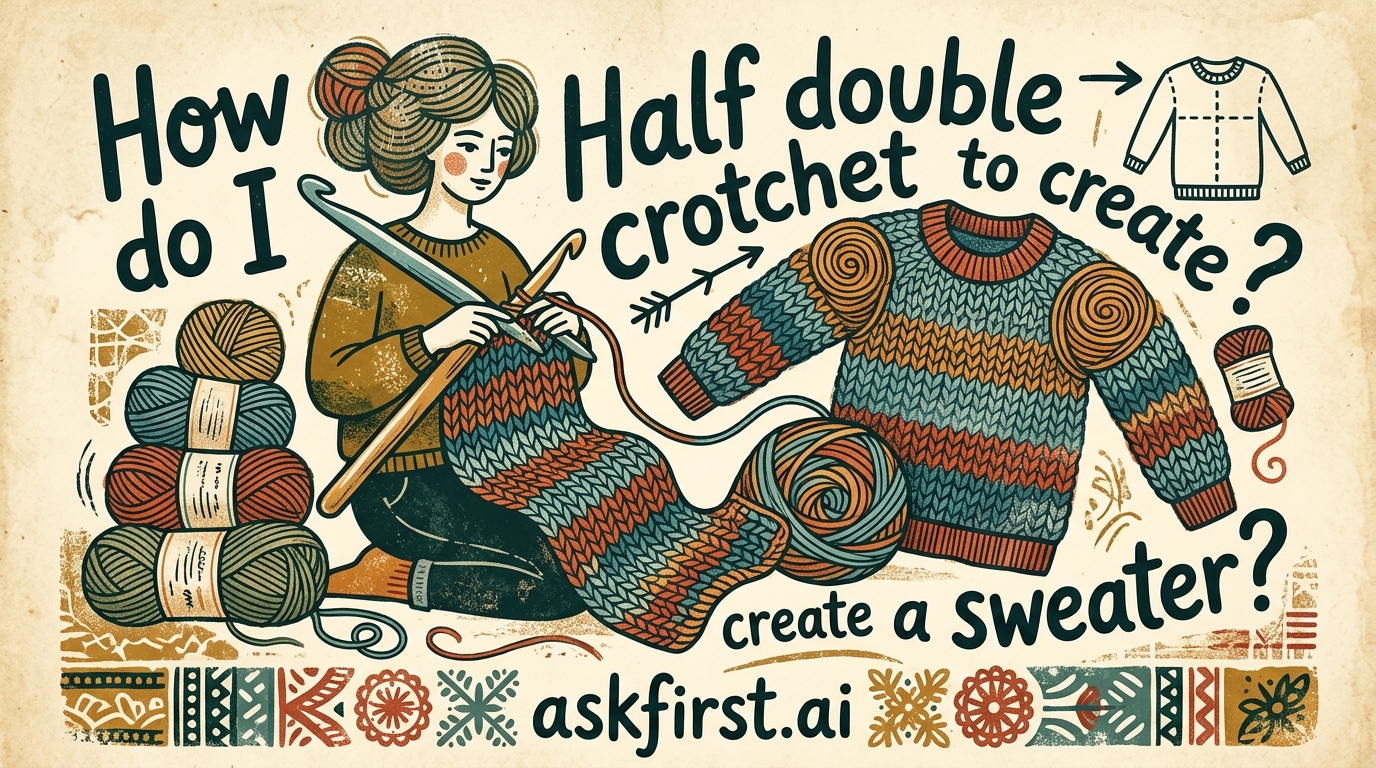
Mastering the Half Double Crochet for Garment Construction
The half double crochet (HDC) stitch occupies a unique "Goldilocks" position in the world of crochet. It possesses the height of a double crochet but the density and structural integrity of a single crochet, making it arguably the most versatile stitch for garment construction. When you use the HDC to create a sweater, you are opting for a fabric that drapes beautifully without being overly holey or thin. Whether you are a beginner or a seasoned fiber artist, understanding the mechanics of this stitch is the first step toward creating professional-grade knitwear.
The Anatomy and Mechanics of the HDC
To execute a half double crochet, you yarn over, insert your hook into the stitch, yarn over again, and pull up a loop. You then yarn over one final time and pull through all three loops on your hook simultaneously. This specific motion creates a "third loop" on the back of the stitch (often called the "camel stitch" loop).
When creating a sweater, this third loop is your secret weapon. By working exclusively into the back loop or the third loop, you can create a knit-like ribbing that mimics the elasticity of a standard knitted sweater. In her definitive guide, Modern Crochet: Patterns for the Modern Home and Wardrobe (2019), author Debrosse emphasizes that using the third loop of the HDC creates a braided texture that is visually indistinguishable from stockinette knitting, providing a sophisticated finish to cuffs, collars, and hemlines.
Planning Your Sweater: The Modular Approach
Creating a sweater using HDC is best approached through a modular construction method. Most modern patterns, such as those detailed in Crochet Your Way by Susan Levin, suggest working in flat panels: a front panel, a back panel, and two sleeves.
- The Foundation: Start with a foundation chain that matches the width of your desired torso measurement. Because HDC is slightly more compact than double crochet, you must account for "positive ease." Aim for 2–4 inches of extra width to ensure the sweater isn't restrictive.
- The Body Panels: Work your rows back and forth. To ensure straight edges, always count your stitches at the end of every row. A common mistake is losing stitches at the end of the row due to the turning chain. Remember that the turning chain for an HDC row generally counts as a stitch if you are working a "standard" pattern, but many experts prefer to skip the chain and work a "standing HDC" for a cleaner edge.
- The Shaping: To create armholes, you will need to increase or decrease. For the armholes, you can leave a section unworked at the beginning and end of your row to create a "drop shoulder" silhouette. This is the most beginner-friendly construction style for HDC sweaters.
Achieving Professional Drapes and Tension
One of the primary challenges with HDC is that it can appear slightly stiff if your tension is too tight. To achieve the drape found in high-end boutique sweaters, consider sizing up your hook by 0.5mm or 1.0mm larger than what is recommended on your yarn label.
In The Crochet Stitch Bible by Betty Barnden, it is noted that the HDC stitch density changes significantly based on the fiber content. Wool, for example, has natural memory and will hold the HDC structure well, while cotton or bamboo blends may stretch over time. When using cotton, ensure you are working a slightly tighter gauge to prevent the garment from "growing" after several wears.
Assembly and Finishing Techniques
Once your four panels (front, back, and two sleeves) are complete, assembly is where the sweater truly comes to life. Avoid using a standard slip stitch to join panels if you want a seamless look. Instead, use the mattress stitch with a tapestry needle. By lining up the loops of your HDC rows and sewing them together, you create a seam that is virtually invisible and mimics the structure of a professional machine-knit garment.
For the ribbing, attach your yarn to the bottom of the sweater and work a series of "front post" and "back post" half double crochets. This creates a ribbed effect that pulls the fabric in, providing a structured, fitted look at the wrists and waist. This technique is famously showcased in the works of Toni Lipsey, specifically in her book The Crochet Kaleidoscope, where she demonstrates how post stitches can define the shape of a garment.
Conclusion
The half double crochet is the backbone of functional, stylish, and durable crochet apparel. By leveraging its unique third-loop structure for ribbing and its dense, warm texture for the main body panels, you can move beyond simple blankets and scarves into the realm of custom-fitted clothing. Remember that the key to a successful sweater lies in gauge swatching, maintaining consistent tension, and utilizing proper seaming techniques. With practice, the rhythmic motion of the HDC will allow you to produce garments that are not only comfortable but also possess a timeless, hand-crafted aesthetic that rivals anything found in a retail store. Whether you are crafting a chunky oversized pullover or a sleek, fitted turtleneck, the HDC remains your most reliable and versatile tool.