The Complexity of Emotional Erosion: Understanding Male Disengagement
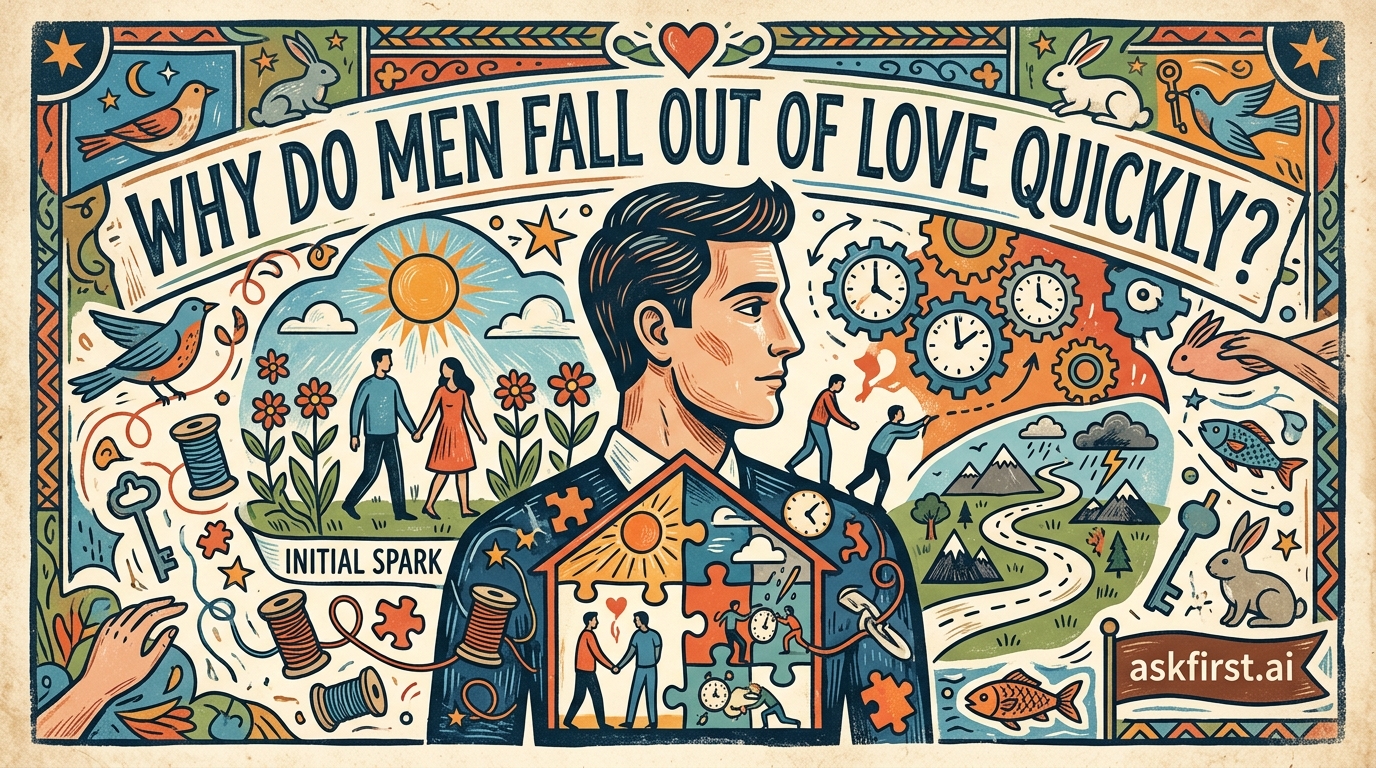
The phenomenon of men seemingly "falling out of love" quickly is a subject that often leaves partners bewildered and searching for clarity. While popular culture frequently paints men as emotionally stoic or prone to sudden detachment, the psychological reality is far more nuanced. When a man appears to disconnect rapidly, it is rarely an instantaneous event; rather, it is usually the final manifestation of a prolonged period of internal processing, unmet needs, and systemic relationship dissatisfaction. To understand this transition, one must look past the surface-level behavior and examine the psychological, biological, and communication dynamics at play.
The "Silent Withdrawal" Phenomenon
One of the most common reasons men appear to fall out of love suddenly is the phenomenon of "silent withdrawal." Unlike many women, who may be socialized to express dissatisfaction through verbal processing or emotional venting, many men are conditioned to avoid conflict or "bothering" their partners with their internal struggles.
In The Seven Principles for Making Marriage Work, Dr. John Gottman notes that men are often more prone to "stonewalling"—a defensive mechanism where one partner shuts down during conflict. Over time, this suppression creates an emotional chasm. A man may spend months—or even years—silently mourning the loss of the connection, attempting to resolve his unhappiness internally. By the time he verbalizes his desire to leave, he has already mentally and emotionally exited the relationship. To the partner, the change seems abrupt, but for the man, it is the conclusion of a long, private journey of disillusionment.
The Loss of Purpose and Competence
Psychologically, many men derive a significant portion of their self-worth from their perceived ability to provide, protect, or succeed within their partnership. When a man feels that he is failing in these roles—or conversely, when he feels that his efforts are perpetually unappreciated—he may experience a profound sense of "competence collapse."
In his seminal book The Way of the Superior Man, David Deida argues that a man’s core focus is his life’s purpose. If a relationship begins to feel like a cage that stifles his growth or if he feels he cannot live up to his partner’s expectations, he may experience a rapid decline in romantic interest. This is not necessarily a reflection of the partner’s value, but rather a reflection of the man’s inability to reconcile his identity with the demands of the relationship. When a man feels he is no longer being "seen" for his strengths, he often retreats into a state of indifference as a defense mechanism against feelings of inadequacy.
The Role of Biological and Chemical Shifts
It is impossible to ignore the biological underpinnings of romantic attachment. The initial "falling in love" phase is heavily influenced by a cocktail of dopamine, oxytocin, and norepinephrine. As this neurochemical surge naturally stabilizes—usually within 18 to 36 months—the relationship must transition into a phase of companionate love.
If a couple has failed to build a foundation of deep friendship, shared values, and mutual respect during the initial "honeymoon" phase, the relationship may lack the structural integrity to survive the chemical drop-off. For some men, once the intense thrill of the initial pursuit and the novelty of the connection fade, they may misinterpret the absence of that high-octane excitement as a sign that they are no longer "in love." This reflects a misunderstanding of the long-term nature of love, which requires active effort and intentionality rather than just passive emotional experience.
External Stressors and the "Tunnel Vision" Effect
Men often operate under a cognitive framework that prioritizes "tunnel vision" when dealing with extreme stress, such as career failure, financial crisis, or grief. When a man is overwhelmed by external life pressures, he may subconsciously categorize his relationship as a "luxury" that he no longer has the emotional bandwidth to maintain.
In The Male Brain, Dr. Louann Brizendine explains that the male brain is highly wired for goal-oriented problem-solving. When a man feels he is under siege in his professional or external life, he may compartmentalize his emotions to focus on survival. If his partner requires significant emotional labor that he cannot currently provide, he may detach completely to regain a sense of equilibrium. This is often interpreted as falling out of love, when in reality, it is a desperate attempt at emotional self-preservation.
Conclusion: The Illusion of Suddenness
The perception that men fall out of love "quickly" is almost always a result of a communication gap. It is an illusion created by the discrepancy between internal emotional exhaustion and external expression. True, lasting intimacy requires both partners to move beyond the superficial stages of attraction and engage in the rigorous, often uncomfortable work of radical honesty.
When a relationship ends, it is rarely because the love vanished overnight. It is usually because the structural foundation—built on trust, communication, and mutual evolution—was allowed to erode over time. Recognizing the early signs of withdrawal—such as a lack of engagement, the cessation of "bids" for connection, and increased irritability—can provide the necessary window to address the underlying issues before the process of detachment becomes irreversible. Love is not a static state of being; it is a dynamic process that requires constant, conscious maintenance. When that maintenance stops, the decline is inevitable, regardless of how quickly it finally comes to light.