The Psychology of Brand Trust vs. Interpersonal Trust
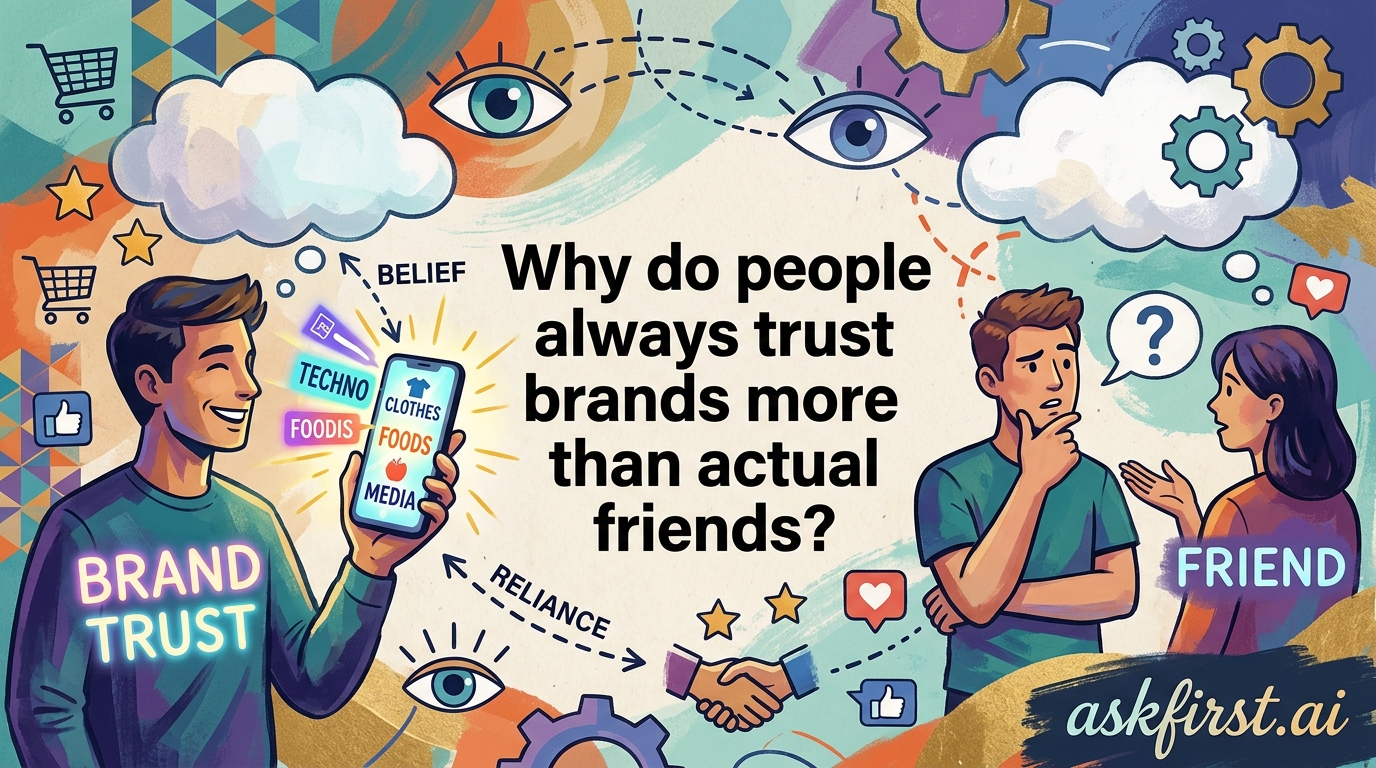
The phenomenon of placing higher levels of trust in established corporate entities compared to personal acquaintances is a fascinating subject of social psychology and behavioral economics. While it may seem counterintuitive that a faceless organization gains more credibility than a known peer, several deep-seated psychological mechanisms facilitate this reality.
1. The Power of Consistent Predictability
Human interactions are inherently volatile. A friend might have a bad day, act unpredictably, or suffer from cognitive biases that color their recommendations. Brands, by contrast, operate under stringent quality control protocols. This predictability is deeply comforting to the human brain. When a consumer engages with a global brand, they are not interacting with an individual's mood; they are interacting with a set of processes designed to minimize variance. The psychological desire for stability makes brands seem like 'reliable actors' in an otherwise chaotic marketplace.
2. The Fallacy of Objective Data
Friends often offer subjective, anecdotal advice. A friend might suggest a product because it worked for them in one specific, non-replicable circumstance. Conversely, brands present themselves through the veneer of big data and market research. Humans are biologically wired to respect authority, and in modern society, authority is often coded as 'data-driven' or 'scientifically tested'. Even when the data is curated to look favorable, the mere presence of charts, testimonials, and verified reviews provides a sense of logical validation that a friend’s casual 'you should try this' lacks.
3. The Reduction of Social Friction
Trusting a friend carries a social risk. If a friend recommends a bad movie or an unreliable gadget, it introduces friction into the relationship. Should the product fail, the friend is socially accountable, leading to awkwardness. Brands, however, offer a frictionless path to consumption. If a brand’s product is faulty, the consumer directs their anger at a customer service department rather than a peer. This buffer protects social harmony, leading consumers to prefer the 'brand relationship' as a safer, lower-stakes alternative for everyday logistical decisions.
4. Professional Branding and Parasocial Interaction
Global brands invest billions in building parasocial relationships. Through sophisticated storytelling, advertising, and corporate social responsibility initiatives, brands cultivate a persona that feels personable and empathetic. This is known as 'anthropomorphism'—attributing human characteristics to non-human entities. When a brand successfully mirrors the values of a consumer, the consumer feels a deeper, more idealized bond with that brand than they might with a complex human friend who holds conflicting viewpoints. The brand is designed to be the 'perfect version' of a companion: always present, always aligned with the user's needs, and never demanding emotional reciprocation.
5. The Halo Effect and Social Proof
Social proof is a potent psychological shortcut. Seeing millions of people purchase from a specific brand creates an illusion of collective wisdom. Even if a personal friend is intelligent, they are only one voice. A brand, supported by thousands of online reviews and widespread cultural adoption, carries the weight of a 'crowd'. As Robert Cialdini famously outlined in his work on influence, humans are prone to believe that if everyone else is doing it, the action must be correct. This collective endorsement creates a foundation of trust that is structurally more imposing than the singular, isolated opinion of an acquaintance.
Strategies for Balanced Consumerism
To navigate this dynamic effectively, individuals should maintain a healthy level of critical analysis:
- Cross-Reference Recommendations: Treat brand claims as marketing, not absolute fact.
- Value Peer Experience: Recognize the benefit of genuine, flawed, but honest personal feedback over polished marketing content.
- Identify Intent: Understand that brands are profit-motivated, whereas friendships are based on mutual social benefit.
By understanding these layers of influence—the comfort of consistency, the authority of data, the avoidance of social risk, and the effectiveness of brand archetypes—one can reclaim autonomy. Trust is a finite resource; allocating it strategically between the convenience of global brands and the authentic, albeit messy, advice of real-world peers is a hallmark of emotional intelligence.