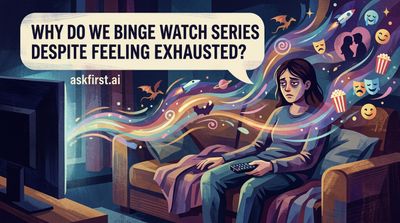
The Psychology of Familiarity and Comfort Viewing
Human beings are wired to seek patterns, and in a world that is inherently unpredictable, the act of rewatching a favorite television show serves as a profound psychological anchor. This phenomenon, often termed 'comfort viewing,' is not merely a sign of creative stagnation or a lack of new content. Instead, it is a deliberate, highly effective strategy used by the brain to manage stress, regulate emotions, and foster a sense of security. When an individual engages with a familiar narrative, the cognitive load required to process the story is significantly reduced. Unlike watching a new program, which demands the brain dedicate resources to plot twists, character development, and social navigation, rewatching allows the viewer to enter a state of 'low-effort processing.' This state effectively quiets the prefrontal cortex—the area responsible for complex decision-making and anxiety-inducing planning—thereby facilitating relaxation.
The Predictive Brain and the Comfort of Certainty
At the core of this behavior lies the concept of the 'predictive brain.' Neuroscience suggests that our cognitive apparatus is constantly trying to minimize uncertainty. When a viewer knows exactly what happens in a scene, how a joke lands, or why a character makes a specific choice, the anxiety of the unknown is eliminated. This predictability offers a sense of control that may be lacking in the viewer's daily life. According to the 'parasocial interaction' theory, audiences form deep, one-sided relationships with television characters. Over multiple viewings, these characters begin to feel like members of a trusted social circle. In times of social isolation or professional pressure, revisiting these characters serves as a form of 'social snacking,' providing the emotional equivalent of a reassuring conversation with an old friend.
Psychological Benefits of Rewatching
Research in consumer behavior and psychology has highlighted several key benefits associated with this habit:
- Resource Conservation: By alleviating the 'decision fatigue' caused by scrolling through endless catalogs of new media, rewatching saves valuable mental energy.
- Emotional Regulation: Familiar storylines allow viewers to process their own life experiences through the safety of the screen, acting as a mirror for personal growth without the risk of real-world consequences.
- Nostalgia as a Buffer: Nostalgia is a complex emotional state that can increase self-esteem and social connectedness. Revisiting a show from a previous era of one’s life bridges the gap between past and present, providing a sense of continuity and stable identity.
The Impact of Narrative Closure
There is a specific allure to narrative closure. In reality, life is rarely resolved neatly. Conflicts often linger, and conclusions are frequently ambiguous. Television shows, however, provide a structured beginning, middle, and end. Even when the ending is bittersweet, it is finalized. The viewer gains a feeling of resolution that is often unavailable in the chaotic nature of daily existence. This is why situation comedies (sitcoms) are particularly popular for comfort viewing; they usually operate within a 'status quo' framework where challenges are resolved within the span of thirty minutes. This rhythmic cycle of problem-and-resolution provides a sense of psychological safety that rewards the brain with small, consistent releases of dopamine.
Challenging the Myth of Stagnation
It is a common misconception that rewatching indicates a fear of the new. Experts suggest the opposite: comfort viewing provides the emotional fuel necessary to engage with the challenges of the world. By recharging the batteries through familiar narratives, individuals are better equipped to face novelty and uncertainty in their professional and social lives. Far from being a sign of laziness, rewatching is an act of sophisticated emotional intelligence. It is a tool for self-soothing that honors the human need for stability.
Conclusion
In essence, rewatching favorite shows is a sanctuary of certainty. It allows for the repetition of positive experiences, the reinforcement of personal values, and the comfort of reliable company. As modern life continues to accelerate in complexity, the importance of these 'mental retreats' becomes increasingly evident. By understanding that we seek these stories not to escape reality, but to equip ourselves with the calmness necessary to navigate it, we can fully appreciate the therapeutic power of our favorite episodes. Whether it is the humor of a beloved sitcom or the intrigue of a well-told drama, these shows act as permanent fixtures in our psychological landscape, forever ready to welcome us back into their predictable and comforting folds.