The Economic Influence on Interpersonal Dynamics
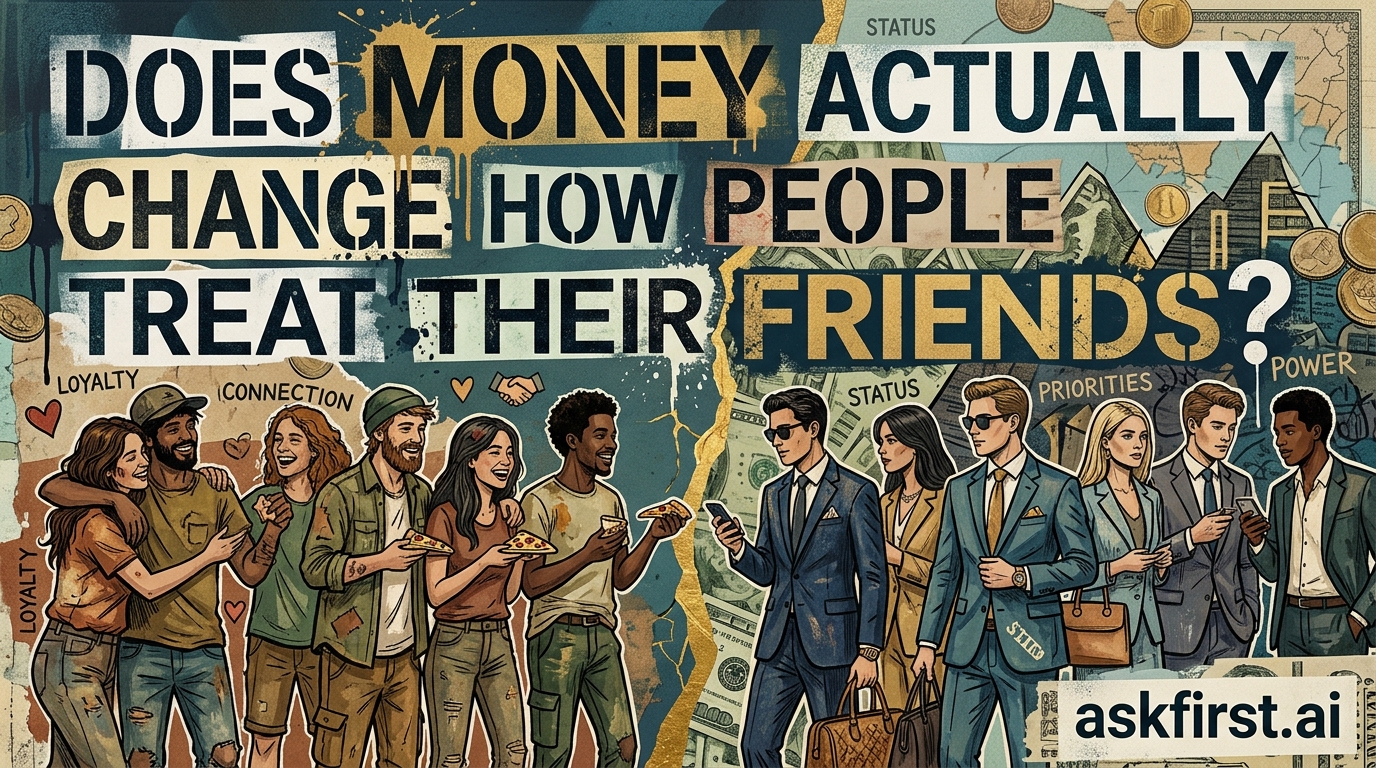
The impact of wealth on interpersonal relationships is one of the most studied phenomena in social psychology. Money does not merely facilitate transactions; it acts as a psychological catalyst that recalibrates social perceptions, alters expectations, and shifts the fundamental architecture of human interaction. When financial disparities emerge between long-term friends, the resulting shifts are rarely subtle and often follow predictable psychological trajectories.
The Psychology of Financial Asymmetry
Research indicates that increased wealth often leads to a diminished ability to read others' emotions—a trait psychologists call lower empathy. As individuals accumulate resources, they become increasingly focused on self-reliance and self-interest. This is often referred to as the 'buffering effect' of wealth, where money serves as a psychological shield, reducing the perceived need for deep social reliance. Consequently, affluent individuals may unconsciously treat friends as auxiliary actors in their lives rather than essential emotional partners. This shift in perspective manifests through:
- Reduced Attentional Focus: Wealthier individuals may become more distracted during conversations if they perceive their time to be highly valuable, leading to shorter interactions or frequent interruptions.
- Shifted Power Dynamics: The 'who pays' mentality can create an unspoken hierarchy. Even when both parties act with good intentions, the benefactor often finds themselves in a position of unintended authority, while the recipient may experience a loss of agency or a subtle sense of debt.
The Role of Relational Expectations
Money introduces a layer of 'transactional thinking' into friendships that were once built on communal sharing. In a healthy friendship, resources are typically shared without a direct expectation of return. However, as financial gaps widen, the wealthier friend may begin to view social invitations through the lens of cost-benefit analysis. They might subconsciously evaluate whether a trip or a dinner is 'worth' the financial investment relative to the social utility provided by the friend.
Cultural and Social Signaling
Friends often bond over shared interests and similar lifestyles. When one party ascends to a higher tax bracket, they often change their consumption patterns—frequenting different venues, changing dress codes, or altering leisure activities. This creates a social barrier known as 'lifestyle drift.' The friend with less money may feel alienated or pressured to perform beyond their means, while the wealthier friend may feel frustrated by an perceived inability to share their newfound world. This disconnect is not necessarily a reflection of malice, but rather an outcome of diverging environmental exposure.
Scientific Perspectives: The Piff and Keltner Studies
Notable research led by social psychologists like Paul Piff at the University of California, Berkeley, has demonstrated that socioeconomic status (SES) can predict social behavior. In controlled experiments, participants primed to feel wealthier were significantly less likely to share resources or pause for others in social settings. While these studies analyze broader social behaviors, the implications for personal friendships are profound: wealth acts as a filter through which the behavior of peers is interpreted. A wealthy individual might interpret a friend’s request for support differently than they would have before their financial windfall, often applying a more skeptical or analytical framework.
Strategies for Mitigating the Financial Divide
While the psychological pull of money is strong, it is not an inevitable destroyer of friendship. Many long-term bonds survive wealth disparity through proactive management of expectations:
- Transparent Communication: Explicitly discussing the financial limitations of the relationship can eliminate the 'guessing game' that creates anxiety.
- Focusing on Time-Based Bonding: Shifting the focus of social interactions from consumption-heavy activities (expensive dining, luxury travel) to activities that require time and effort (hiking, cooking at home, collaborative hobbies) effectively removes the 'money variable' from the equation.
- The 'Equity of Value' Mindset: Recognizing that value in a friendship is derived from emotional support, history, and trust—not monetary contributions—remains the most effective antidote to the distorting effects of capital.
Conclusion: The Everlasting Value of Non-Monetary Bonds
Ultimately, money changes how people treat their friends only when the participants allow external economic status to supersede internal emotional bonds. While the brain is conditioned to perceive wealth as a metric of social hierarchy, the fundamental human need for authentic, non-transactional connection persists. By understanding that financial shifts trigger unconscious psychological biases, friends can actively work to ensure that their shared history remains more valuable than any account balance. Awareness, empathy, and deliberate effort are the core components that protect true friendship from the erosive effects of financial disparity.