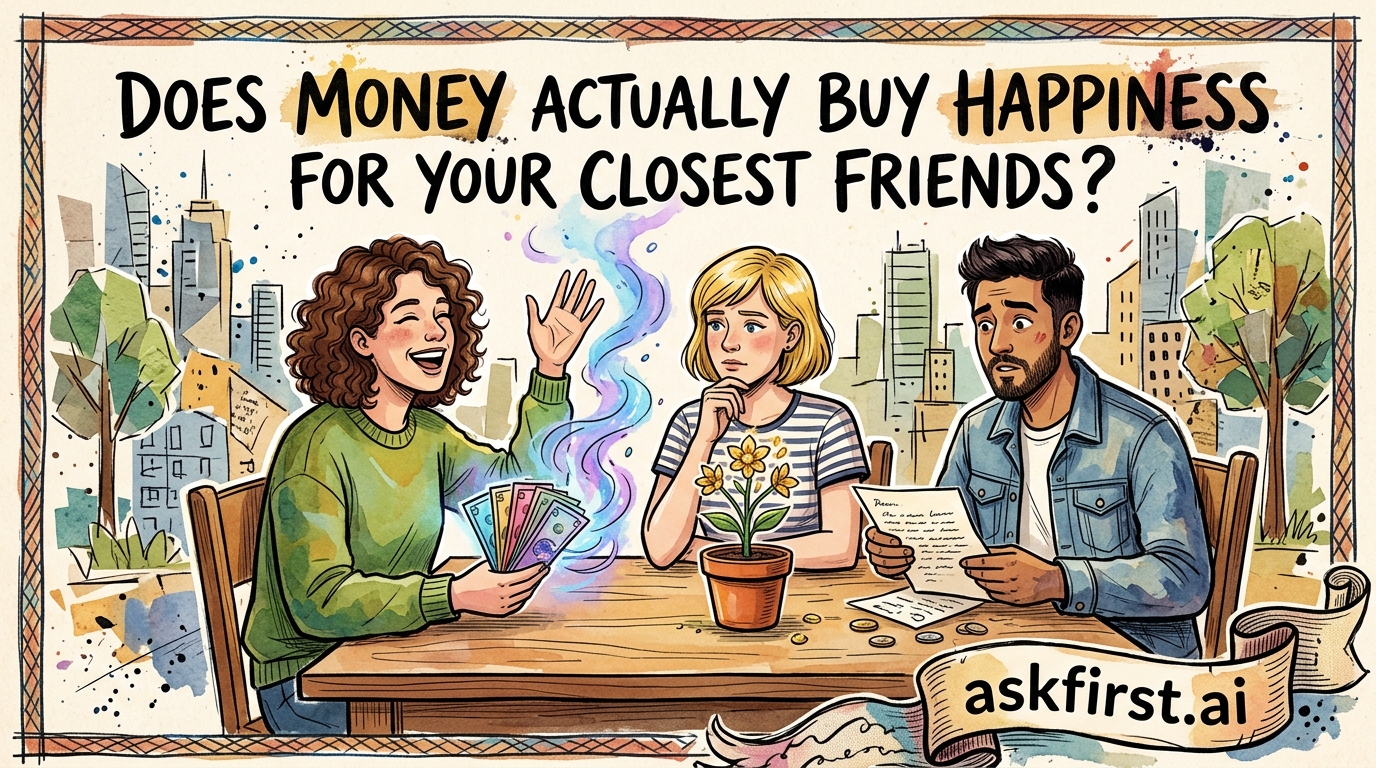
The Paradox of Wealth and Social Fulfillment
The relationship between capital and social satisfaction is one of the most debated topics in behavioral economics and psychology. While the popular mantra suggests that 'money cannot buy happiness,' empirical research indicates a more nuanced reality. When considering the welfare of one's closest friends, financial resources act as an instrument for experience-based connection rather than a direct source of emotional bliss.
The Easterlin Paradox and Relational Stability
The Easterlin Paradox posits that at a point of basic need satisfaction, further increases in income do not correlate significantly with increased life satisfaction. When applied to friendships, this suggests that providing friends with lavish gifts or constant financial bailouts rarely secures deep emotional bonds. In fact, research suggests that excessive financial intervention can create power imbalances, leading to feelings of indebtedness rather than mutual camaraderie. Authentic happiness in friendships is rooted in shared experiences, emotional support, and shared values—none of which are directly purchased through a transaction.
The Power of Experiential Spending
Psychologists Dr. Thomas Gilovich and Dr. Amit Kumar have extensively studied how spending money on experiences—rather than material goods—yields greater psychological dividends. When friends invest resources in shared travels, workshops, or activities, the 'happiness' coefficient rises. By subsidizing shared experiences rather than material items, an individual can facilitate bonds that last a lifetime.
- Shared Experiences: These create memories, which form the bedrock of long-term friendship stability.
- Reduced Anxiety: Eliminating minor financial barriers, such as covering the cost of an occasional meal, can remove friction in a relationship, allowing friends to focus on quality time rather than cost-cutting.
- Reciprocal Value: The 'happiness' derived is not from the money itself but from the time liberated by financial ease.
The Pitfalls of Financial Dependence
It is vital to distinguish between financial assistance and the degradation of agency. When one friend consistently funds the lifestyle of another, the social dynamic shifts from egalitarianism to a patron-client relationship. This shift often triggers 'social comparison theory' anxieties. The friend on the receiving end may struggle with decreased self-esteem, while the benefactor may develop feelings of resentment if expectations of gratitude are not met.
Key Indicators that Financial Involvement is Harming Friendships:
- A decrease in open communication due to unspoken power dynamics.
- One party feeling obligated to perform 'appreciation' acts.
- The prioritization of material consumption over genuine social interaction.
Scientific Perspective on Altruism and Social Bonds
Neuroscientific evidence supports the notion that 'prosocial spending'—spending money on others—activates reward centers in the brain, including the ventral striatum. When individuals spend money on their close friends in a way that fosters communal joy (such as hosting a dinner party or organizing an event), both parties experience an uptick in positive affect. This is not because of the money, but because the resources serve as a catalyst for social bonding. The happiness is found in the collective endorphin release of social cohesion, not the currency.
Defining True Social Wealth
If money is used to buy time, it becomes a powerful tool for friendship. Hiring a cleaner to save time for a friend, or paying for a service that allows friends to spend three hours together instead of working, is essentially 'buying happiness.'
- Use Money for Access: Use funds to gain access to environments where meaningful conversations occur.
- Avoid Materialism: Do not replace emotional availability with gifts.
- Maintain Equality: Ensure the balance of power remains flat, regardless of the bank balance of either participant.
In conclusion, money does not possess the inherent property to 'buy' happiness for friends in a literal, transactional sense. Instead, money is a force multiplier. If the underlying friendship is fragile, money acts as a wedge. If the friendship is robust, money can be utilized to facilitate the shared experiences and emotional intimacy that lead to genuine human flourishing. The secret to friendship happiness remains consistent: investment in quality, undivided attention, and mutual respect. When money is used to support these pillars, it can indirectly contribute to a richer social life, but it remains a secondary support structure to the emotional foundation of human connection. The most successful 'purchases' in a friendship are those that foster memories, bridge distances, and create shared legacies that persist long after the monetary value of the act has been forgotten.