The Psychology of Professional Camaraderie
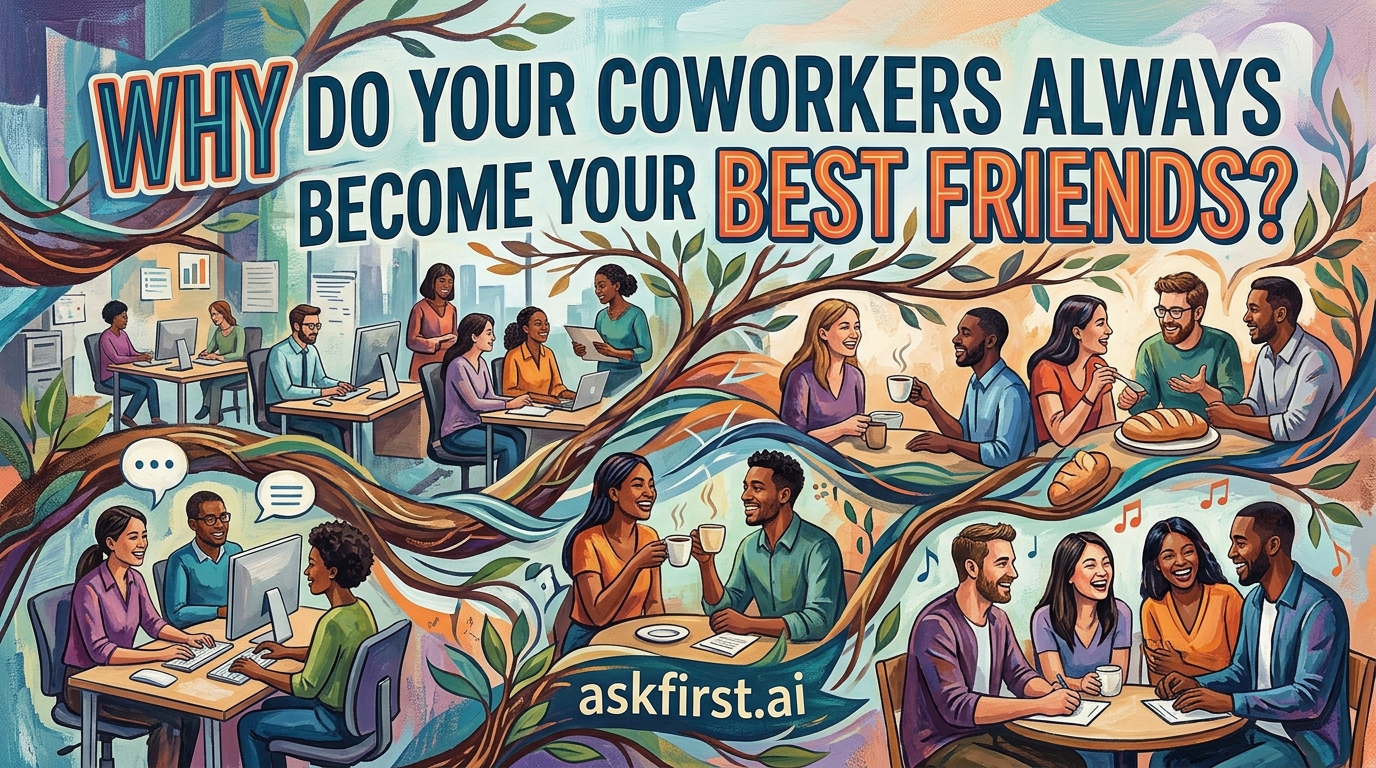
Human beings are innately social creatures, often referred to as 'prosocial' by evolutionary psychologists. When individuals spend a significant portion of their waking hours in the same physical or digital environment, psychological mechanisms trigger the formation of deep bonds. The phenomenon of coworkers becoming best friends is not a coincidence; it is a calculated result of proximity, shared challenges, and the 'mere exposure effect.'
The Proximity Principle and Mere Exposure
At the core of workplace friendship is the Proximity Principle. In social psychology, this suggests that individuals are more likely to form relationships with those they interact with frequently. When tasks, meetings, and shared office spaces force repetitive interactions, the brain begins to perceive these peers as familiar, which inherently reduces the 'threat' levels that usually prevent deep social connection.
Combined with the Mere Exposure Effect—a cognitive bias where people tend to develop a preference for things merely because they are familiar with them—the daily grind essentially programs the mind to view colleagues as safe and reliable social anchors. Over time, these daily repetitions transform basic professional acquaintances into trusted confidants.
Shared Adversity: The Band of Brothers Effect
Nothing accelerates friendship faster than shared struggle. In the workplace, whether it is meeting a tight deadline, navigating a complex project, or commiserating over common corporate policies, employees are often subjected to collective stressors. This creates a psychological state known as 'shared adversity.'
When people face a common challenge, they form an 'in-group' mentality. The act of venting to a coworker about a shared obstacle validates one's own perspective and creates a unique, unspoken alliance. This aligns with sociological research suggesting that shared positive and negative experiences create a common narrative, which is the foundational bedrock of any long-term friendship.
The Necessity of Emotional Buffering
Work is an environment of evaluation, pressure, and ambiguity. To survive, individuals often seek an emotional buffer. A 'work best friend' acts as a sounding board, an interpreter of office politics, and a mirror for one's own professional frustrations.
This role is crucial for mental well-being. By having a trusted peer to consult, employees gain:
- Social Validation: Confirming that their reactions to management or work tasks are 'normal.'
- Cognitive Relief: Reducing stress through cathartic conversation.
- Social Support: A buffer against burnout that provides a sense of psychological safety.
Why Workplace Bonds Last
Many question why these friendships persist even after one person leaves the company. The answer lies in the nature of the initial bond. Workplace friendships are built on a foundation of 'voluntary association within an involuntary environment.' Because both parties were forced to be there, the friendship represents a choice made despite external pressures. This voluntary element makes the relationship feel more authentic and stable than many social connections built in more superficial settings.
The Science of Bonding in a Hybrid World
Even with the rise of remote and hybrid work, these bonds continue to flourish through digital channels. Modern workplace communication platforms act as 'virtual breakrooms.' The spontaneous, non-work-related banter—often referred to as 'watercooler talk'—has merely migrated to instant messaging. Studies on digital communication show that humans are adept at building intimacy through text-based interaction, as long as the frequency of communication remains consistent. The loss of physical proximity is compensated for by the deliberate, intentional effort required to reach out to a colleague in a digital space, which ironically can sometimes lead to deeper self-disclosure.
Essential Pillars of Workplace Friendships
- Trust: Knowing that conversations shared within the walls of a project remain private.
- Reciprocity: The mutual exchange of assistance, advice, and listening time.
- Authenticity: The ability to be oneself, free from the mask of corporate professionalism, which the 'best friend' label permits.
Ultimately, the workplace acts as a laboratory for human connection. Because the environment is highly structured and results-oriented, it strips away the games people play in casual dating or social clubs. Coworkers see each other at their best and their worst, creating a rare level of transparency. It is this combination of forced familiarity, shared purpose, and emotional necessity that explains why the person sitting in the next cubicle or appearing on a video call often becomes the most significant confidant in a person's life.