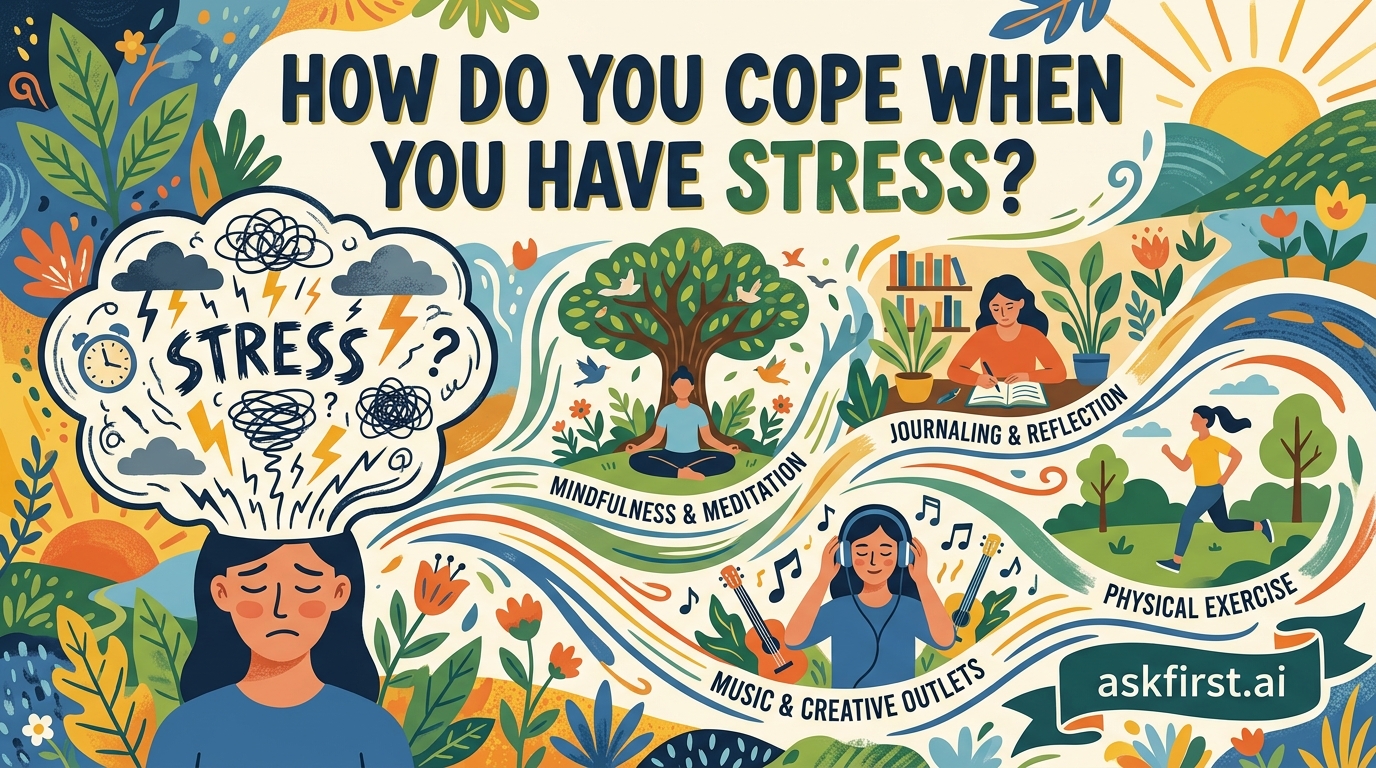
Mastering the Architecture of Stress Resilience: A Comprehensive Guide
Stress is an inescapable facet of the human experience, a biological echo of our evolutionary past. In the modern era, however, the "fight-or-flight" response—originally designed to help our ancestors evade predators—is frequently triggered by psychological pressures, leading to chronic physiological wear and tear. Coping with stress effectively is not about eliminating it entirely, but rather about developing a sophisticated toolkit to regulate the nervous system and reframe cognitive patterns.
The Neurobiology of Stress: Understanding the "Why"
To master stress, one must first respect its biological roots. When you perceive a threat, the amygdala sends a distress signal to the hypothalamus, which activates the sympathetic nervous system. This releases a cocktail of cortisol and adrenaline. According to Dr. Robert Sapolsky in his seminal work, Why Zebras Don’t Get Ulcers, the problem with modern humans is that we turn on this stress response for days, months, or years at a time, which is not how the system was designed to function.
The key to coping lies in "down-regulating" this response. If the system is stuck in the "on" position, we must utilize external interventions to signal safety back to the brain.
Physiological Regulation: The Bottom-Up Approach
The fastest way to influence your mental state is through the body. When your mind is racing, your nervous system is likely locked in a sympathetic state.
- Controlled Respiration: The most efficient tool available is the physiological sigh. As popularized by neuroscientist Dr. Andrew Huberman of Stanford University, this involves two sharp inhales through the nose followed by a long, extended exhale through the mouth. This specific pattern mechanically offloads carbon dioxide and slows the heart rate almost instantaneously.
- Thermal Regulation: Cold exposure—whether through a cold shower or simply splashing ice-cold water on your face—triggers the "mammalian dive reflex." This reflex forces an immediate reduction in heart rate and shifts the body toward a parasympathetic (rest and digest) state.
- Intentional Movement: Stress creates a build-up of metabolic energy. Engaging in rhythmic, repetitive movement—such as brisk walking, swimming, or even deep-tissue foam rolling—helps process the cortisol circulating in your bloodstream.
Cognitive Reframing: The Top-Down Approach
While physiological techniques calm the body, cognitive reframing addresses the narrative that drives the stress. In The Antidote: Happiness for People Who Can't Stand Positive Thinking, author Oliver Burkeman argues that trying to "think positive" often backfires. Instead, he suggests "negative visualization"—the Stoic practice of contemplating the worst-case scenario. By calmly examining the outcome you fear, you strip it of its power, often realizing that the consequences are manageable rather than catastrophic.
Furthermore, consider the "Circle of Control" framework popularized by Stephen Covey in The 7 Habits of Highly Effective People. Draw two concentric circles. The inner circle contains things you can control (your actions, your words, your schedule); the outer circle contains things you cannot (the economy, other people’s opinions, the weather). Spending emotional energy on the outer circle is a primary source of chronic stress. Redirecting that energy into the inner circle provides a sense of agency and calm.
Structural Lifestyle Modifications
Coping is not just a reactive process; it is built on a foundation of structural stability.
- Digital Hygiene: Constant connectivity creates a state of "continuous partial attention." Establishing "no-screen" zones—particularly within the first hour of waking and the last hour before sleep—allows the brain to recover from the constant dopamine-seeking loops of digital input.
- The Architecture of Sleep: Sleep is the brain's primary mechanism for clearing out metabolic waste (the glymphatic system). Dr. Matthew Walker, in his book Why We Sleep, highlights that sleep deprivation mimics the cognitive impairment of alcohol intoxication. Prioritizing a consistent sleep-wake cycle is the single most effective stress-management strategy available.
- The Power of "Deep Work": Cal Newport, in his book Deep Work, suggests that anxiety often stems from a lack of focus. By dedicating blocks of time to singular, high-value tasks, you enter a state of "flow." Flow states are inherently anti-stressful because they demand 100% of your cognitive bandwidth, leaving no room for anxious rumination.
Conclusion: The Path Toward Integration
Coping with stress is a practice of ongoing maintenance rather than a destination. It requires a dual approach: using physiological hacks to signal safety to the body, and utilizing cognitive frameworks to maintain perspective. Whether you are utilizing the breathing techniques of Dr. Huberman, the Stoic insights of Oliver Burkeman, or the structural discipline of Cal Newport, the goal remains the same: to transition from a reactive state to a responsive one.
Remember that stress is not an enemy to be destroyed, but a signal to be decoded. By building a robust system of habits, you ensure that even when the waves of life become turbulent, your internal foundation remains firm. Start small—perhaps with a single physiological sigh or a defined "no-phone" window—and build your resilience systematically over time.