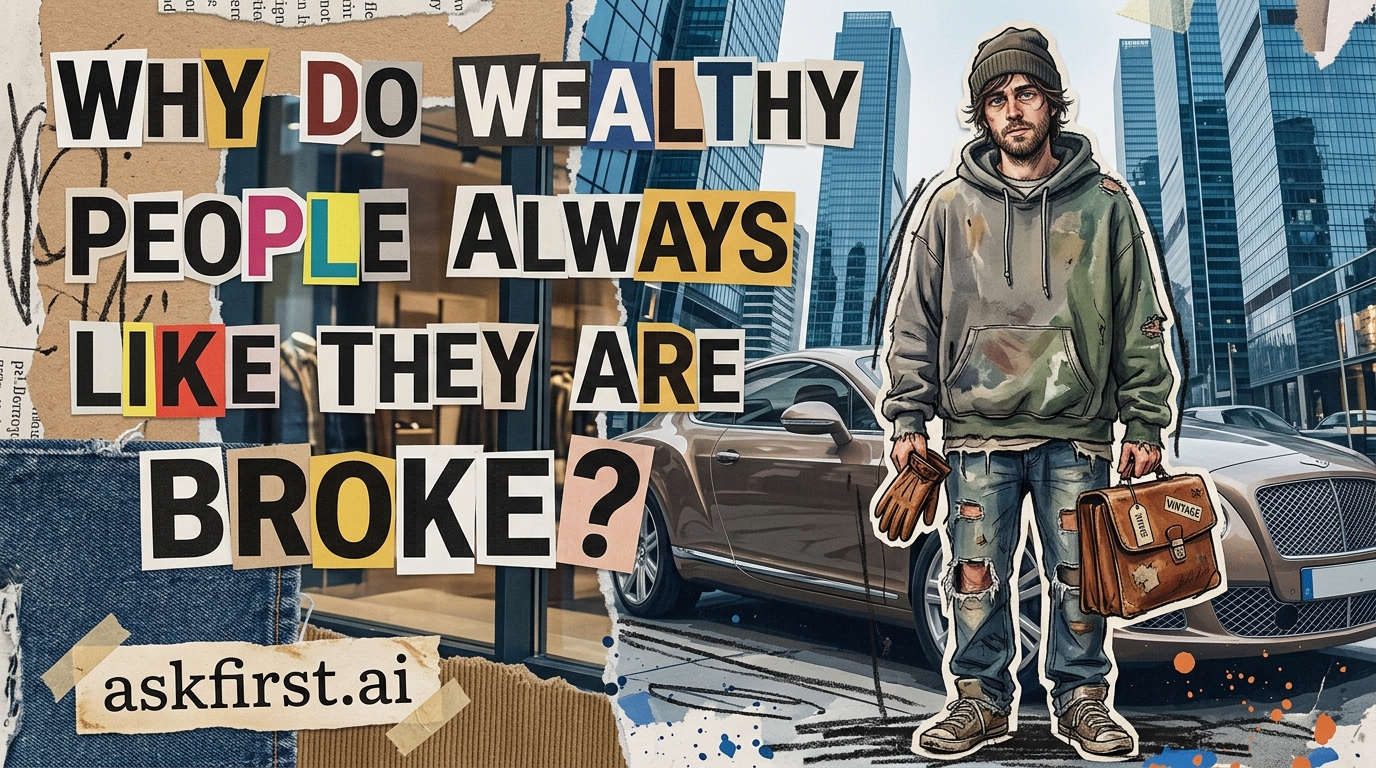
The Psychology of Stealth Wealth
The phenomenon of individuals with significant financial means opting for understated, often worn, or plain attire is not merely a quirk of fashion; it is a calculated sociological and psychological strategy often referred to as 'Stealth Wealth' or 'Quiet Luxury.' In a world increasingly saturated with branding and logomania, the choice to dress modestly functions as a signal to those who know how to decode it. This practice serves as a filter, separating those who consume for status from those who consume for intrinsic quality.
The Socio-Economic Signaling Paradox
Anthropologists often discuss the concept of 'conspicuous consumption,' coined by Thorstein Veblen in the late 19th century. Historically, the elite used extravagant clothing to demonstrate their distance from labor. However, in the modern era, high-net-worth individuals often find that flaunting wealth through overt logos or expensive trends creates an unwanted target or a social barrier. By dressing down, wealthy individuals engage in 'inconspicuous consumption.' They signal their status not to the general public, but to a peer group that recognizes the subtle markers of quality: the drape of cashmere, the cut of a bespoke suit, or the absence of branding that requires a sophisticated eye to identify.
The Efficiency Mindset: Cognitive Load Reduction
Many high-net-worth individuals, particularly those in leadership or tech-heavy roles, utilize clothing as a tool for decision-making efficiency. The concept of 'decision fatigue' posits that every choice an individual makes throughout the day drains mental energy. By adopting a 'uniform'—often consisting of plain hoodies, simple t-shirts, or reliable denim—these individuals eliminate the daily tax of selecting an outfit. When a person manages complex financial portfolios or global organizations, the mental bandwidth required to coordinate an outfit is seen as a misallocation of resources. They prioritize consistency and functionality over aesthetic variation.
Psychological Comfort and Security
Beyond status signaling and efficiency, dressing 'broke' provides a psychological layer of security. Overt displays of wealth can invite unsolicited requests for loans, social pressure, or unwanted attention from those seeking to benefit from the individual's assets. Blending into a crowd—sometimes called 'social camouflage'—allows the wealthy to interact in public spaces without being treated differently. This maintains a sense of autonomy and prevents the 'rich person tax,' where vendors or acquaintances adjust their behavior or pricing based on the perceived financial status of the individual.
The Evolution of the 'New Elite'
In the 21st century, the definition of success has shifted from aristocratic display to intellectual or operational prowess. The 'new elite' often emerge from industries like software engineering, venture capital, or entrepreneurship. Within these subcultures, the prevailing ethos prioritizes competence over costume. In these professional circles, wearing an expensive designer suit might actually signal a lack of seriousness or an obsession with surface-level aesthetics rather than foundational value. Thus, the tattered jeans and plain crewneck sweater have become the new uniform of high achievement.
The Distinction Between Poverty and Understatement
It is vital to distinguish between genuinely dressing in poverty and performing 'aesthetic poverty.' When a billionaire wears a $500 plain grey t-shirt, it is an aesthetic choice that costs more than the standard retail shirt. The comfort, the longevity of the fabric, and the ethically sourced materials are the real drivers of value. The irony is that the ultra-wealthy often spend significant amounts of money to achieve a look that appears effortlessly 'broke.' This requires an understanding of high-end tailoring, where the objective is to create a garment that looks lived-in and comfortable while maintaining superior durability.
Cultural Trends and the Future of Fashion
As the world moves further into the digital age, the importance of physical signaling continues to decline. The 'Quiet Luxury' trend is a direct response to the global saturation of fast-fashion and the ubiquity of status logos. As mass-market brands democratize trends, the ultra-wealthy move toward exclusivity that is defined by scarcity and heritage rather than visibility. In the coming decade, we expect this trend to intensify, with a focus on 'stealth' materials, sustainable fabrics, and minimalist designs that reject the rapid turnover of traditional fashion cycles. Ultimately, for the wealthy, clothing is no longer about how you look to others; it is about how you feel in a world that you have already successfully navigated.