The Psychology of Parasocial Attachment
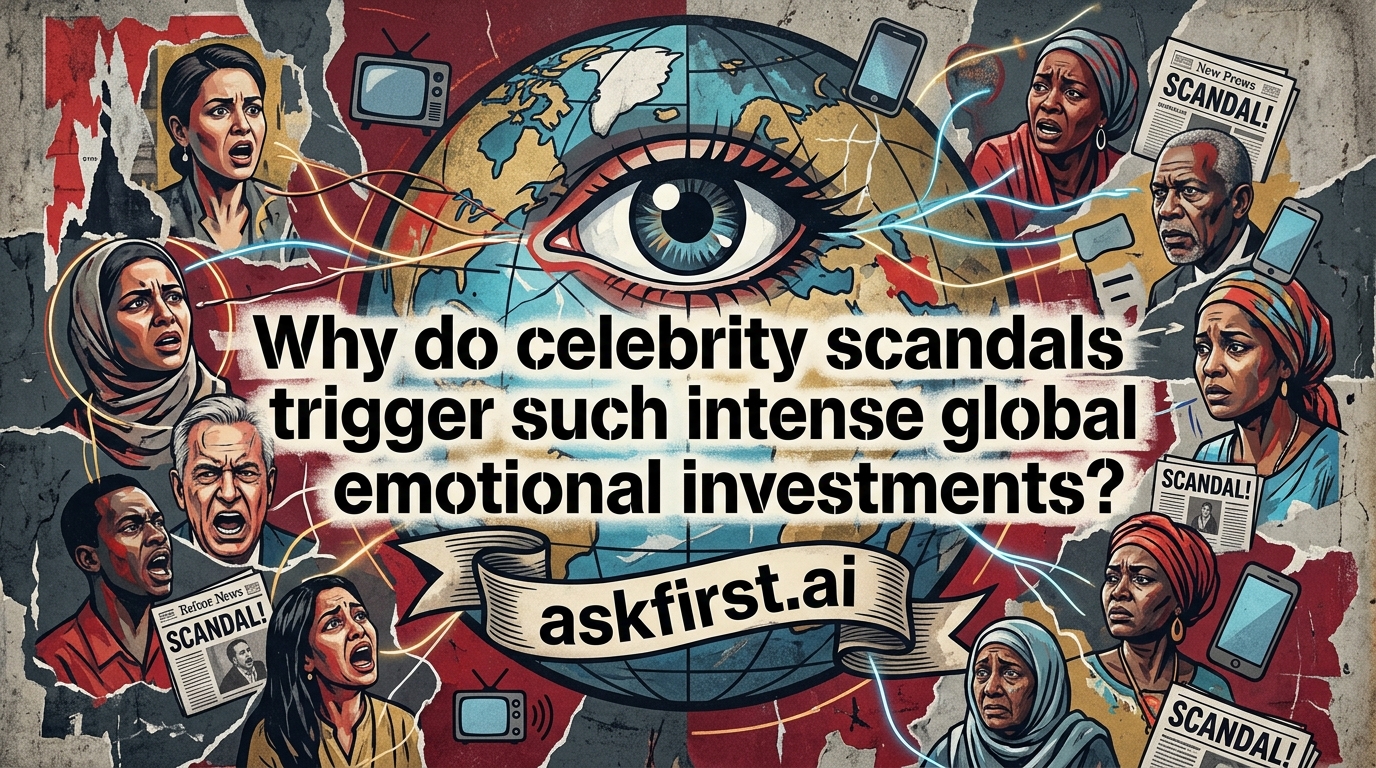
At the heart of the intense public reaction to celebrity scandals lies the psychological phenomenon known as parasocial interaction. Humans are evolutionary hardwired to form social bonds; historically, our survival depended on understanding the motivations and behaviors of people within our immediate 'tribe.' In the modern era, the human brain struggles to distinguish between a face encountered in daily life and one repeatedly viewed on a screen. When we consume hours of content featuring a specific celebrity, our brains register this as a consistent, ongoing social relationship. Consequently, when a scandal occurs, the brain interprets it as a betrayal by a 'friend' or a disruption in the social fabric, triggering genuine feelings of shock, disappointment, or defensive loyalty.
The Role of Narrative Transportation
Celebrity scandals often serve as high-stakes real-world dramas that mirror the classic structures of mythology and literature. Public interest is frequently driven by narrative transportation, a state where individuals become so immersed in a storyline that they lose track of reality. Scandals often follow a hero's journey arc—the rise, the fall, and the potential redemption. By engaging with these narratives, audiences can explore themes of morality, justice, and human failure from a safe distance. This provides a communal experience where global spectators can debate ethical frameworks without the immediate repercussions of direct social conflict.
Social Identity and Collective Belonging
Participation in the discourse surrounding a celebrity scandal offers a sense of belonging to a larger community. Sharing opinions on social platforms creates a shared reality, validating individual moral compasses through collective consensus. Researchers have noted that fans often adopt a celebrity’s values as an extension of their own identities. When a celebrity deviates from their public persona, it challenges the fans' self-concept. The intense emotional investment is not just about the celebrity; it is about protecting the integrity of the social identity formed through the fandom. Supporting or condemning a celebrity allows people to perform their own virtues and social values in a visible, public arena.
The 'Schadenfreude' Mechanism
Another fundamental driver is the psychological concept of schadenfreude—the experience of pleasure derived from the misfortune of others. In an egalitarian society, watching individuals who possess immense wealth, beauty, and status suffer a downfall serves a leveling function. It reinforces the idea that no one is above the consequences of human frailty. This paradoxical mix of empathy for the human condition and satisfaction in seeing a powerful figure humbled is a powerful emotional cocktail that keeps the public glued to updates.
Evolutionary Scrutiny and Social Learning
From an evolutionary perspective, observing high-status individuals is a form of indirect social learning. Throughout history, keeping track of the behaviors of group leaders or elite members was crucial for predicting the stability of the tribe. Today, we scrutinize celebrity behavior to learn what is 'socially acceptable.' Scandals act as case studies in societal norms, defining the boundaries of what is considered honorable or shameful in the eyes of the public. By intensely analyzing these events, society effectively 'polices' its own standards of morality through a proxy of celebrity influence.
The Digital Catalyst
While the psychological drivers are ancient, the digital age acts as an accelerant. The constant stream of notification updates and the democratization of opinion-making mean that every individual has a platform to voice their emotional reaction. This creates a feedback loop where the emotional investment is amplified by social media algorithms, which favor high-engagement, emotionally charged content. As more people join the conversation, the perceived importance of the event grows, creating an illusion of global consensus that makes the scandal feel like an unavoidable, history-defining moment.
Conclusion
Ultimately, the intense global fascination with celebrity scandals is a manifestation of the complex interplay between our ancestral social instincts and the modern digital landscape. We are not just watching entertainment; we are navigating the complexities of human nature, morality, and identity. Whether driven by a misplaced sense of social loyalty, the thrill of the narrative, or the need to validate social norms, these scandals act as a mirror, reflecting our own values and insecurities back at us. Understanding this mechanism allows us to consume media with greater perspective, recognizing that while the celebrities are the figures on the stage, the drama is fundamentally about the audience itself.