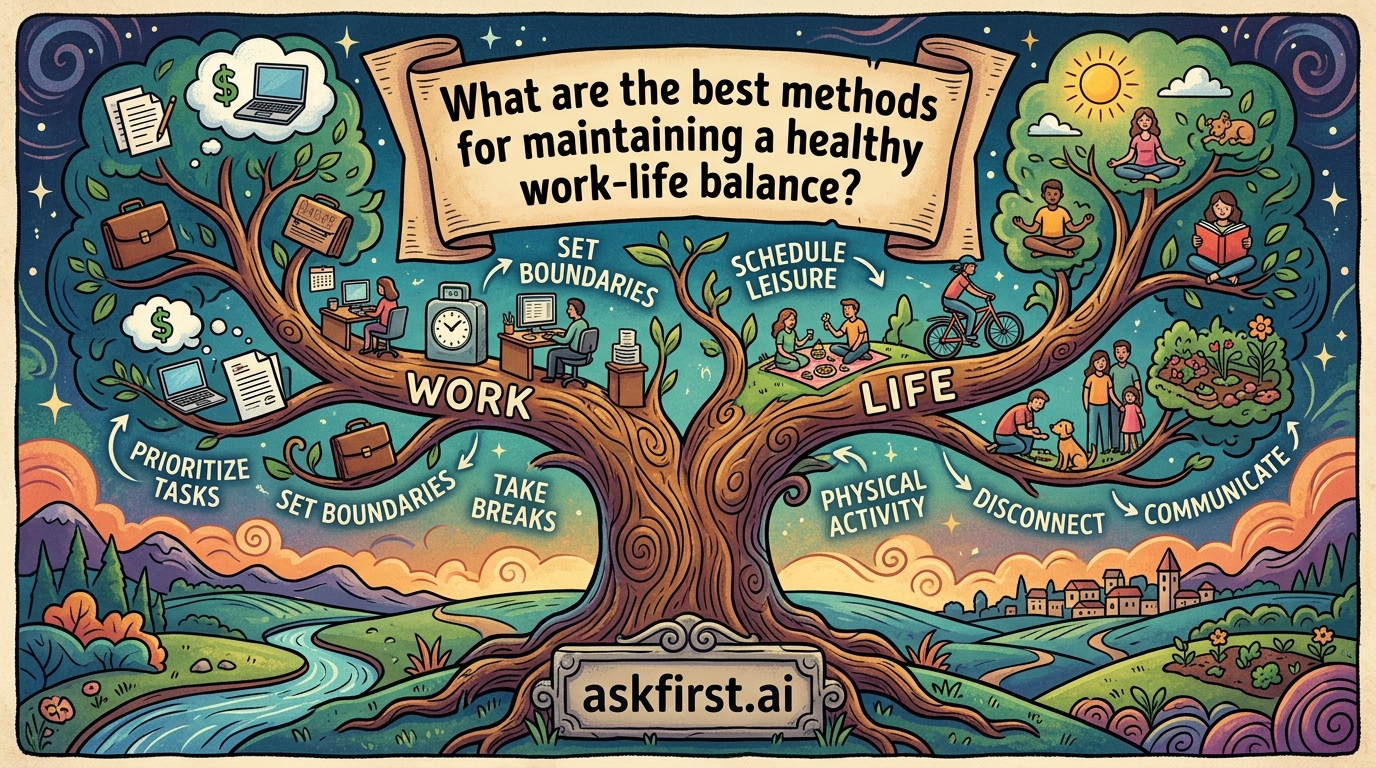
Maintaining a healthy work-life balance in the modern era is less about finding a perfect equilibrium and more about mastering the art of deliberate boundaries. As the lines between professional and personal spheres continue to blur due to remote work and constant connectivity, the traditional "9-to-5" model has largely evaporated. To reclaim your time and mental well-being, you must adopt a proactive, systemic approach to your daily schedule and psychological commitments.
The Psychology of Boundary Setting
The primary obstacle to a sustainable work-life balance is the "always-on" culture. According to Cal Newport in his seminal work Deep Work: Rules for Focused Success in a Distracted World, the ability to focus without distraction on a cognitively demanding task is a rare skill that is becoming increasingly valuable. Newport argues that by setting rigid boundaries—such as finishing your workday at a specific hour and refusing to check emails after that time—you actually increase your productivity during working hours.
To implement this, you must treat your personal time with the same level of professional rigor you apply to a high-stakes meeting. If you work from home, this means physically closing your office door or packing your laptop away in a drawer. By creating a physical transition ritual, you signal to your brain that the "work mode" has concluded. This is supported by the research of Dr. Adam Grant, an organizational psychologist at the Wharton School, who emphasizes that "micro-breaks" and clear temporal boundaries prevent cognitive depletion and chronic burnout.
Prioritization and the "Essentialist" Mindset
Many professionals struggle with balance because they lack a clear hierarchy of tasks. Greg McKeown, in his book Essentialism: The Disciplined Pursuit of Less, posits that we often fall into the trap of believing we can "do it all." The reality is that we can only do a few things exceptionally well.
To achieve balance, you must master the art of the "strategic no." Before accepting a new project or commitment, ask yourself: "Does this contribute to my primary professional goals or my personal well-being?" If the answer is no, declining the request is not a failure of character; it is a necessity for performance. Concrete examples of this include:
- The "One-In, One-Out" Rule: For every new task you take on, identify one existing task to delegate, automate, or eliminate.
- Time-Blocking: Dedicate specific blocks of your calendar to deep work, meetings, and personal recovery. Treat these blocks as non-negotiable appointments.
Leveraging Technology to Maintain Autonomy
While technology is often the culprit behind work-life imbalance, it can also be your most effective tool for restoration. The goal is to move from being "reactive" to "proactive."
- Notification Hygiene: Disable all non-essential push notifications on your smartphone. Research from the University of California, Irvine, led by Gloria Mark, suggests that it takes an average of 23 minutes and 15 seconds to return to deep focus after an interruption. Every "ping" regarding a non-urgent email is a direct hit to your productivity and your subsequent ability to finish work on time.
- Asynchronous Communication: Encourage your team to utilize project management tools like Asana, Trello, or Slack with "Do Not Disturb" modes. Moving away from constant real-time communication allows for periods of uninterrupted work, which naturally shortens the time required to complete tasks.
The Role of Physical and Mental Recovery
Work-life balance is not merely about managing hours; it is about managing energy. In The Power of Full Engagement by Jim Loehr and Tony Schwartz, the authors argue that energy—not time—is our most precious resource. They suggest that performance requires oscillation between periods of high-intensity work and active recovery.
Recovery does not mean mindlessly scrolling through social media. True recovery involves activities that restore cognitive resources, such as:
- Physical Exercise: Engaging in cardiovascular activity or resistance training, which has been shown to reduce cortisol levels.
- Cognitive Detachment: Engaging in hobbies that have no correlation to your professional life, such as cooking, painting, or hiking.
- Sleep Hygiene: Prioritizing 7–9 hours of sleep is the foundational requirement for emotional regulation and executive function. Without adequate rest, your resilience against work-related stress plummets.
Conclusion
Maintaining a healthy work-life balance is a continuous process of recalibration. It requires the courage to set boundaries, the discipline to prioritize effectively, and the wisdom to recognize that your professional output is inextricably linked to your personal health. By implementing the strategies of deep work, adopting an essentialist mindset, and managing your energy through deliberate recovery, you move away from the unsustainable cycle of "busy-ness" and toward a life of sustainable, high-impact performance. Remember, no project is worth the sacrifice of your long-term health; the goal is to build a career that supports your life, not a life that serves only your career.