The Paradox of Emotional Distance: Understanding Avoidance
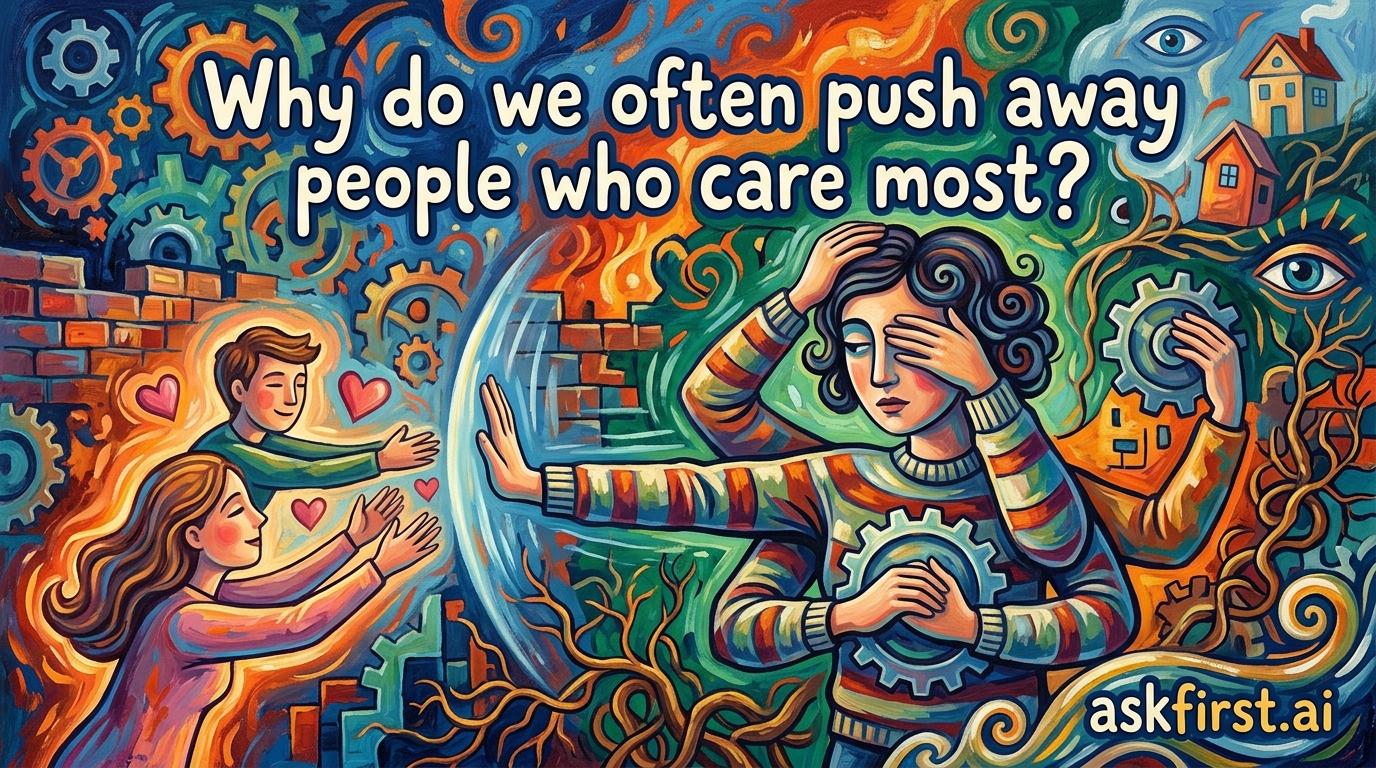
Human psychology is a complex web of survival instincts and social needs, and one of the most puzzling phenomena is the tendency to distance oneself from individuals who offer genuine care and support. This behavior, often labeled as self-sabotage, is rarely a reflection of the other person’s character but rather a deeply rooted mechanism aimed at protecting the individual from perceived threats. By examining attachment theory, the fear of vulnerability, and internal models of self-worth, one can decode why this pattern persists.
1. Attachment Theory: The Secure Base Dilemma
Psychologist John Bowlby’s attachment theory posits that the bonds formed in infancy dictate adult relational styles. Those who develop an avoidant attachment style often learn early in life that their needs might be met with indifference or intrusion. As adults, when someone expresses deep care, it inadvertently triggers these dormant survival patterns. To an avoidant individual, proximity feels like a loss of autonomy. Pushing people away acts as a subconscious boundary-setting mechanism, ensuring that the individual retains total control over their emotional space.
2. The Vulnerability Threshold and Emotional Safety
Dr. Brené Brown’s research on vulnerability highlights that intimacy requires the courage to be imperfect and exposed. When someone shows profound care, the recipient is forced into a state of visibility. If an individual harbors deep-seated insecurities or low self-esteem, they may perceive this attention as a magnifying glass. The fear is not necessarily of the other person, but of the prospect that if the partner truly saw all facets of the person—including perceived flaws—the interest would vanish. This is the fear of exposure. Pushing the person away is a preemptive strike against a hypothetical rejection that the individual fears is inevitable.
3. The Role of Self-Concept and Worthiness
Self-worth serves as the internal thermostat for how much love an individual believes they deserve. When a person receives more care than their self-concept allows, they experience cognitive dissonance—a state of mental discomfort caused by holding two conflicting beliefs: 'I am not worth much' vs. 'This person loves me.' To resolve this discomfort, the brain instinctively works to restore balance. By rejecting the care, the individual aligns their external reality with their internal narrative of unworthiness. It is a psychological defense against the jarring experience of being treated better than one expects.
4. Fear of Future Loss
Another potent driver is the anticipatory anxiety regarding loss. This is the 'avoidance of disappointment' trap. If one never lets anyone get too close, one can never be truly devastated by their absence. The logic, while flawed, is protective: if someone does not know the depths of one’s inner life, their departure causes less damage. This defensive pessimism serves as a shield against potential emotional trauma, yet it inadvertently starves the individual of the very connection they require to thrive.
5. Breaking the Cycle: Strategies for Change
Understanding why this happens is the first step toward overcoming the urge to push away those who offer support. Strategies include:
- Recognizing Triggers: Learning to identify the moment the urge to isolate arises. Is it when a conversation becomes too deep? When someone expresses admiration?
- Cognitive Reframing: Consciously challenging the thought, 'They will realize I am not enough,' with the truth, 'They are choosing to stay based on who I am today.'
- Gradual Exposure: Allowing for small moments of vulnerability rather than total closure. Practicing the acceptance of compliments or small favors can build the emotional muscle needed to accept larger expressions of love.
Conclusion: The Gift of Presence
Ultimately, pushing away those who care most is a legacy of past conditioning rather than a present reality. Human connection is an inherent need, and overcoming the instinct to sabotage it requires patience, introspection, and the courage to believe that one is inherently worthy of stable, long-term support. By shifting focus from defending against phantom threats to embracing the reality of affection, individuals can cultivate deeper, more sustainable relationships that honor the effort of those who seek to remain by their side.