The Paradox of Fear: How Biological Survival Mechanisms Forge Human Resilience
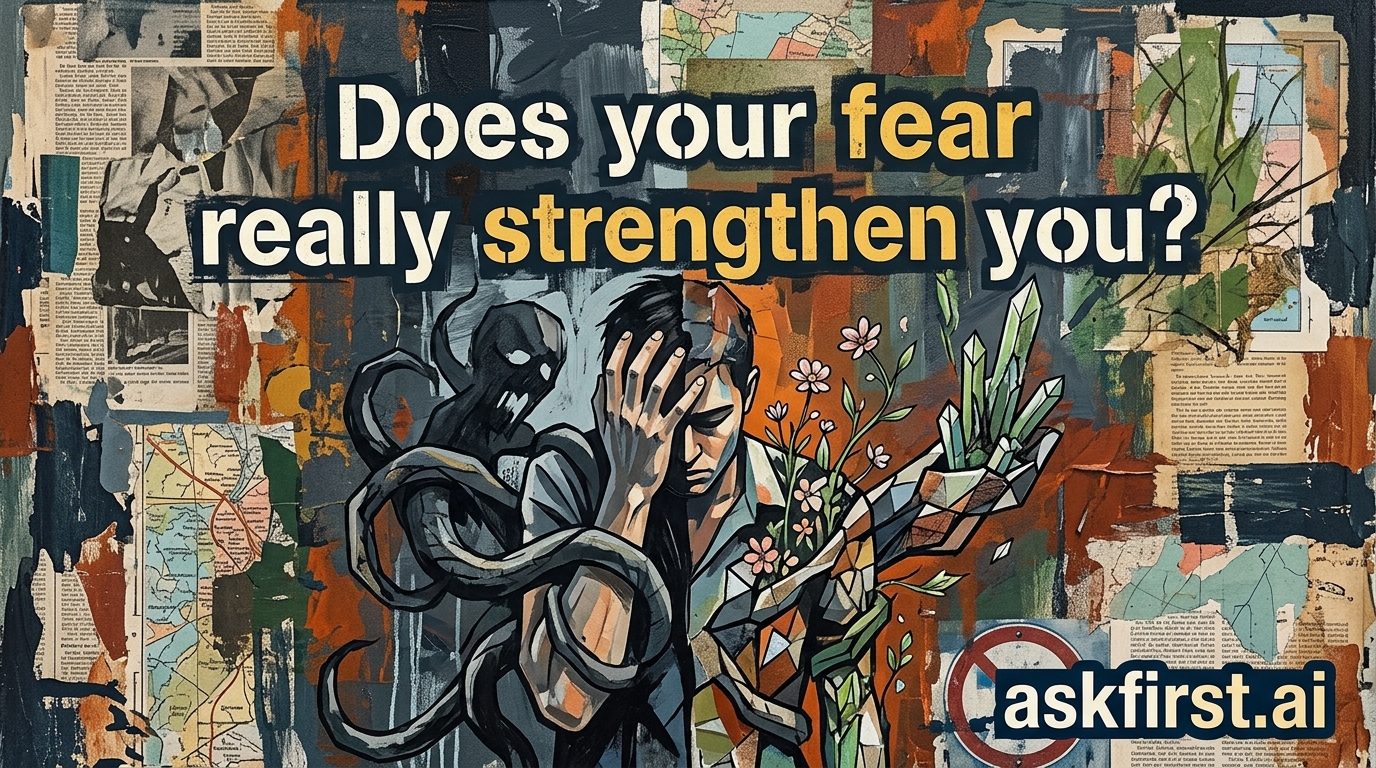
The common adage that "fear strengthens you" is frequently dismissed as a motivational platitude. However, when examined through the lenses of evolutionary biology, cognitive psychology, and neurobiology, it becomes clear that fear is not merely an obstacle to be overcome; it is an essential catalyst for human growth and the refinement of the nervous system. While fear is inherently uncomfortable—designed by nature to trigger a state of high alert—it acts as a crucible. By forcing us to confront potential threats, it builds the psychological architecture required for long-term resilience.
The Neurobiology of the "Fear-Growth" Response
At the core of the human experience of fear is the amygdala, the almond-shaped cluster of nuclei located deep within the temporal lobes. As noted by neuroscientist Joseph LeDoux in his seminal work The Emotional Brain: The Mysterious Underpinnings of Emotional Life, the amygdala serves as our internal "smoke detector." When we perceive a threat, the amygdala initiates a cascade of hormonal responses, including the release of adrenaline and cortisol, which prioritize immediate survival over complex deliberation.
However, the "strengthening" effect occurs when the prefrontal cortex—the area responsible for executive function and emotional regulation—interacts with this primal response. When we face our fears, we are effectively training the prefrontal cortex to modulate the amygdala’s alarm system. This process is known as top-down emotional regulation. By repeatedly exposing ourselves to controlled fear (such as public speaking, athletic competition, or difficult conversations), we are essentially performing "weightlifting" for our nervous system. Over time, the threshold for what constitutes a "threat" increases, rendering us more composed under pressure.
The Concept of "Post-Traumatic Growth"
It is vital to distinguish between debilitating terror and the type of fear that fosters growth. In the field of psychology, researchers Richard Tedeschi and Lawrence Calhoun coined the term "Post-Traumatic Growth" (PTG). Their research, detailed in the Handbook of Posttraumatic Growth, demonstrates that individuals who experience significant adversity often emerge with a greater sense of personal strength, improved relationships, and a heightened appreciation for life.
Fear is the psychological precursor to this growth. It serves as a signal that we have reached the edge of our current capabilities. When we lean into that fear rather than retreating, we move from a state of "survival" to "adaptation." For example, a person who fears the vulnerability of intimacy may, through the gradual process of opening up to others, develop a profound capacity for emotional depth that they would have never possessed had they remained within their comfort zone. The fear did not make them "strong" in a vacuum; it provided the friction necessary to polish their character.
Concrete Examples of Fear as a Catalyst
Consider the professional athlete standing on the starting blocks of an Olympic final. The physiological symptoms—a racing heart, shallow breathing, and tunnel vision—are identical to those of someone facing a life-threatening predator. Yet, the athlete has trained themselves to reframe these sensations not as a signal to flee, but as a signal of readiness.
In her book The Upside of Stress, health psychologist Kelly McGonigal cites research showing that individuals who view their physiological fear response as "helpful" rather than "harmful" perform significantly better in high-stakes environments. The fear strengthens them because it forces them to focus their attention, sharpen their reflexes, and commit fully to the task at hand. Without the fear, the athlete would lack the necessary arousal levels to achieve peak performance.
The Danger of Avoidance
The primary reason many people feel "weakened" by their fears is not the fear itself, but the act of avoidance. Avoidance provides immediate relief from anxiety, which acts as a powerful form of negative reinforcement. By retreating, we teach our brain that the only way to be safe is to avoid the challenge. As clinical psychologist Dr. Jordan Peterson emphasizes in 12 Rules for Life: An Antidote to Chaos, "voluntary confrontation with the unknown" is the fundamental mechanism by which we expand our competence. When we avoid what we fear, our world shrinks; when we confront it, our world expands.
Conclusion: Transforming Fear into Virtue
Fear does not strengthen us by making us fearless. True strength is not the absence of fear, but the mastery of it. By understanding the biological necessity of fear, we can stop viewing our trepidation as a sign of weakness and start recognizing it as a necessary tool for expansion. Whether through the controlled exposure of a new challenge or the deliberate reframing of our physiological response, fear acts as the forge in which our resilience is tempered. We are strengthened not by the avoidance of the dark, but by our willingness to walk through it, learning to navigate the terrain of our own limitations until they become the foundation of our greatest achievements.