The Paradox of Reciprocity: Why Kindness Often Meets Cruelty
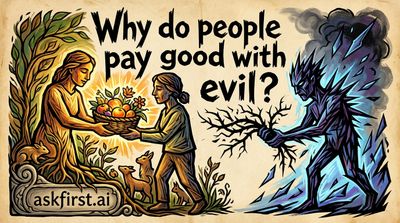
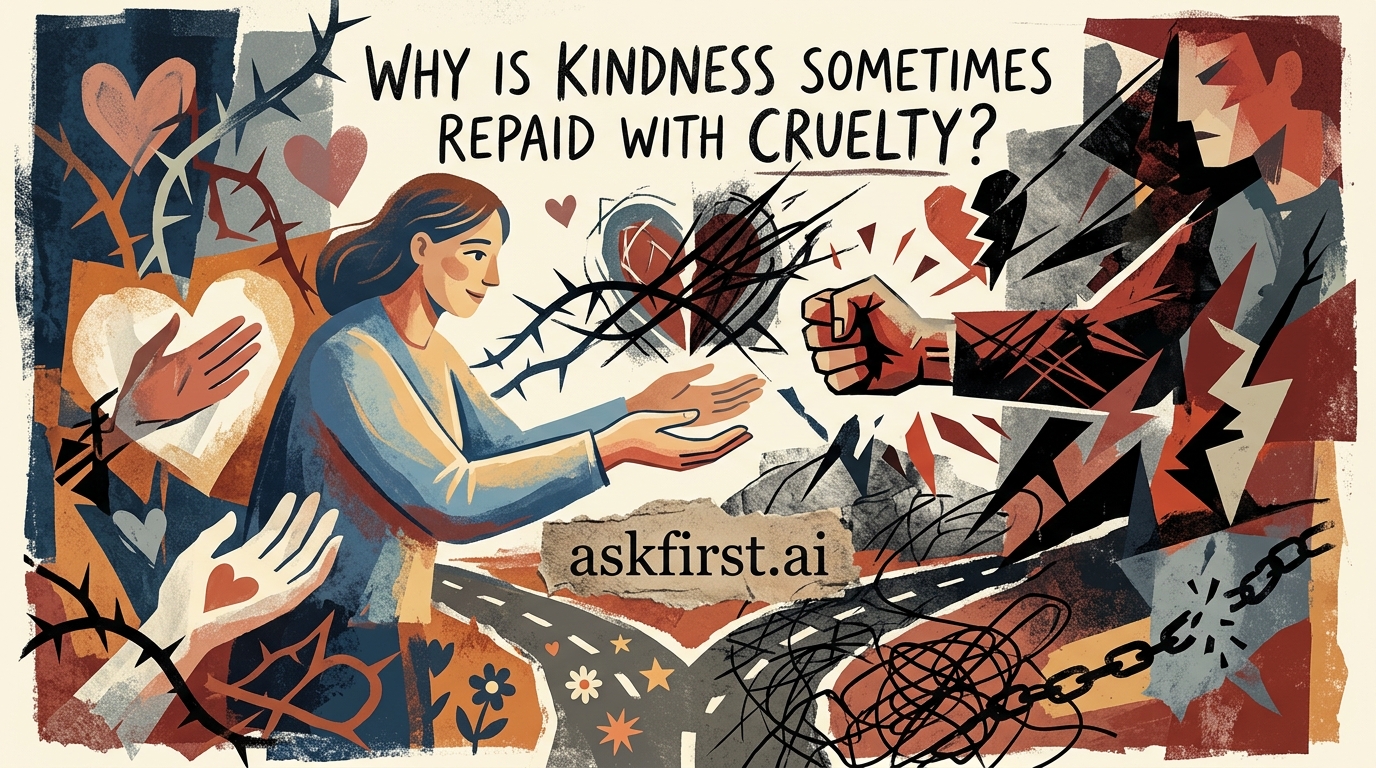
The human experience is defined by a deep-seated desire for connection, yet we are frequently confronted with the jarring reality that benevolence does not always yield gratitude. When an act of kindness is met with cruelty, it triggers a profound sense of cognitive dissonance. To understand this phenomenon, one must look beyond simple moral judgment and delve into the complex psychological, sociological, and evolutionary mechanisms that govern human interaction. The intersection of vulnerability, ego defense, and social power dynamics often explains why a generous gesture can be perceived as an affront rather than a gift.
The Psychology of Indebtedness and Ego Threat
One of the most compelling explanations for why kindness is met with hostility lies in the concept of psychological indebtedness. In his seminal work Influence: The Psychology of Persuasion, Robert Cialdini identifies the "rule of reciprocation" as a fundamental social norm. Humans are hardwired to feel uncomfortable when they owe someone something. When a person receives a significant kindness, they may feel a loss of autonomy or a sense of inferiority.
For individuals with fragile self-esteem or a deep-seated need for control, the acceptance of kindness feels like an admission of weakness. In their minds, the benefactor is placed in a position of power, and the recipient is relegated to the status of a "debtor." To reclaim their sense of agency, the recipient may lash out with cruelty, effectively attempting to "level the playing field" by devaluing the benefactor. By attacking the person who helped them, they attempt to erase the psychological debt, convincing themselves that the benefactor was not actually helpful, but perhaps manipulative or condescending.
The Projection of Internal Shadows
In psychoanalytic theory, particularly the work of Carl Jung, the concept of the "Shadow" plays a pivotal role in human behavior. People often harbor repressed feelings of inadequacy, guilt, or self-loathing. When an individual encounters an act of genuine, unselfish kindness, it acts as a mirror that reflects their own perceived shortcomings.
If someone is struggling with their own inability to be kind or generous, seeing another person embody those traits can trigger intense feelings of envy and resentment. This is what psychologists often refer to as reaction formation—a defense mechanism where a person expresses the opposite of their true feelings to cope with anxiety. Rather than confronting their own lack of kindness, they project their internal frustration onto the benefactor. Cruelty, in this context, is a defensive reaction designed to suppress the discomfort caused by the benefactor’s moral "superiority."
Power Dynamics and the Fear of Manipulation
Not all kindness is perceived as altruistic, and this is where social skepticism enters the equation. In environments characterized by high levels of competition or trauma—such as toxic workplaces or dysfunctional family systems—kindness is often viewed with suspicion. As described by Robert Greene in The 48 Laws of Power, individuals in competitive hierarchies often view every action as a strategic move.
When a person who is accustomed to being exploited receives an unexpected act of kindness, their survival instincts may interpret it as a "Trojan Horse." They may believe that the kindness is a precursor to a future request or a manipulation tactic designed to lower their guard. To protect themselves, they preemptively strike back with cruelty. This is a manifestation of cynical hyper-vigilance, where the recipient attacks the benefactor to test the authenticity of the gesture. If the benefactor remains kind despite the cruelty, the recipient may become even more aggressive, as their worldview—which dictates that everyone has an ulterior motive—is being challenged.
Evolutionary Perspectives: The Cost of Altruism
From an evolutionary standpoint, the "costly signaling theory" suggests that altruism is a way to display fitness and status. However, in small, resource-scarce environments, altruism can also be seen as a disruption of social hierarchy. If an individual acts in a way that is "too kind," they may be perceived as a threat to the established status quo.
In The Selfish Gene, Richard Dawkins explores how organisms navigate the tension between cooperative behavior and competitive survival. When someone acts with excessive kindness, they may be perceived as violating the unspoken rules of the group. If the group relies on a certain level of cold, pragmatic decision-making, the "kind" actor is seen as a liability. Cruelty, in this sense, is a social corrective mechanism used by the group to punish the individual who is violating the expected norms of the collective.
Conclusion: The Resilience of the Benefactor
It is important to recognize that the cruelty one receives in response to kindness is rarely a reflection of the benefactor’s worth; rather, it is a reflection of the recipient’s internal landscape. When we are met with hostility after offering help, it is usually because we have inadvertently touched upon a nerve—whether it be the recipient’s ego, their fear of vulnerability, or their deep-seated cynicism.
Understanding these dynamics does not excuse cruelty, but it provides a framework for maintaining personal integrity. One does not need to become hardened by the world to protect oneself. As the philosopher Marcus Aurelius wrote in his Meditations, one must continue to act according to one's nature, regardless of how others behave. Kindness is a gift given to the world, and its value remains intact even if the recipient chooses to burn it. By recognizing the roots of such hostility, we can remain compassionate without being naive, ensuring that our benevolence is a choice rooted in strength rather than a reaction to the expectations of others.