The Evolution of the Suit: From Tunic Origins to Modern Tailoring
The history of the "suit" is a complex evolution of sartorial tradition, transitioning from functional, loose-fitting garments of the ancient world to the structured, standardized ensemble recognized today. While there is no single "first" suit in the modern sense, the concept of a matching jacket and trousers emerged as a distinct cultural shift in the late 17th century.
Historical Foundations: The Pre-Modern Era
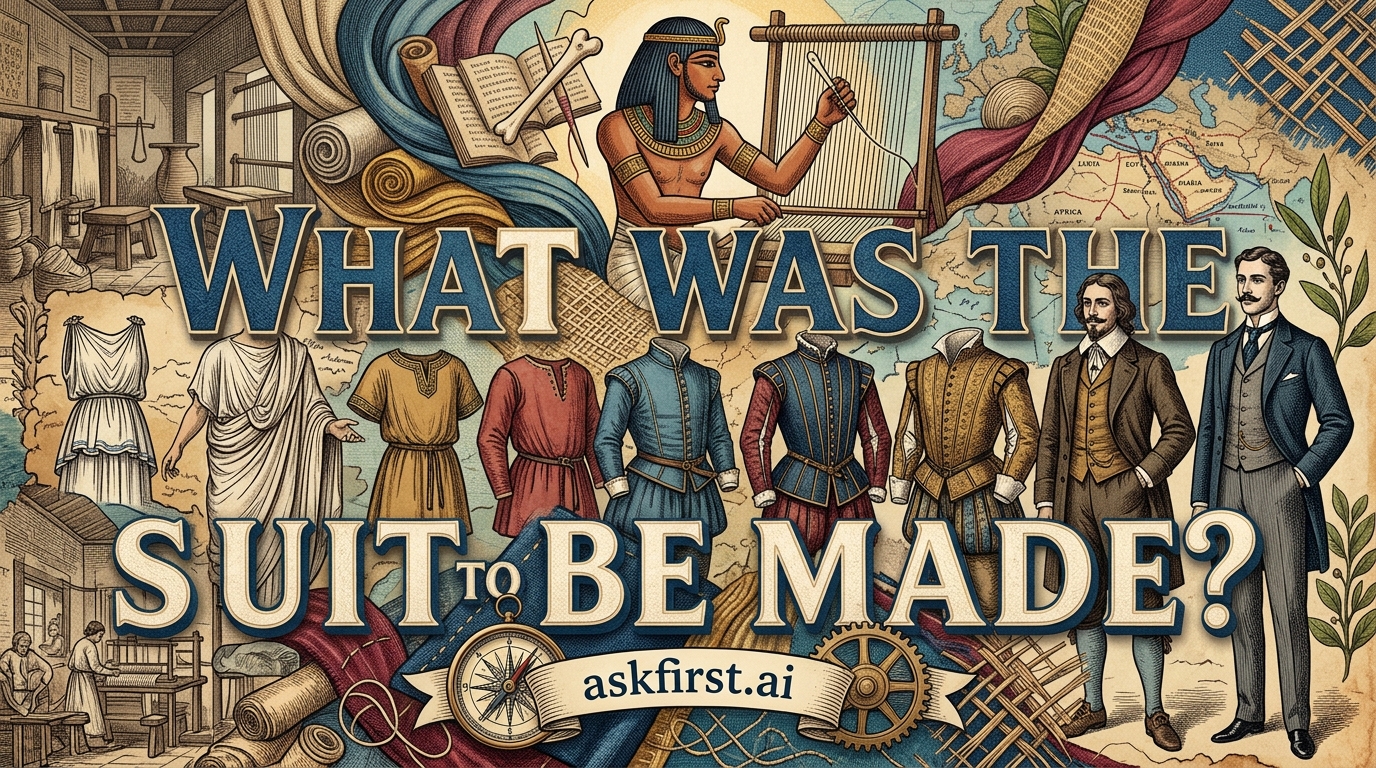
Before the 1600s, European men typically wore tunics, breeches, and doublets. These pieces were rarely made from the same fabric or designed as a cohesive set. The true ancestor of the modern suit appeared in 1666, when King Charles II of England decreed a new style of dress for the English court. He introduced a long coat, a vest (waistcoat), and breeches, marking the first time a coordinated three-piece outfit was standardized as courtly attire. This became known as the "Persian-influenced" style, reflecting a shift toward more formal, structured silhouettes.
The Industrial Revolution and the Rise of the Lounge Suit
The transition from the aristocratic, elaborate court dress to the modern "lounge suit" occurred during the 19th century.
- The Victorian Shift: As the Industrial Revolution took hold, the focus shifted from ornate silks and velvets to functional wools. The frock coat was the standard for gentlemen until the mid-1800s.
- The Lounge Suit Emergence: Around the 1860s, the "lounge suit" was introduced as a casual alternative for country wear. It was initially considered scandalous to wear such "undress" in the city.
- Standardization: By the early 20th century, the lounge suit replaced the frock coat as the standard daytime attire for men in professional and social settings.
Anatomy of the Classic Suit
A traditional suit consists of the following components, which must be crafted from matching fabric (the "suit length"):
- The Jacket: Featuring lapels, buttons, and internal canvas structure.
- The Trousers: Designed to match the jacket’s weight and weave.
- The Waistcoat (Optional): Once mandatory, it is now often omitted in two-piece configurations.
Pros and Cons of Modern Suit Culture
Pros
- Professionalism: A well-fitted suit conveys authority, competence, and respect for the environment.
- Versatility: Suits can be adapted for weddings, boardrooms, or formal galas through fabric selection (e.g., linen for summer, heavy wool for winter).
- Silhouette Enhancement: Tailoring uses structured shoulders and waist suppression to improve the wearer's physical proportions.
Cons
- Maintenance: High-quality suits require professional dry cleaning and careful storage to prevent fabric degradation.
- Cost: Bespoke or made-to-measure tailoring represents a significant financial investment.
- Rigidity: The formal nature of the suit can be restrictive compared to modern "athleisure" or business-casual trends.
Future Trends: Tech-Tailoring and Sustainability
The future of the suit lies in technical fabrics—incorporating elastane for stretch and moisture-wicking properties—and sustainable sourcing. As the world moves toward more casual workspaces, the suit is evolving into a "deconstructed" form, often worn without ties or paired with sneakers, maintaining its status as a symbol of elegance while embracing comfort and environmental consciousness. From the King’s 1666 decree to the digital age, the suit remains the ultimate expression of masculine sartorial identity.