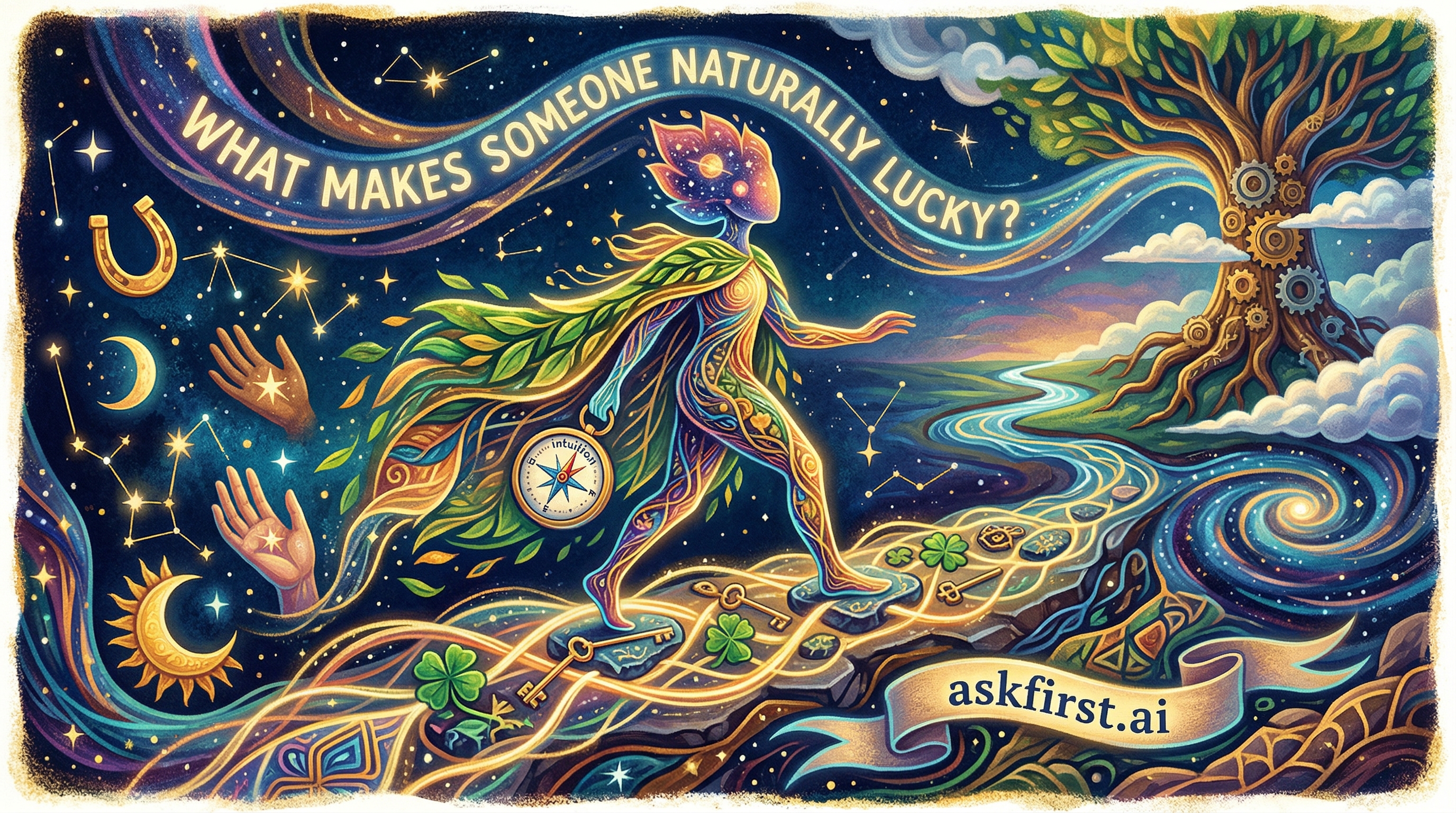
The concept of being "naturally lucky" is often dismissed as a mystical or random occurrence, yet psychological research and behavioral studies suggest that luck is not merely a roll of the cosmic dice. Instead, it is a byproduct of specific cognitive frameworks, personality traits, and habitual actions that create a fertile environment for positive outcomes. When we observe individuals who seem consistently fortunate, we are often witnessing the result of a "luck-prone" mindset—a structured way of interacting with the world that maximizes the probability of favorable events.
The Psychology of Opportunity Recognition
The most significant factor distinguishing the "lucky" from the "unlucky" is the ability to recognize and seize opportunities. Dr. Richard Wiseman, a prominent psychologist who spent years studying the nature of luck, identified that lucky individuals are exceptionally skilled at noticing chance opportunities, even when they are not actively looking for them.
- Openness to Experience: Lucky people tend to have a high degree of openness. They are less anxious and less focused on rigid, narrow goals, which allows them to perceive peripheral information. An anxious person focused intently on a specific task often suffers from "inattentional blindness," missing the unexpected but beneficial signpost right in front of them.
- Reduced Inhibition: By maintaining a relaxed, curious outlook, lucky individuals remain receptive to the environment. They do not filter out "noise" as efficiently as others, which means they are more likely to strike up a conversation with a stranger, notice a job opening on a bulletin board, or find a creative solution to a problem that others might overlook due to a closed mindset.
The Power of Positive Expectation
Self-fulfilling prophecies play a massive role in one’s perceived luck. If an individual believes they are lucky, they approach life with a sense of confidence and resilience. This confidence influences their behavior in three critical ways:
- Persistence in the Face of Failure: When a "lucky" person encounters a setback, they are more likely to frame it as a learning experience or a temporary hurdle rather than a permanent defeat. This persistence keeps them in the game longer, increasing the statistical likelihood that they will eventually succeed.
- Increased Social Capital: Optimism is magnetic. People are naturally drawn to those who project positivity and confidence. By maintaining a cheerful disposition, lucky individuals build larger, more diverse social networks. These networks act as a massive reservoir of resources, information, and opportunities that are unavailable to those who are more pessimistic or withdrawn.
- Risk-Taking Propensity: Because they expect positive outcomes, lucky people are more inclined to take calculated risks. Whether it is applying for a challenging role, moving to a new city, or investing in a new venture, they understand that luck favors the active participant.
Networking and the "Luck Surface Area"
The concept of "Luck Surface Area" is a powerful framework for understanding why some people seem to have more good fortune than others. It suggests that luck is a function of two variables: doing things and telling people about them.
- Active Engagement: By constantly putting oneself in new situations—attending conferences, picking up new hobbies, or initiating conversations—an individual increases their surface area. The more interactions one has with the world, the higher the probability that a random, positive collision will occur.
- Visibility: It is not enough to simply do things; one must also communicate their passions and goals. When you share your interests with others, you activate your network. Friends, colleagues, and acquaintances become "luck sensors" for you, alerting you to opportunities that align with your stated goals. This creates a distributed system of opportunity-finding that far exceeds what a single person could achieve alone.
Intuition as Data Processing
What many call "gut instinct" or "lucky intuition" is often the brain’s ability to process vast amounts of subconscious data. Lucky individuals are frequently those who have spent years honing their craft or exploring diverse fields. Because they have a deep, varied knowledge base, their subconscious can spot patterns and connections that others cannot consciously see.
When a person feels a "lucky hunch" to take a specific path or trust a certain person, they are often unconsciously synthesizing years of experience, non-verbal cues, and subtle environmental signals. Trusting this intuition allows them to make rapid, high-quality decisions that lead to favorable outcomes, further reinforcing their belief in their own luck.
Conclusion: Can Luck Be Cultivated?
The evidence is clear: luck is not a static trait bestowed by birth. It is a set of learned behaviors and cognitive habits. By becoming more open to new experiences, maintaining a positive and resilient outlook, actively expanding one’s social and professional surface area, and learning to trust the subconscious pattern-recognition of a well-informed mind, anyone can effectively "manufacture" their own luck.
Ultimately, being lucky is about shifting from a passive observer of one's life to an active architect of one's environment. While one cannot control the randomness of the universe, one can certainly control how much of that randomness is allowed to intersect with their own life path. Through consistent action and a receptive mindset, the "lucky" individual transforms luck from a mystery into a reliable strategy for success.