The Legal Reality: Can Nature's Shapes Be Copyrighted?
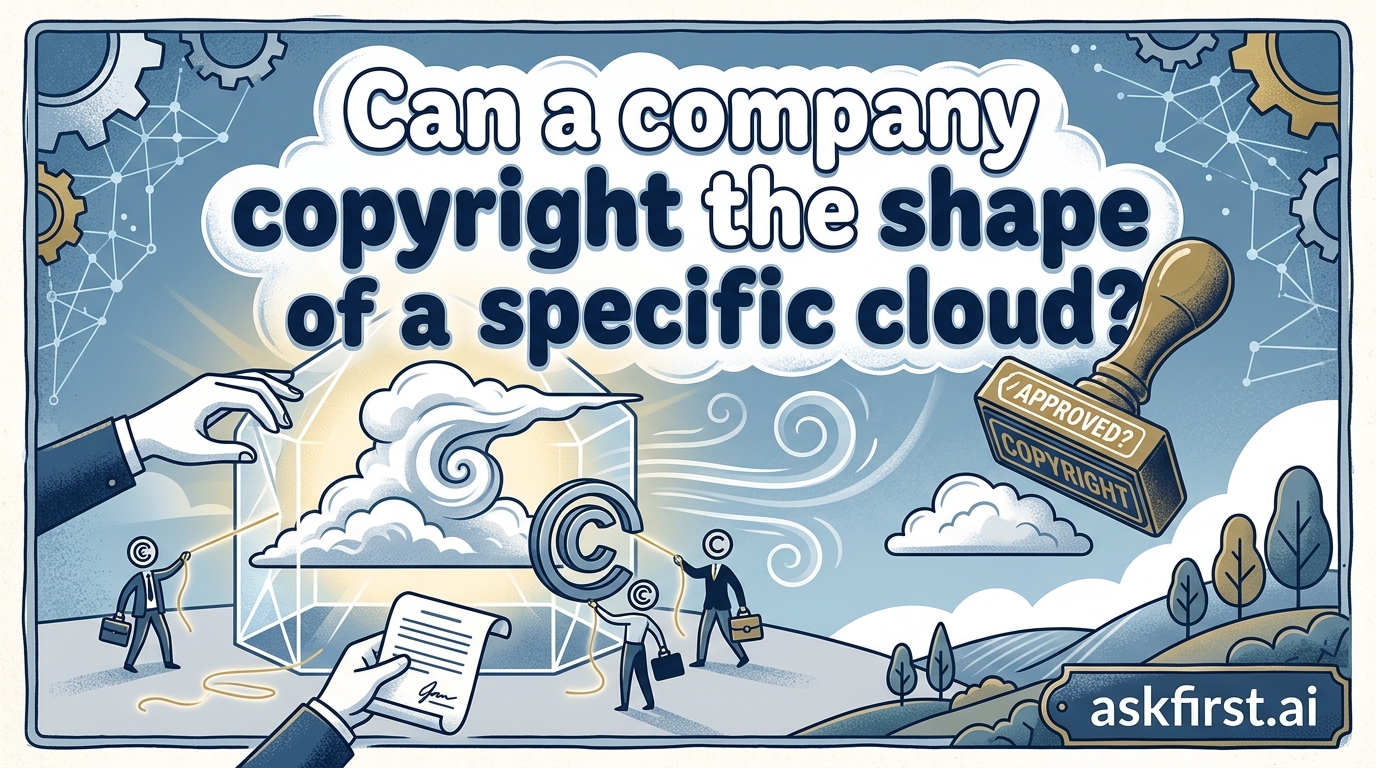
Copyright law is designed to protect original works of authorship that are fixed in a tangible medium of expression. At the core of this legal framework lies a fundamental principle: nature and natural phenomena are considered part of the public domain. Because a cloud is a transient, naturally occurring atmospheric phenomenon, it lacks the essential human authorship required for copyright protection under international standards, such as the Berne Convention.
The Concept of Originality and Authorship
For a work to be eligible for copyright, it must exhibit a "modicum of creativity" and originate from a human creator. Since clouds are formed by meteorological processes like condensation and wind patterns—not by human intent or artistic design—they are not eligible for copyright. A company or an individual cannot claim ownership over a shape that emerges naturally in the sky, as they have not "created" the work.
The Misconception of Trademark vs. Copyright
While copyright protection is impossible for a cloud, organizations often confuse this with trademark or trade dress law. Companies sometimes attempt to use a silhouette or a stylized depiction of a cloud in their branding. In such cases, the company does not own the actual cloud shape in nature; rather, they own the exclusive right to use that specific visual representation as a source identifier for their goods or services within a commercial context. This is a common legal distinction that often confuses the public:
- Copyright: Protects the expression of creative works (books, art, music).
- Trademark: Protects symbols, names, and images used to distinguish brands.
Can Photography Provide Protection?
If a photographer captures a high-resolution image of a unique, unusual cloud formation, the photographer does hold a copyright over the photograph itself. However, this does not grant them rights to the shape of the cloud as it exists in the sky. If another person were to stand in the same location and take their own photo of that same cloud, that individual would also hold the copyright to their unique photograph. The copyright protects the specific artistic choices made during the capture—lighting, angle, aperture, and timing—rather than the meteorological event itself.
The "Public Domain" Boundary
Legal systems globally, including the United States Copyright Office, consistently rule that facts, ideas, and natural occurrences are non-protectable. Attempting to claim ownership over a natural shape would be an attempt to privatize the commons. The law preserves these elements for the public, ensuring that no entity can monopolize the beauty of the natural world or the geometry of the atmosphere. Consequently, any attempt by a company to enforce "ownership" over a cloud's shape would be dismissed in a court of law as lacking a legal foundation.