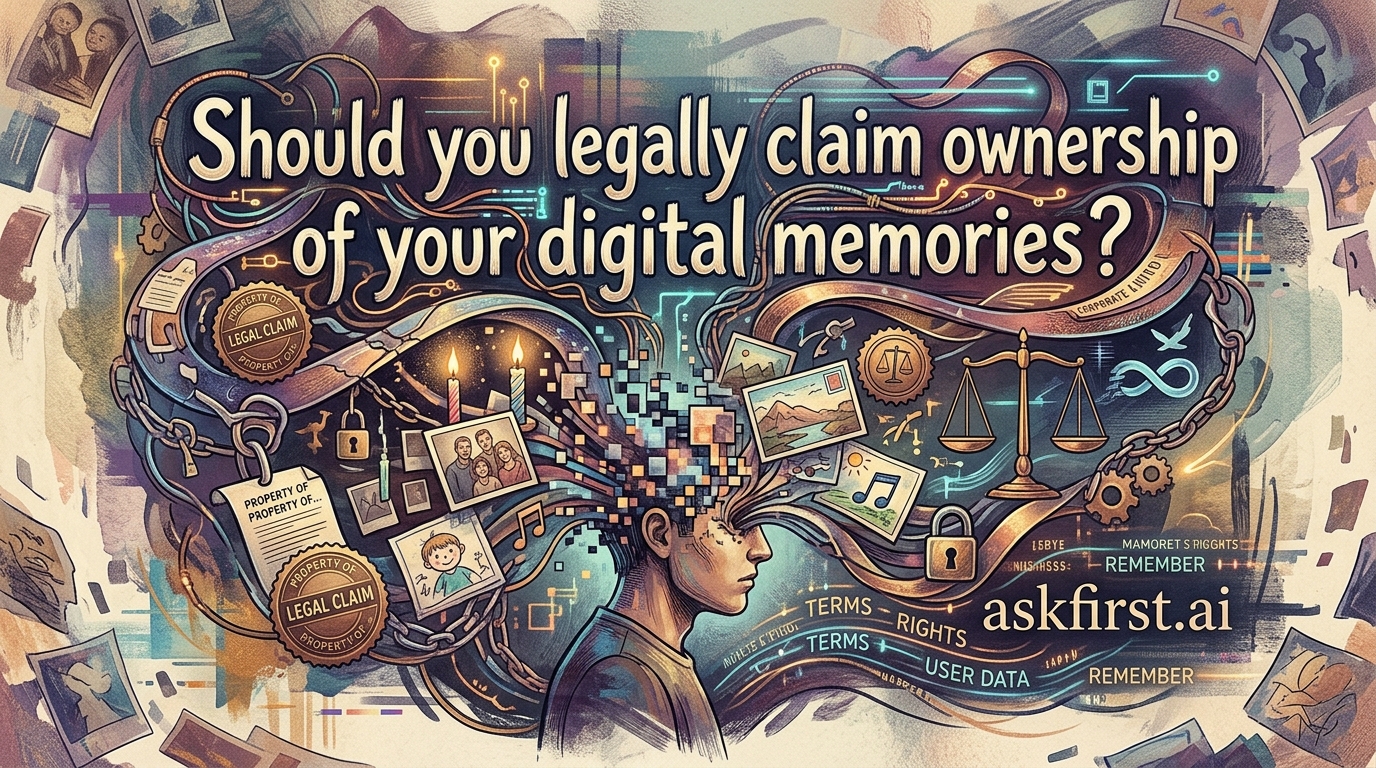
The Significance of Digital Legacy
In an era where personal identity is increasingly mirrored in virtual spaces, the concept of digital ownership has shifted from convenience to a critical necessity. Every photograph, journal entry, and video clip uploaded to social platforms represents a permanent facet of personal history. Claiming legal ownership of these digital memories is not merely an act of record-keeping but a fundamental step toward securing personal agency in the digital age. Without formal legal recognition or proactive management, these assets often become stranded in the purgatory of service provider terms of service, where access can be revoked at any time.
The Legal Landscape
Most mainstream platforms operate under "Terms of Service" agreements that grant companies a non-exclusive, perpetual license to the content users upload. While this allows the service to display images and videos, it complicates the definition of ownership. If a user loses access to an account due to a platform-wide outage, policy shift, or security breach, reclaiming that content becomes legally daunting. Proactive users must treat digital memories like physical property by adhering to several core principles:
- Data Redundancy: Never rely on a single cloud provider as the sole repository for irreplaceable memories. Maintaining local backups on encrypted hard drives is the only way to ensure true, autonomous ownership.
- Estate Planning: Legal frameworks regarding "digital assets" are evolving rapidly. Consult with legal professionals to include digital memory access in wills or trusts, ensuring that designated heirs possess the credentials and legal authority to manage these assets.
- Platform Auditing: Review privacy settings and export tools frequently. Using features like "Download Your Data" allows users to extract their archives into portable formats, effectively establishing a private master copy.
Why Ownership Matters
Legal and practical ownership serves as a defense against "platform drift," a phenomenon where service providers modify their algorithms or storage policies in ways that render historical content invisible or inaccessible. Furthermore, by asserting control over digital memories, individuals prevent the potential exploitation of their personal data by third-party advertisers. When one retains the primary, high-resolution original files, the dependency on cloud-based thumbnail versions disappears.
Future-Proofing Memories
True ownership requires technical foresight. Formats change; proprietary file types that are standard today may become obsolete in a decade. By maintaining files in universal, open-source formats—such as JPEG for images or MP4 for video—individuals safeguard their digital history against the erosion of technological progress. Taking ownership is an empowering move that transforms users from mere content consumers into curators of their own personal archives, ensuring that these stories remain accessible to future generations without the interference of corporate middle-men.