The Psychological and Symbolic Influence of Lucky Numbers on Human Relationships
Human behavior is rarely governed by logic alone. Despite the objective nature of modern science, many individuals integrate symbolic systems—such as recurring lucky numbers—into their daily cognitive processing. When these patterns intersect with the complexities of interpersonal relationships, a fascinating psychological landscape emerges. Understanding whether these numbers dictate decisions or merely provide a comforting framework for uncertainty is essential for anyone interested in the intersection of belief and behavioral science.
The Psychology of Pattern Recognition
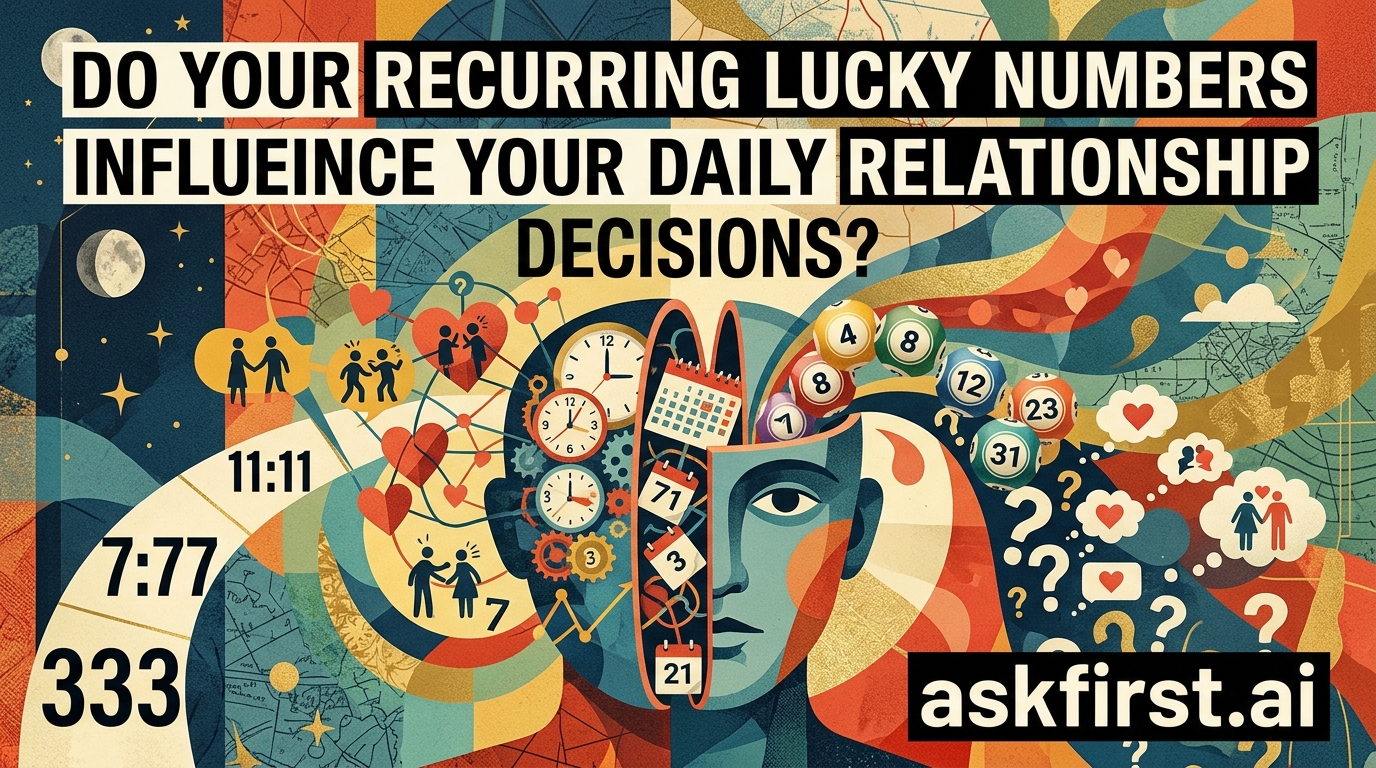
The human brain is a sophisticated pattern-matching machine. This evolutionarily advantageous trait allowed ancestors to identify threats in the wild, but in the modern era, it often leads to the perception of significance where there is only statistical coincidence. This phenomenon, known as apophenia, explains why individuals begin to associate specific numerical values with positive emotional states. When a specific number appears frequently—be it a birthdate, an anniversary, or a digit associated with a lucky event—the brain creates a neural reinforcement loop. This loop attaches a sense of safety and predictability to the number, which naturally bleeds into decision-making processes regarding friends, partners, and colleagues.
Influencing Relationship Dynamics
While few people would suggest that a number "chooses" their partner for them, lucky numbers often act as psychological "tie-breakers." When faced with a difficult choice in a relationship—such as whether to finalize a commitment, pick a date for a meeting, or choose a gift—individuals often defer to their symbolic systems to resolve the internal tension caused by indecision.
- Threshold Selection: Many individuals schedule important relationship milestones on dates reflecting their lucky numbers, believing that these dates carry inherent positive energy.
- Validation Bias: If a positive interaction occurs while a lucky number is visible, the relationship is perceived as "meant to be." Conversely, a negative experience without the presence of the number is often dismissed as a temporary hurdle rather than a systemic failure.
- Decision Anchoring: In environments where individuals feel they lack control, relying on a lucky number provides a sense of agency, even if the influence is purely symbolic.
The Role of Cognitive Comfort
It is vital to distinguish between a superstitious obsession and a cognitive heuristic. In behavioral economics, a heuristic is a mental shortcut that eases the cognitive load of decision-making. By assigning value to numbers, individuals reduce the anxiety associated with unpredictable relationship outcomes. By relying on a symbolic framework, one creates a "mental anchor" that stabilizes the decision-making process. For example, choosing to visit a favorite restaurant at 7:00 PM because seven is a lucky number provides a sense of alignment and intention, even if the time itself has no bearing on the success of the dinner. This is not necessarily irrational; it is a manifestation of the human need for structure.
Busting the Myth of Total Control
Despite the comfort lucky numbers provide, it is crucial to remain grounded in reality. Relying exclusively on symbolic numbers can lead to a phenomenon known as the illusion of control, where individuals overestimate their ability to influence events that are actually probabilistic. Scientific studies into behavioral psychology indicate that the most sustainable relationships are built on consistent, intentional effort, mutual trust, and effective communication—factors that exist independently of numerical symbolism. Relying too heavily on a lucky number can become a detriment if it causes a person to ignore obvious "red flags" or communication gaps in a relationship simply because the situation aligns with a specific numerical pattern.
Cultivating a Balanced Perspective
To leverage the power of personal symbols effectively, one should view lucky numbers as ceremonial tools rather than decision-making dictators. Using a lucky number to add a layer of joy or intentionality to a date is a healthy expression of personal style. However, decisions involving the emotional health and stability of a relationship should be handled with analytical rigor and deep empathetic communication.
- Reflect on Intent: Ask if a decision is based on genuine feeling or solely on the appearance of a number.
- Verify with Data: Does the relationship satisfy emotional needs regardless of lucky numbers?
- Use Numbers for Positivity: Instead of using numbers to decide if a relationship should continue, use them to curate moments of connection.
In conclusion, while recurring lucky numbers do not technically dictate the fate of human relationships, they play a profound role in how individuals frame their experiences. By acknowledging this influence, people can better manage their cognitive biases and foster deeper, more authentic connections with their loved ones. The marriage of symbolic intuition and objective reasoning creates the most balanced approach to life, ensuring that one remains both open to the wonder of the universe and rooted in the reality of human connection.