The question of whether consciousness persists beyond the cessation of biological life is perhaps the oldest and most profound inquiry in human history. Across millennia, philosophy, theology, and, more recently, clinical science have grappled with the nature of existence. While no empirical, peer-reviewed scientific consensus has "proven" an afterlife, the subject remains a vibrant field of multidisciplinary investigation. To understand this complex issue, one must examine the intersection of near-death studies, quantum theories of consciousness, and the enduring philosophical traditions that have shaped human civilization.
The Clinical Frontier: Near-Death Experiences (NDEs)
In the modern era, the most tangible evidence cited by proponents of an afterlife comes from the study of Near-Death Experiences (NDEs). Dr. Sam Parnia, a critical care physician and director of resuscitation research at NYU Langone Health, has spent years documenting the accounts of patients who have been declared clinically dead—meaning their hearts stopped and brain activity ceased—only to be resuscitated.
In his seminal work, Erasing Death: The Science That Is Rewriting the Boundaries Between Life and Death, Parnia notes that many patients report a sense of "lucid consciousness" during periods where the brain should be incapable of forming memories. These accounts often feature a consistent narrative: the feeling of separating from the physical body, moving through a tunnel, encountering deceased loved ones, and experiencing a panoramic life review. Skeptics, such as neurologist Dr. Steven Novella, argue that these phenomena are merely the result of a dying brain releasing neurochemicals like DMT or undergoing oxygen deprivation (hypoxia). However, researchers like Dr. Bruce Greyson, co-author of The Handbook of Near-Death Experiences, argue that the depth and clarity of these experiences often transcend the chaotic hallucinations expected during a physiological breakdown.
The Philosophical Perspectives: Dualism vs. Physicalism
The debate over the afterlife is fundamentally a debate about the nature of the mind. In Western philosophy, the divide is generally categorized into Physicalism and Dualism.
Physicalism, the dominant view in modern neuroscience, posits that the mind is entirely a product of the brain. When the hardware (the brain) stops functioning, the software (consciousness) ceases to exist. This view is echoed in the writings of Daniel Dennett, particularly in Consciousness Explained, where he argues that there is no "Cartesian Theater" or soul—only a series of neural processes.
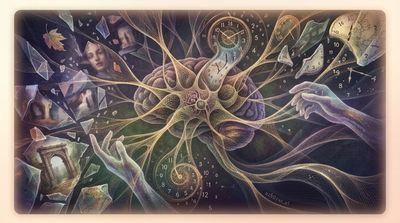
Conversely, the Dualist tradition, famously championed by René Descartes, suggests that the mind and body are distinct entities. Modern proponents of this view often look to quantum mechanics to explain how consciousness might exist independently of the brain. Physicist Sir Roger Penrose and anesthesiologist Stuart Hameroff proposed the "Orch-OR" (Orchestrated Objective Reduction) theory, suggesting that consciousness originates from quantum vibrations within microtubules inside brain neurons. While highly controversial, this theory opens the door to the possibility that consciousness could exist in a non-local, quantum state after the physical body expires.
Cultural and Religious Foundations
Throughout human history, the conviction of an afterlife has functioned as a cornerstone of societal order and personal meaning. In the Egyptian Book of the Dead, the journey of the soul through the underworld, or Duat, was a rigorous process of moral judgment. Similarly, in the Bhagavad Gita, the concept of Atman (the soul) is described as immutable and eternal: "The soul is never born, nor does it die at any time."
These systems provide a framework for understanding life as a transient phase. Whether one looks at the Platonic view of the soul’s immortality as expressed in the Phaedo, or the Abrahamic concepts of resurrection and eternal life, the human narrative consistently rejects the idea of total extinction. This "universal intuition" suggests that the desire for an afterlife is not merely a coping mechanism for the fear of death, but perhaps a reflection of a deeper, intuitive understanding of our own subjective awareness.
The Problem of Verification
The fundamental hurdle in this inquiry is the "Hard Problem of Consciousness," a term coined by philosopher David Chalmers. We understand the physical mechanics of the brain, but we do not know how or why physical matter gives rise to subjective experience. Because we cannot observe consciousness from the outside—only experience it from the inside—we lack the tools to measure its persistence beyond the biological entity.
If consciousness is a fundamental property of the universe, like mass or charge, then it would not necessarily be destroyed when the brain dies. This hypothesis is explored by Bernardo Kastrup in Why Materialism Is Baloney, where he argues that the brain is not the producer of consciousness, but rather a "filter" or "transceiver" that constrains it. If the brain is a filter, then death might simply be the removal of that filter, allowing consciousness to expand rather than terminate.
Conclusion: A Mystery Awaiting Resolution
As of May 2026, the question of life after death remains an unsolved mystery. We are caught between the rigorous demands of material science, which sees no evidence for a soul, and the persistent, cross-cultural, and clinical evidence of subjective experiences that suggest the mind is more than just a biological machine.
Whether the afterlife is a reality or a final, elaborate trick of a failing nervous system, the pursuit of the answer serves as a powerful catalyst for human inquiry. We continue to look toward the horizon of the unknown, not only because we fear the end, but because the very nature of our consciousness demands that we ask: "What comes next?" The answer, for now, remains an invitation to continue exploring the limits of our own existence.