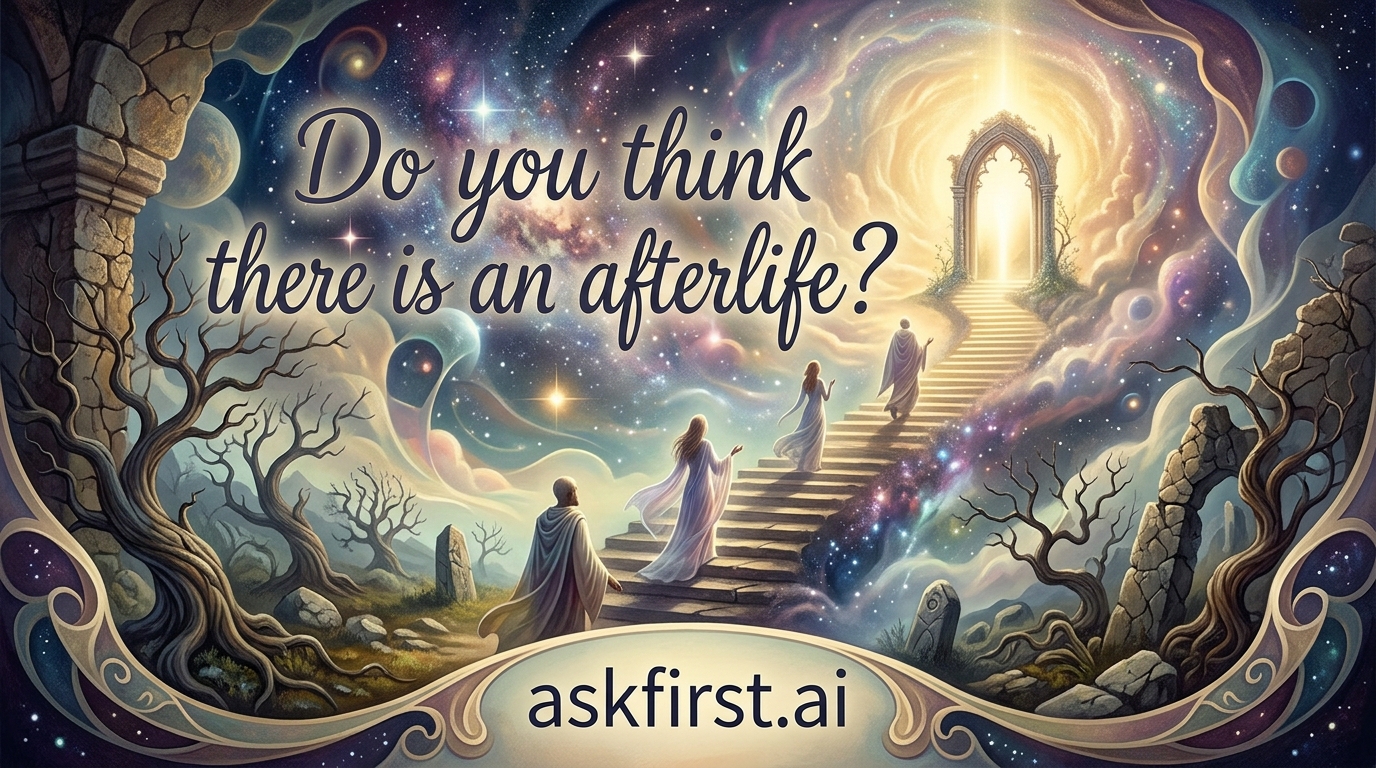
The question of the afterlife is perhaps the most enduring inquiry in the history of human consciousness. It sits at the intersection of metaphysics, theology, neuroscience, and physics. Whether one views the afterlife as a literal destination for the soul or a metaphorical continuation of energy, the discourse surrounding this topic remains one of the most intellectually rigorous pursuits in human history. To understand this concept, we must examine the perspectives offered by historical philosophy, modern near-death studies, and the scientific limitations of our current understanding.
Philosophical Foundations: The Dualist Perspective
The concept of an afterlife is deeply rooted in the philosophy of substance dualism, most famously articulated by René Descartes in his seminal work, Meditations on First Philosophy (1641). Descartes argued that the mind (or soul) and the body are distinct substances. Under this framework, the physical body is a machine subject to decay, while the mind—the seat of consciousness—is an immaterial entity. If the mind is not physically tethered to the biological structures of the brain, it follows logically that the cessation of brain activity does not necessitate the destruction of the consciousness itself.
This perspective is echoed in the ancient traditions of Plato, specifically in his dialogue Phaedo, where he posits that the soul is immortal and inherently divine. Plato argued that because the soul is the provider of life, it cannot admit its opposite, death. While modern materialist science often challenges this, the philosophical argument for the non-locality of consciousness remains a pillar for those who believe that our current existence is merely a transient phase of a larger, ongoing cycle.
Near-Death Experiences (NDEs) and Clinical Observations
One of the most compelling, albeit controversial, areas of research regarding the afterlife comes from the study of Near-Death Experiences. Dr. Raymond Moody, in his groundbreaking 1975 book Life After Life, documented the testimonies of patients who were clinically dead and subsequently resuscitated. These individuals frequently reported consistent motifs: a sense of detachment from the body, moving through a dark tunnel, encountering a "being of light," and a panoramic review of their life.
More recent clinical research, such as the AWARE study led by Dr. Sam Parnia at the NYU Langone Medical Center, has sought to quantify these experiences. While Dr. Parnia focuses on the physiological aspects of resuscitation, his research has highlighted that consciousness may persist for a short window after cardiac arrest—a state that challenges our traditional definitions of brain death. Critics argue that these experiences are the result of neurochemical surges, such as massive releases of DMT or endorphins in a dying brain. However, proponents point to "veridical perception"—instances where patients describe events or objects in hospital rooms that they could not have physically seen while unconscious—as evidence that consciousness can function independently of the brain.
The Scientific Dilemma: Energy and Information
From the standpoint of physics, we often look to the First Law of Thermodynamics, which states that energy cannot be created or destroyed, only transformed. While this law applies to physical matter and energy, some theorists, such as the late Dr. Robert Lanza in his book Biocentrism (2009), argue that life and consciousness are fundamental to the universe. Lanza suggests that space and time are tools of the mind, and therefore, death as we conceive of it may be an illusion. In this view, the "afterlife" is not a place one travels to, but a shift in the way consciousness perceives reality once the biological filter of the brain is removed.
Conversely, the materialist perspective remains the dominant paradigm in modern neuroscience. Authors like Daniel Dennett, in Consciousness Explained (1991), argue that the mind is essentially a set of "user illusions" created by the brain. From this viewpoint, once the neural architecture is dismantled, the "software" of the self ceases to run. This is a sobering conclusion, yet it highlights the profound mystery of why we possess subjective experience at all—a problem known as the "Hard Problem of Consciousness," as termed by philosopher David Chalmers.
Conclusion: The Unresolved Mystery
Ultimately, the question of whether there is an afterlife cannot be settled by empirical evidence alone because it exists outside the bounds of verifiable, repeatable observation. Whether one finds comfort in the religious promise of an eternal state, the philosophical possibility of non-local consciousness, or the materialist acceptance of finality, the inquiry itself reveals more about the human condition than the answer ever could.
We are creatures defined by our search for meaning in the face of inevitable expiration. Whether the afterlife is a literal transition to a new state of being or the final closing of a complex biological chapter, the fact that we can contemplate our own cessation is, in itself, a profound phenomenon. As we continue to advance in our understanding of quantum mechanics and neurobiology, the boundaries between the physical and the metaphysical will continue to blur, ensuring that this question remains at the very heart of human exploration.