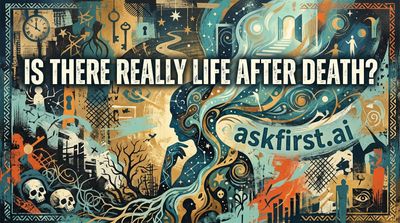
The question of whether the deceased retain consciousness or awareness of their transition from life to death is perhaps the oldest and most profound inquiry in human history. It sits at the intersection of neuroscience, theology, philosophy, and the emerging field of near-death studies. Because science relies on empirical observation—and the dead cannot report back—there is no singular, universally accepted answer. Instead, we must examine this through the lenses of clinical evidence, historical belief, and the mechanics of human consciousness.
The Neurobiological Perspective: The End of Awareness
From a strictly materialist or neurobiological perspective, the answer is definitive: the deceased do not "know" they are dead because the organ responsible for knowledge—the brain—has ceased to function. According to researchers like Dr. Sam Parnia, director of critical care and resuscitation research at NYU Langone Health, consciousness is inextricably linked to the electrical activity of the cerebral cortex.
When the heart stops, blood flow to the brain ceases. Within seconds, the electrical activity in the cerebral cortex is suppressed. If resuscitation does not occur within minutes, the brain cells begin to undergo irreversible necrosis. In his book Erasing Death: The Science That Is Rewriting the Boundaries Between Life and Death, Parnia explains that while there may be a "flash" of memory or a surge of electrical activity during the final moments of oxygen deprivation, this is a physiological process, not a transition into a post-mortem state of awareness. From this viewpoint, "knowing" requires a functional neural architecture that no longer exists after clinical death.
The Phenomenon of Near-Death Experiences (NDEs)
The complexity of this topic arises when we look at Near-Death Experiences. Many people who have been clinically dead—meaning their heart stopped and they were resuscitated—report having a profound sense of awareness while they were technically "dead."
Dr. Raymond Moody, whose seminal work Life After Life (1975) first popularized the study of NDEs, documented thousands of accounts where individuals reported leaving their bodies, observing the hospital staff attempting to revive them, and feeling a sense of peace or detachment. Moody notes that these individuals often describe a sensation of "knowing" they were no longer in their physical form. While skeptics argue this is a hallucination caused by a dying brain flooding with neurotransmitters like DMT or endorphins, the vividness and consistency of these accounts across cultures suggest that the human experience of "self" may be more resilient than we currently understand.
Philosophical and Theological Frameworks
If we step outside the laboratory, the question becomes a matter of metaphysical belief. Most religious traditions argue that the "self" or "soul" is independent of the biological vessel.
In the Tibetan Book of the Dead (Bardo Thodol), the process of dying is viewed as a series of stages. The text suggests that consciousness does not simply blink out; rather, it transitions into a "Bardo," or intermediate state. According to this tradition, the deceased may be confused or unaware that their life has ended, requiring guidance or spiritual recognition to move forward. This aligns with the concept of "ghosts" or "spirits" found in folklore globally—the idea that a consciousness can become "stuck" because it does not realize or accept that its physical tether has been severed.
In contrast, the Abrahamic traditions (Judaism, Christianity, and Islam) generally posit that upon death, the soul undergoes an immediate transition. Whether it is the "sleep of the dead" awaiting resurrection or an immediate arrival at a judgment, the awareness is shifted from the temporal world to a spiritual plane. In these frameworks, the deceased do not "know" they are dead in the sense of being trapped in a void; rather, they are immediately aware of their new, disembodied reality.
The Problem of Definition: What is "Knowing"?
The difficulty in answering this question lies in our definition of "knowing." To know something is to process information, compare it against a memory bank, and reach a conclusion. This is a cognitive process. If we assume that consciousness is a product of the brain, then awareness ends with the brain.
However, if we entertain the hypothesis put forward by philosophers like David Chalmers, who discusses the "Hard Problem of Consciousness," we must consider that consciousness might be a fundamental property of the universe, like mass or charge. If consciousness is fundamental, then the physical death of the brain may not end the consciousness itself, but rather change the mode of its existence. In this model, the deceased wouldn't "know" they are dead in the way we think about it; instead, they would simply perceive the loss of their physical sensory input and adapt to a different, non-local form of awareness.
Conclusion
Ultimately, whether the dead "know" they are dead remains a mystery that transcends current scientific capability. If we rely on the biological record, the cessation of brain activity implies a total loss of the capacity to know anything at all. Conversely, if we weigh the testimonies of those who have touched the veil—and the ancient, persistent human intuition that the mind survives the body—there is a compelling argument that consciousness may persist in a form that we cannot yet measure.
We are left with a profound duality: the body is a machine that eventually stops, but the observer—the "I" that asks the question—may be something far more elusive. Until we can bridge the gap between subjective experience and objective measurement, the state of the dead will remain the final, silent frontier of human knowledge.