Decoding the Blueprint: How Sacred Geometry Shapes Intuition
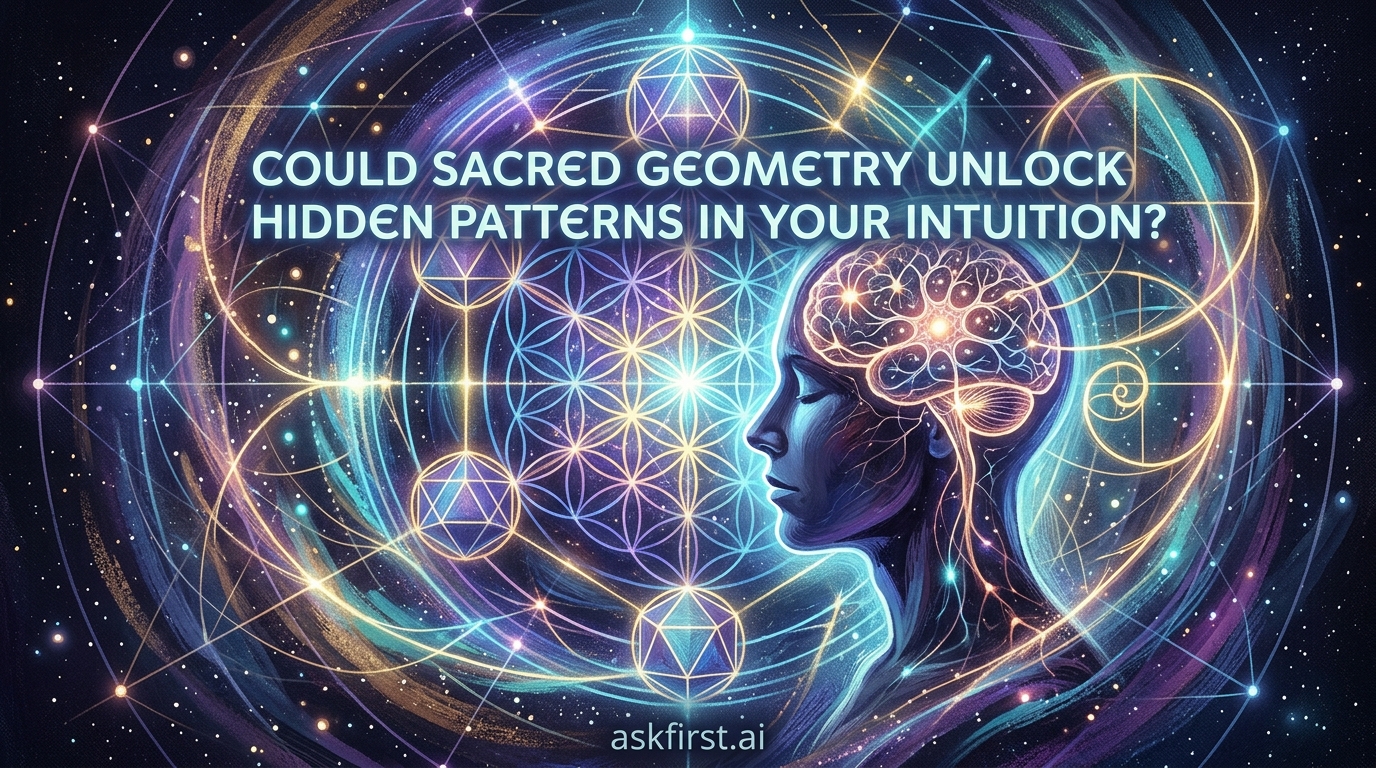
Sacred geometry is the study of geometric ratios and forms that appear throughout nature, art, and architecture, serving as a bridge between the mathematical structure of the universe and the human psyche. Many proponents argue that these universal patterns act as a visual language that bypasses rational thought, potentially tapping into the subconscious reservoir where intuition resides. By observing fundamental forms like the Flower of Life, the Golden Ratio, or the Platonic solids, individuals may find a method to align their internal focus with external cosmic proportions.
The Mathematical Basis of Intuition
Intuition is often described as an instinctive knowing or a "gut feeling" that occurs without conscious deliberation. From a neuroscientific perspective, this process relies on the brain’s ability to recognize patterns rapidly. Sacred geometry provides a set of universal patterns—such as Fibonacci sequences found in sunflower seeds, nautilus shells, and spiral galaxies—that have been evolutionarily hardcoded into human perception. When a mind interacts with these shapes, it may be essentially "tuning" its neural networks to recognize underlying orders in complex environments, effectively sharpening the intuitive faculty.
Core Principles for Intuitive Alignment
To explore how these shapes influence cognitive clarity, one can examine several key geometric foundations:
- The Golden Ratio (Phi): Found in everything from ancient Greek architecture to the proportions of the human face, this ratio is considered the most aesthetically pleasing. Engaging with this ratio is thought to promote a sense of balance and harmony within the observer, clearing mental clutter that impedes intuitive insight.
- The Platonic Solids: These five regular polyhedra represent the fundamental building blocks of matter. Meditation on these forms is often cited as a practice to ground scattered thoughts, allowing for a more stable base from which intuitive "hits" can emerge.
- Fractals: These infinite, self-similar patterns illustrate the concept that the part reflects the whole. By understanding fractal nature, one may better comprehend how personal decision-making is inextricably linked to the broader flow of life.
Cultivating Intuitive Resonance
While science acknowledges these patterns exist, the assertion that they "unlock" intuition remains in the realm of metaphysical exploration. However, the pedagogical value lies in the practice of mindful observation. By consciously studying these structures, a person transitions from passive observation to active engagement with the environment. This shift forces the brain to slow down, reducing the noise of cognitive bias and allowing the quiet voice of intuition to surface. Whether seen as a spiritual key or a cognitive tool, sacred geometry offers a framework for deepening one's relationship with the world, encouraging a deeper, more pattern-aware way of processing existence. As researchers like Fritjof Capra noted in The Tao of Physics, the interconnectedness of all things is mirrored in these geometric laws, suggesting that intuition may simply be our way of sensing these fundamental links.