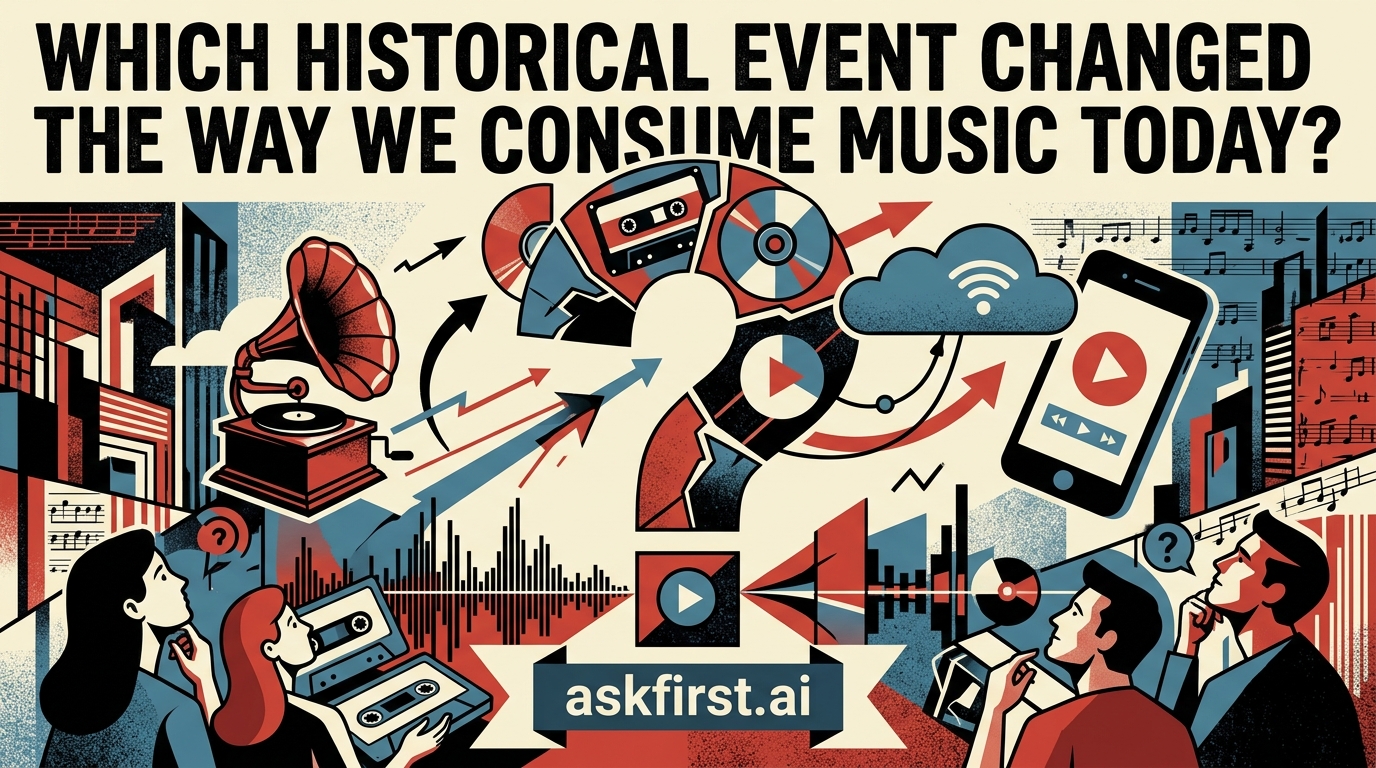
The Dawn of Digital Disruption: The MP3 Revolution
While many points in history altered music consumption, the singular event that fundamentally dismantled the old guard was the public release and global standardization of the MP3 format (MPEG-1 Audio Layer III) in the mid-1990s. This technological milestone did not merely change a format; it initiated a paradigm shift that moved music from a physical asset to a digital, portable, and ubiquitous stream.
The Pre-Digital Constraints
Prior to the MP3, music consumption was tethered to physical limitations. Listeners were bound by the capacity of vinyl records, cassette tapes, and compact discs. To hear a single song, one had to purchase an entire album. The industry relied on 'gatekeepers'—record labels, radio stations, and physical retailers—to control what reached the public. This period of scarcity created a business model built on physical margins, distribution logistics, and controlled access.
The Compression Breakthrough
In 1993, the Fraunhofer Institute completed the development of the MP3 codec. The brilliance of this technology lay in psychoacoustic compression. By removing audio data that the human ear cannot perceive, the file size of a high-quality song was reduced by a factor of ten or more. This compression was the 'Trojan Horse' that allowed high-fidelity music to bypass the massive barriers of slow internet speeds and limited storage capacities of the era.
The Unintended Consequences of Ubiquity
As personal computing gained steam, the MP3 allowed music to be stripped from its physical medium. Once music became a data file, the traditional business model faced an existential crisis. Key historical developments that followed included:
- The Rise of Peer-to-Peer Networks: The launch of services like Napster in 1999 proved that the world wanted instant, frictionless access to music. It turned music into a utility rather than a luxury product.
- Decoupling of the Album: The digital format fostered the 'singles culture' we know today. Consumers no longer needed to buy ten tracks to get the one hit they heard on the radio.
- The Personalization of Sound: The MP3, followed by the iPod in 2001, allowed listeners to carry thousands of songs in their pockets, effectively ending the era of the 'mixtape' and initiating the era of the 'curated playlist.'
The Shift from Ownership to Access
The ultimate evolution of the MP3 revolution is the modern Streaming Era. Once the music industry transitioned from a physical product business to a digital file business, the logical conclusion was the shift from ownership (buying a song) to access (renting a library). Companies like Spotify and Apple Music perfected this by creating a global jukebox, using the groundwork laid by early digital compression to ensure that a listener in Tokyo could hear the same track as a listener in New York, instantly and without storage constraints.
Why This Event Matters Eternally
This event remains the most important in music history because it fundamentally altered the psychological relationship between the creator and the fan. Today, music is background radiation—it is everywhere, highly personalized, and algorithmic. The democratization of distribution forced artists to interact directly with their audiences, bypassing the old corporate hurdles. The MP3 did not just kill the CD; it unleashed a creative explosion where discovery is limitless.
By decoupling sound from physical media, the MP3 changed music from a finite, tangible good into an infinite, ethereal experience. Every algorithm that suggests a new artist, every 'Discover Weekly' playlist, and every cloud-synced library owes its existence to that moment in the 1990s when engineers discovered how to shrink a sound wave without losing its soul. It transformed music consumption from a passive ritual of purchase into an active, constant lifestyle of discovery.