The Professional Dynamics of Collaboration: Friends vs. Strangers
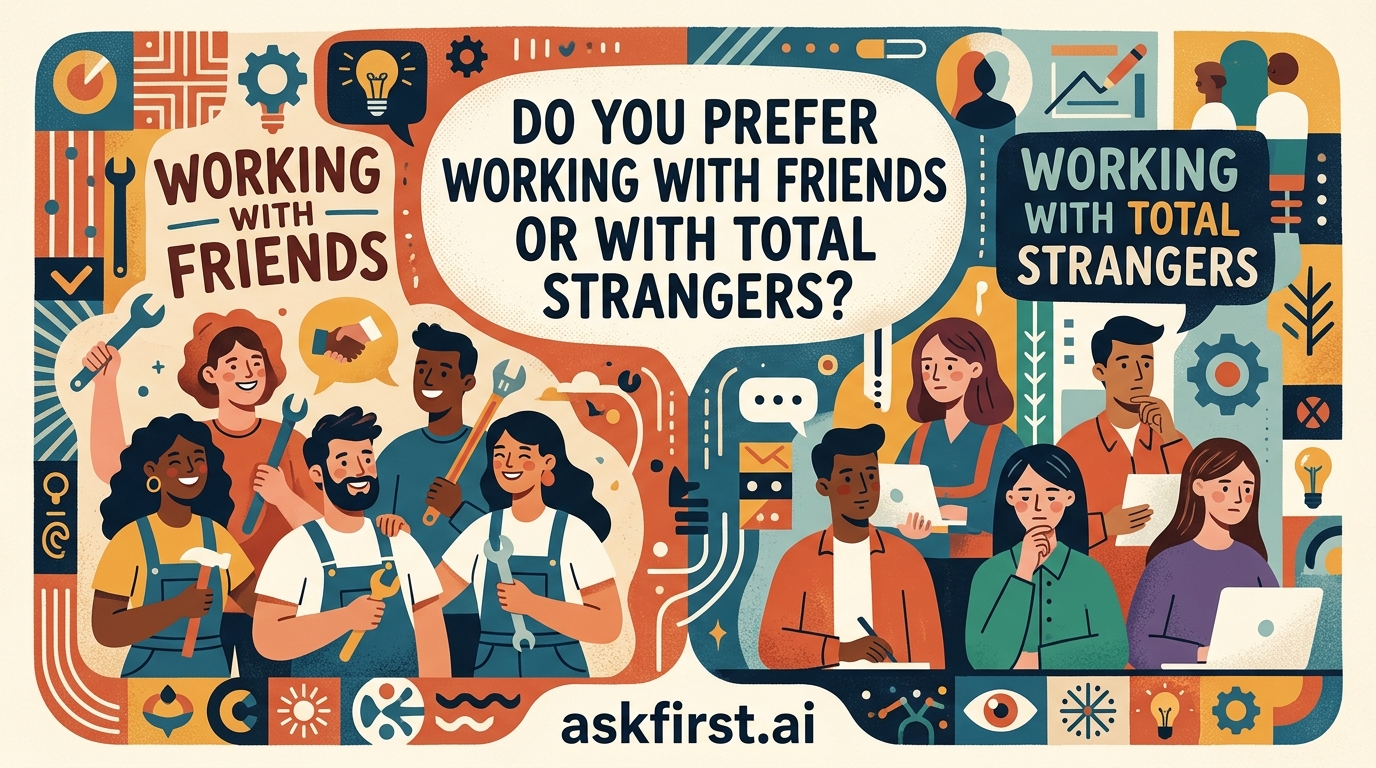
Deciding between collaborating with close acquaintances or total strangers is a fundamental dilemma in professional development. This choice impacts communication styles, accountability mechanisms, and creative output. Understanding the psychological underpinnings of these group dynamics is essential for building high-performing teams.
The Case for Collaboration with Friends
Working with friends offers significant advantages regarding interpersonal synergy. According to organizational psychology principles, trust acts as a lubricant for collaboration. When team members already possess an established rapport, the 'storming' phase of group development—as outlined by Bruce Tuckman—is often minimized.
- Accelerated Communication: Existing social capital allows for shorthand communication. Understanding a colleague's emotional nuances facilitates quicker decision-making.
- Enhanced Psychological Safety: Amy Edmondson’s research on psychological safety suggests that team members perform better when they feel comfortable taking risks. Friends are naturally more inclined to support one another in vulnerable moments.
- Shared Values: Often, friendships are built on common worldviews, which can lead to highly aligned mission-driven work.
However, there are inherent risks. The 'friendship bias' can stifle critical feedback. When affection takes precedence over honesty, teams may suffer from groupthink, where dissenting opinions are suppressed to maintain harmony. Furthermore, blurring the lines between personal and professional boundaries can lead to long-term friction if business objectives remain unfulfilled.
The Case for Collaboration with Strangers
Collaborating with total strangers is often the catalyst for radical innovation. This is primarily because strangers lack the 'shared echo chamber' that often plagues friend groups. Diversity of thought, background, and expertise is naturally higher in groups formed by objective skill matching rather than social affinity.
- Objective Accountability: When professional expectations are explicitly defined in a contract or agreement without the 'cushion' of friendship, accountability becomes more objective. The focus remains strictly on deliverables.
- Cognitive Diversity: Strangers bring unique cognitive frameworks. This collision of different professional lenses frequently results in 'productive conflict,' which is necessary for breakthrough innovation.
- Neutrality: Strangers are less susceptible to historical biases or interpersonal baggage. This allows for a 'blank slate' approach to problem-solving.
Strategic Comparison: The Performance Matrix
To determine the best approach, consider the nature of the project. If the task requires deep empathy, sustained long-term commitment, or high-risk brainstorming where safety is paramount, working with friends is often superior. If the goal is rapid disruption, highly technical execution, or the fusion of disparate industries, engaging with strangers provides the necessary friction to generate new ideas.
| Attribute | Working with Friends | Working with Strangers |
|---|---|---|
| Communication | High-speed, intuitive | Explicit, structured |
| Risk Tolerance | High, but fragile | Calculated, professional |
| Feedback Loop | Softened, personal | Direct, objective |
| Innovation Driver | Shared passion | Cognitive diversity |
Mitigating Risks in Either Scenario
Regardless of the social dynamic, successful collaboration relies on clear governance. For groups of friends, the 'Professional Pact' is recommended. This involves holding a formal meeting at the start of a venture where all members agree that the friendship is secondary to the project success and establish clear protocols for delivering difficult feedback.
For teams comprised of strangers, the focus must shift to 'Early Integration.' This includes structured icebreakers, clear goal setting, and transparency regarding communication preferences. Establishing the rules of engagement early ensures that the team relies on standardized processes rather than social familiarity to drive output.
Ultimately, the choice is not binary. The most successful organizations build teams that balance both: utilizing the high-trust bonds of established friendships to provide the 'core' of the team, while strategically layering in 'outsiders' or strangers to challenge assumptions and prevent cognitive stagnation. By leveraging the security of the familiar and the stimulation of the unknown, professional groups can achieve a state of 'productive balance' that fosters both stability and innovation.